
















A team of investigators at the Agency for Science, Technology and Research in Singapore have developed a bio-functional thermogel, a type of synthetic polymer, to prevent retinal scarring caused by failed retinal detachment repair surgery.

A team of investigators at the Agency for Science, Technology and Research in Singapore have developed a bio-functional thermogel, a type of synthetic polymer, to prevent retinal scarring caused by failed retinal detachment repair surgery.

David Brown, MD, highlights his ASRS poster that includes 44-week data for a four-times-higher dose of aflibercept in a real-world setting.
Rahul Khurana, MD, shares a preview of his ASRS poster based on an analysis of the second year of the VIEW 1 and VIEW 2 studies comparing aflibercept and ranibizumab treatment arms.
The FDA has accepted the supplemental Biologics License Application of aflibercept injection for review in patients with diabetic retinopathy.
Nadia K. Waheed, MD, MPH, and David M. Brown, MD, discuss guidelines available to ensure proper intravitreal injections.
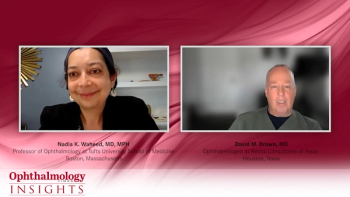
Nadia K. Waheed, MD, MPH, and David M. Brown, MD, discuss how intravitreal injections have changed the treatment landscape of retinal eye disorders.

Investigators have found that recordings from the retina could identify distinct signals for both attention deficit hyperactivity disorder and autism spectrum disorder, providing a potential biomarker for each condition.

A team of investigators at Flinders University in Australia have found that a specific cell within the retina appears to be particularly good at housing Ebola and other viruses.
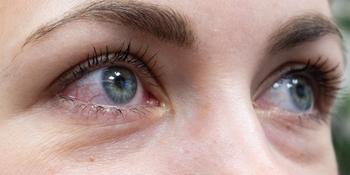

LumiThera Inc. noted that the trial results demonstrated statistically significant improvement in the prespecified primary endpoint in BCVA at 13 months in the PBM treatment group over the sham-treatment group.

The U.S. Centers for Medicare and Medicaid Services code is effective July 1 and will enhance access to Xipere, the only therapy available in the United States for suprachoroidal use in the treatment of macular edema associated with uveitis.
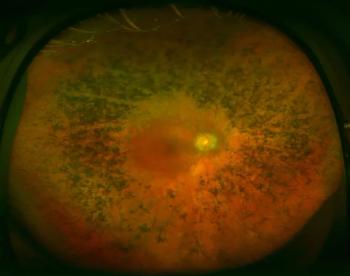
A team led by researchers from the University of Geneva has identified a molecular mechanism that causes degeneration of the eye’s photoreceptors, which can lead to blindness.

Jason Menzo is named CEO, while Russell Kelley, PhD, MBA, will become managing director of the RD Fund. Ben Yerxa, PhD, will take the helm of Opus Genetics, the first RD Fund- and foundation-backed spin-off company.

Foundation Fighting Blindness is among a group of investors offering financial support for Nacuity’s efforts to stop oxidative tissue damage, a driver of blinding eye diseases.

The study investigates 3-year intravitreal implant in eyes with active noninfectious posterior uveitis.
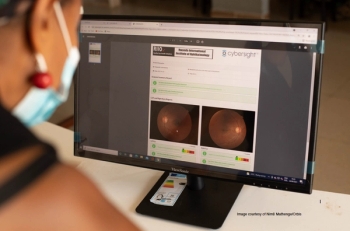
The research from eye care nonprofit Orbis International focuses on diabetic retinopathy in Rwanda, where associated vision complications from diabetes are growing.
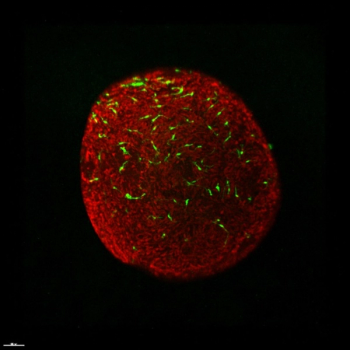
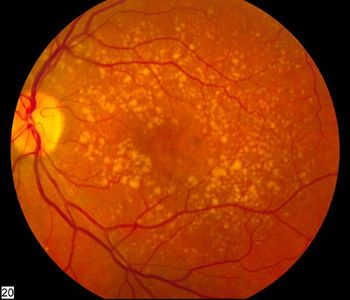
After 10 years, AREDS2 formula shows increased efficacy compared to original formula, benefit of eliminating beta-carotene.

Scientists have revived light-sensing neuron cells in organ donor eyes and restored communication between them as part of a series of discoveries that stand to transform brain and vision research.
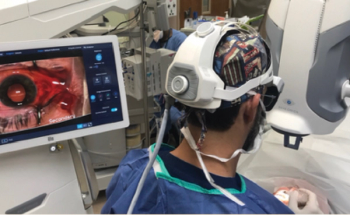
Physicians can use navigational tools to attain a much more immersive perspective.

According to the study by a team of researchers from the University of California Irvine and University of Southern California, treatment with Humanin G reduced protein levels of inflammation markers that become elevated in age-related macular degeneration.

The companies are marketing the first FDA-approved ophthalmology biosimilar as a treatment option for patients with retinal disorders.

According to the company, the AI platform can predict a person's risk of having a stroke or a heart attack in the next five years.

According to Novartis, the approval is based on year 1 data from the Phase III KESTREL and KITE clinical trials investigating brolucizumab-dbll 6 mg vs aflibercept 2 mg in diabetic macular edema patients.

Faricimab is the first treatment for wet AMD and DME in Canada that acts by targeting both VEGF-A and Ang-2, two key drivers of vascular instability that have been associated with vision-threatening retinal conditions.