

















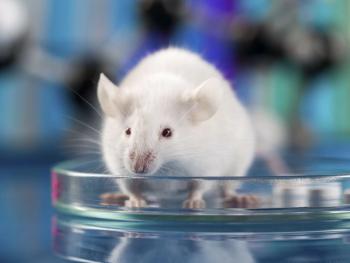
Successful treatment options can offer hope for patients with inherited disease.
Successful treatment options can offer hope for patients with inherited disease.

Investigators believe the therapy could prove to be an option for the treatment of other retinopathies.

PRS can modify disease outcomes due to other genes, such as MYOC.

Investigators from the University of Maryland found that uncovering the mechanism of vision loss in Usher syndrome yields additional drug targets for eventual development of better therapies.

Investigators find that mutations could lead to early treatment intervention.

The POAAGG study in African Americans gives insights into the effect of glaucoma on this population and provides data that could lead to gene therapies.

Improvements are seen after gene therapy for Leber congenital amaurosis.

Investigators have found that the early and late stages of uveal melanoma differ markedly.

According to investigators, aqueous humor analysis differentiated the tumors in patients.
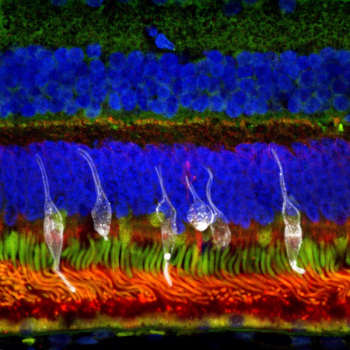
In a study, investigators demonstrated the safety and therapeutic potential of clinically compliant iPSC-derived photoreceptor precursors as a cell replacement source for future clinical trials.
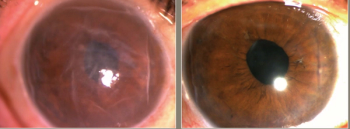
Results from Aurion Biotech's IOTA trial reveals that a corneal endothelial cell therapy showed improvements in visual acuity and central corneal thickness, according to a team of Japanese investigators.

Richard B. Rosen, MD, DSc(Hon), reports on the capabilities of using clinical OCT for imaging and measuring macular surface macrophage cells during the 2021 ASRS annual meeting.

According to 4D Molecular Therapeutics, it has received FDA Clearance of an IND Application for 4D-150, a dual-transgene intravitreal gene therapy for patients with wet AMD.

Trial results indicate that retinal cell injections improve vision in certain retinitis pigmentosa patients.
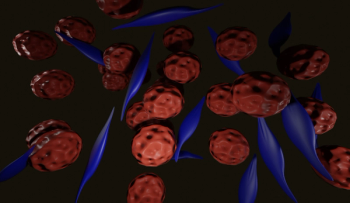
A team of investigators have found that a molecular mechanism drives the progression of uveal melanoma, an often lethal eye cancer in adults.
AbbVie and REGENXBIO announced a strategic partnership to develop and commercialize RGX-314, an investigational gene therapy for wet age-related macular degeneration, diabetic retinopathy and other chronic retinal diseases.

Development of new animal model enhances study of genetic mutations.

During a presentation at the EURETINA 2021 Virtual Congress, Dr José-Alain Sahel explains that optogenetics involves the use of artificial photoreceptors from specific retinal cells to restore vision by transferring a gene that encodes for a light-sensitive protein that causes neuronal cells to respond to light stimulation.

José-Alain Sahel, MD, explains how optogenetics involves artificial photoreceptors from specific retinal cells to restore vision.

The gene-based AAVCOVID vaccine employs a unique adeno-associated viral vector technology that was shown in non-clinical, nonhuman primate studies to enable protection from SARS-CoV-2 challenge and to induce sustained antibody and cellular immune responses from a single dose for up to a year.

Investigators have found that 1 intravitreal injection of an adeno-associated virus encoding an immunosuppressive transgene, either HLA-G or eqIL-10, reduced the clinical and histologic inflammation in a well-established model of autoimmune uveitis.

Development of new animal model enhances study of potential mutations.
Gene therapy has produced early and lasting improvements in retinal cell morphology and visual acuity in a patient with inherited retinal disease.
Study examines immunomodulatory therapy as a potential long-term treatment option.

In PIONEER study, investigators outline their successes.