

















Recent reports of retinal atrophy have raised concerns on potential long-term safety.


NIH backing first-in-class engineered mechanosensitive channel based gene therapy for glaucoma
Recent reports of retinal atrophy have raised concerns on potential long-term safety.

LUNA trial will evaluate the 2x10^11 vg/eye (2E11) and a new lower 6x10^10 vg/eye (6E10) dose of Ixo-vec, with enhanced prophylactic steroid regimens in patients requiring frequent anti-VEGF injections. Interim data anticipated throughout 2023.

Nanoscope Therapeutics’ Phase 2 STARLIGHT open-label trial enrolled 6 subjects with advanced vision loss due to a clinical or genetic diagnosis of Stargardt disease.

Scientist have proposed several methods for converting stem cells into RPE, but there is still a gap in our knowledge of how cells respond to these stimuli over time.

If approved, TP-03 may offer treatment for millions of patients with Demodex blepharitis. TP-03 is now also being studied for the treatment of Meibomian Gland Disease in patients with Demodex mites.

According to a university news release, its CellSight teams clinched top two of three awards in National Eye Institute competition.

A synopsis of the findings presented at EURETINA 2022 for ophthalmologists and retina specialists.

Researchers in Trinity’s School of Genetics and Microbiology developed a new gene therapy, ophNdi1, that is the first of its kind to directly target mitochondrial function in cells that are malfunctioning in AMD.

Gene therapy has partly restored the function of the retina’s cone receptors in two children who were born completely colorblind, reports a new study led by UCL researchers.

Stoke Therapeutics announced enrollment of the first patient in a prospective natural history study of people ages 8 to 60 who are living with autosomal dominant optic atrophy.

Low-grade inflammation seems to be associated with baseline disease in inherited retinal dystrophies (IRDs), according to Christine N. Kay, MD, a surgeon at Vitreoretinal Associates, in Gainesville, Florida.

APOE4 gene associated with Alzheimer’s disease risk was found to protect mice from glaucoma. Research team also prevented retinal ganglion cell death by blocking the APOE signaling pathway, pointing to a potential treatment strategy for glaucoma.

X-linked retinoschisis is a congenital disorder that results in visual impairment in boys at an early age. No treatment is currently available, and surgical repair fails in many cases.

Foundation Fighting Blindness is a driving force in advancing retinal gene therapies into clinical trials.

The study provided evidence of safety, visual acuity improvement and structural stability in a difficult-to-treat patient population.

According to a news release, the U.S. Food and Drug Administration has approved Coherus’ ranibizumab-eqrn (Cimerli) as an interchangeable biosimilar for all five indications of Lucentis.
A multi-institutional effort led by researchers at the University of Pennsylvania is taking steps to develop an effective technique to regenerate photoreceptors cells and restore sight in patients with vision disorders.

Recent reports of retinal atrophy have raised concerns on potential long-term safety.

The discovery of molecular signatures of age-related macular degeneration will help with better diagnosis and treatment of this progressive eye disease.
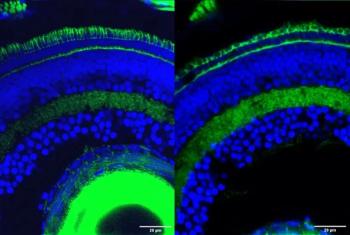
The findings of this study may have revealed the crucial role of gene fragments in retinal development and vision.

A novel computational platform identifies top-performing viral vectors that could deliver gene therapies to the retina with maximum efficiency and precision.

Scientists at the Louisiana State University Health New Orleans Neuroscience Center of Excellence have developed a new, experimental human cell line from retinal pigment epithelial cells.

According to the Nanoscope Therapeutics, 6-month safety and efficacy data are expected in Q1 2023. MCO-010 gene therapy reprograms healthy retinal cells to make them photosensitive.

According to the company, 6-month safety and efficacy data are expected in Q1 2023. MCO-010 gene therapy reprograms healthy retinal cells to make them photosensitive.
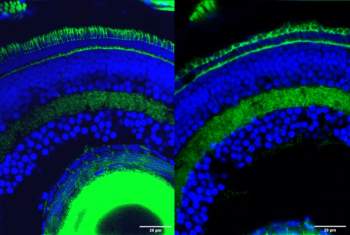
The findings could lead to a new understanding of unexplained causes of heritable retinal diseases.