

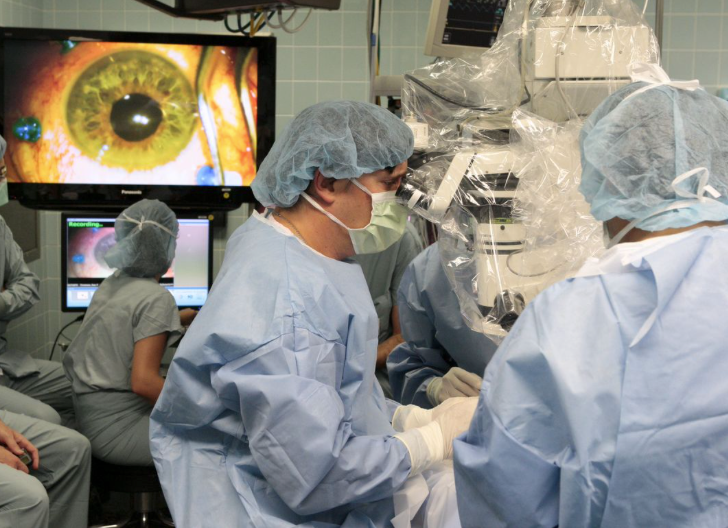

















The companies note that the partnership will propel Ray Therapeutics’ lead optogenetics gene therapy to Phase 1-2 clinical trials.
The companies note that the partnership will propel Ray Therapeutics’ lead optogenetics gene therapy to Phase 1-2 clinical trials.

Christina Y. Weng, MD, MBA, an associate professor of ophthalmology and surgical retina fellowship program director at Baylor College of Medicine in Houston, recently shared some standout therapies for macular degeneration.

The companies note that the partnership will propel Ray Therapeutics’ lead optogenetics gene therapy to Phase 1-2 clinical trials.

Investigators at Trinity College Dublin have highlighted the SARM1 gene, a key driver in the damage that ultimately leads to impaired vision.

In this episode of EyePod, Ora Clinical’s Keith Lane offers a brief overview of the current state of ophthalmology and its standardized endpoints. He also discusses some of the challenges that gene therapy has faced, particularly in relation to ophthalmology. He also offers his outlook for the future of gene therapy.

A brief overview of findings presented at the 2022 Angiogenesis, Exudation and Degeneration meeting hosted by Bascom Palmer.

Dr. Carel Hoyng divulges the main takeaways from his Angiogenesis presentation, including the origins of Stargardt disease, correct diagnosis, ongoing gene therapy trials and the future of therapy.

Investigators in the Netherlands have developed an RNA therapy to halt the progression of Stargardt disease.

Dr Carel Hoyng divulges the main takeaways from his Angiogenesis presentation, including the origins of Stargardt disease, correct diagnosis, ongoing gene therapy trials and the future of therapy.

Carel B. Hoyng, MD, noted that investigators have developed an RNA therapy to stop the progression of the disease, which ultimately leads to legal blindness.

This study showed that an investigational subretinal implant, CPCB-RPE1, containing allogeneic human embryonic stem cell-derived RPE cells, was safe and well-tolerated by patients with dry AMD.
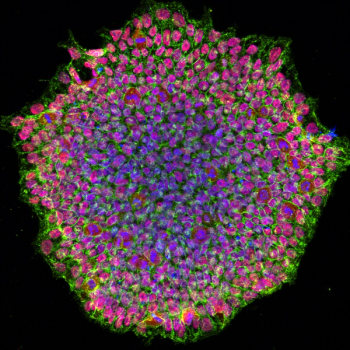
The team hopes the use of patient-derived stem cells will enable high-throughput drug screening for potential therapeutics for patients.

Cleveland Eye Bank Foundation (CEBF) will feature nine researchers from three eye institutions on February 15, from 3 to 5 pm Eastern, for its second annual virtual vision research symposium.
Researchers collected data on COVID-19 symptoms via online surveys from in excess of 1 million 23andMe participants who self-reported their COVID-19 symptoms.
A team of investigators at the RIKEN Center for Biosystems Dynamics Research in Japan have used a genetic modification to improve human-derived retina transplants grown in the lab.

A study finds acceptable outcomes, vision, and microperimetry improvements at higher doses.
Nanoscope Therapeutics has received IND clearance from the FDA to begin a Phase 2 trial of its Multi-Characteristic Opsin ambient-light activatable optogenetic monotherapy to restore vision in Stargardt patients.

AGTC-501 is a recombinant AAV vector-based gene therapy developed for the treatment of X-linked retinitis pigmentosa.

According to the company, 4D-150 is a dual-transgene, intravitreal gene therapy designed to inhibit four distinct angiogenic factors to prevent angiogenesis and reduce vascular permeability for the treatment of wet AMD.
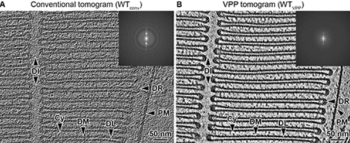
Team at University of California, Irvine provides an understanding of the mechanisms underlying the pathologies of certain gene mutations.
The novel gene therapy product candidate is being developed as a potential single intravitreal administration for blue cone monochromacy by delivering a functional copy of the OPN1LW gene.

The grant will provide Steven DeVries, MD, PhD, the opportunity to travel to Kyoto, Japan and learn from scientists at Ritsumeikan University about the process of growing 3D retinal organoids from stem cells, a technique first developed in Japan.

Researchers have found that study participants with healthy eyes and no history of AMD had thinner retinas if they carried the genes that put them at risk.

In light of another unprecedented year filled with technological advancements and pivots as a result of the pandemic, Joshua Mali, MD, offers his top 5 predictions in ophthalmology for 2022.

A team of researchers with the West Virginia School of Medicine are studying how a benign virus can make new treatments for eye diseases possible.