













New serological biomarkers could characterise Sjögren’s syndrome better than traditionally used autoantibodies.
New serological biomarkers could characterise Sjögren’s syndrome better than traditionally used autoantibodies.
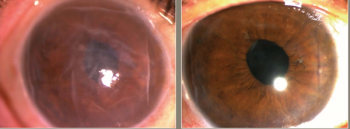
Results from Aurion Biotech's IOTA trial reveals that a corneal endothelial cell therapy showed improvements in visual acuity and central corneal thickness, according to a team of Japanese investigators.

Cynthia Matossian, MD, FACS, ABES, takes a look at the recent, sudden change in low-payment reimbursement by Medicare Administrative Contractors for LipFlow and MGD procedure codes.
Investigators sought to develop a severity scale for tomographic edema in FECD based on Scheimpflug tomography maps, and to evaluate intra- and inter-observer variation for assessing severity.

A cross sectional study investigated how chronic pain conditions outside of the eye impact corneal sensitivity.

A team of investigators at the Texas Tech University Health Sciences Center have developed a technology derived from corneal epithelial stem cells to improve outcomes for DED patients.
Ex vivo experiment identifies potential benefit for supplementary oxygen.
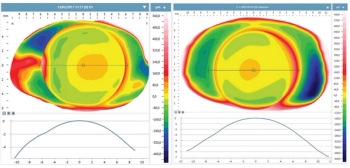
Nasotemporal sagittal height asymmetry a good biomarker of shortsightednes.
Exploring subtleties helps ophthalmologists understand postoperative surprises.

A study sought to implement and test a trained deep learning algorithm using pre-operative corneal topography scans in order to classify between keratoconus and normal corneas, stage the disease, and predict whether a patient will be likely to benefit from CXL treatment.

A retrospective review was performed to describe changes in corneal thickness and to identify the incidence of posterior corneal changes characteristic of keratoconus, following DMEK surgery. Here’s what investigators found.

Mutations in this glaucoma-associated gene may be commonly reported in many other neurodegenerative diseases.

Scanning laser ophthalmoscopy offers improved view of posterior segment.
Investigators examine usefulness in refractive surgery evaluations.

A 48-year-old male patient presented to an ophthalmic emergency department with what was described as progressive bilateral corneal melting 5 weeks after he received the first dose of a COVID-19 vaccine.

CXL is safe, effective to perform on younger population, study results show.
Researchers believe the vial has the potential to transform the way corneal grafts are preserved and will provide scientists with a platform to develop customized preservation solutions.

Investigators examine usefulness in refractive surgery evaluations

Steven Greenstein, MD, reports on the 10-year postop data from an epi-off corneal collagen cross-linking treatment in keratoconus and ectasia patients.
A survey by Health Union sheds light on the issues patients are facing and can help ophthalmologists map out dry eye disease treatment strategies.

CAM’s regenerative healing means long-term relief and fewer visits to clinic.

Edward Holland, MD, discusses Aurion Biotech's investigation of an injectable technique where one cornea donor could potentially supply hundreds of patients with treatment for endothelial disease.
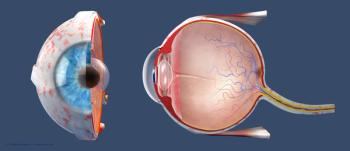
Tool for quantifying measures may predict outcomes for patients.
According to Oculus, its Myopia Master saves space and can be mounted on a workstation or an ophthalmic table. The software is operated directly via an inbuilt display.
The company is evaluating topical cyclosporine to treat the signs and symptoms of dry eye disease.