
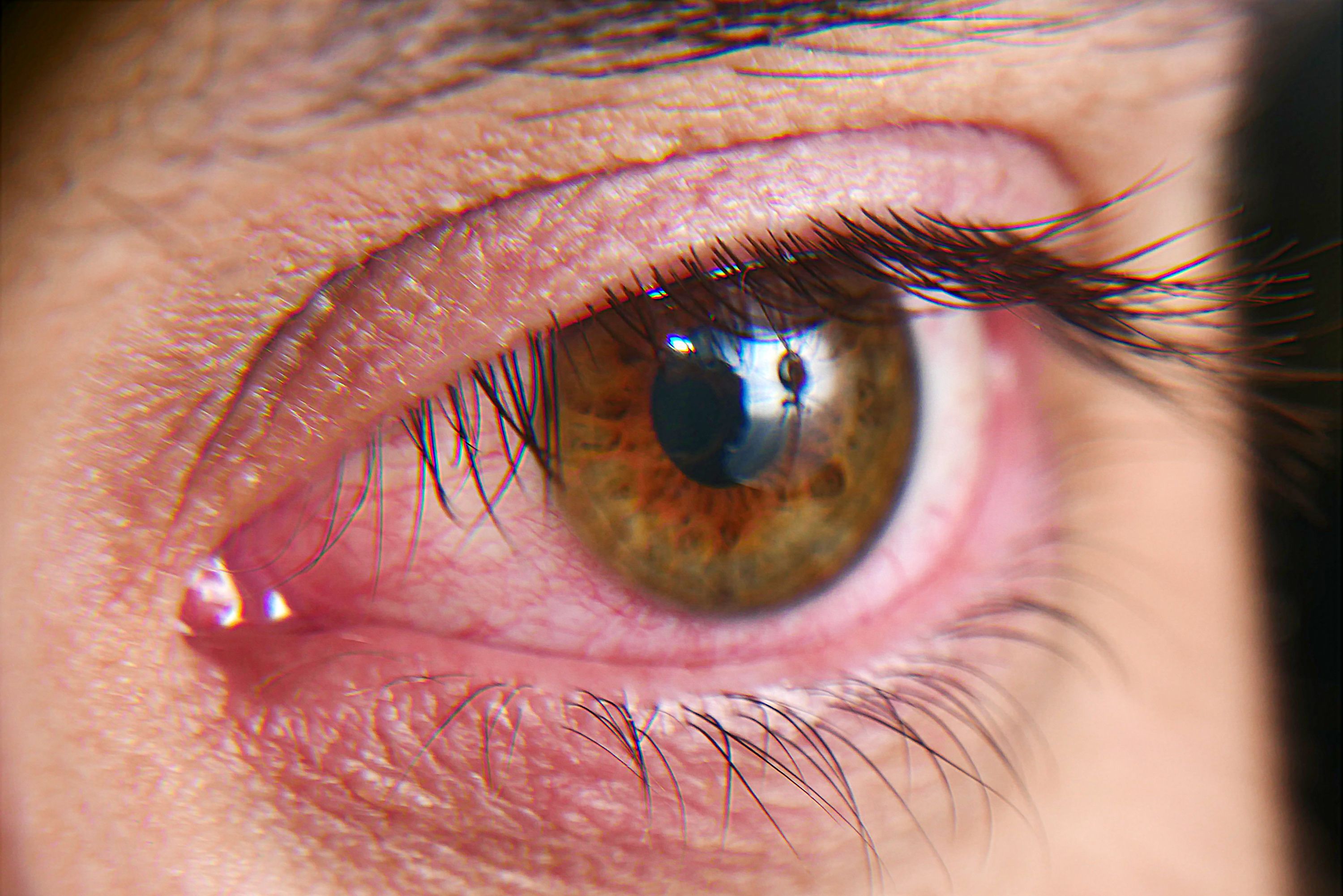

















Analysis finds acceptable outcomes can be expected when pterygium surgery is performed by a supervised ophthalmology resident.

Analysis finds acceptable outcomes can be expected when pterygium surgery is performed by a supervised ophthalmology resident.

New cell therapy drug makes treatment of corneal endothelial disease more accessible.

According to the organization, the goal is to highlight and address the diverse and critical vision and eye health needs of children and to improve outcomes through advocacy, public health, education, and awareness.

Although graft rejection has not been associated with vaccinations, concern remains.
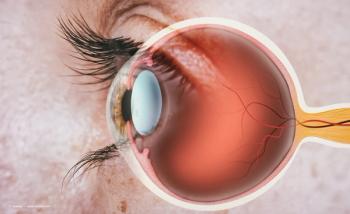
Impairment of corneal sensory innervation causes reduction of both protective reflexes and trophic neuromodulators that are essential for the vitality, metabolism, and wound healing of the ocular surface.

According to Lisa Nijm, MD, JD, patients can benefit from short-term, on-label treatment with a novel loteprednol formulation

I-MED Pharma Inc., a Canadian-based firm, announced this week the expansion of its strategic partnership with ESW Vision in France to be their exclusive distributor in the United States.

TearLab Corp. announced that Adam Szaronos has been appointed president and CEO by the company's Board of Directors, effective immediately.
Investigators are hopeful that future research can focus on public health concerns of dry eye disease.
The company will begin commercialization of the IC-8 small aperture IOL, used for cataract patients, upon successful completion of the manufacturing facility inspections and receipt of an official approval order from the FDA, which the company estimates in Q2 2022.

Study shows statistically significant improvement for primary endpoint of bulbar conjunctival hyperemia for OTX-DED 0.2 mg and 0.3 mg formulations compared with vehicle hydrogel insert.

Successful treatment options can offer hope for patients with inherited disease.

Approaches include anti-vascular endothelial growth factor agents, fine needle diathermy, and corneal collagen crosslinking.
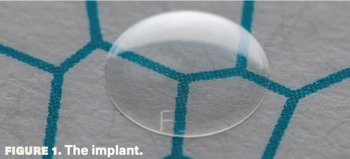
New acrylic implant provides option for patients with endothelial dysfunction.
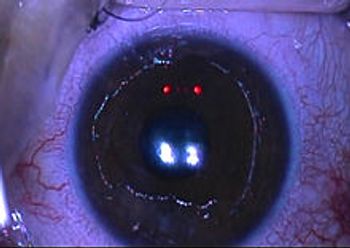
Shady Awwad, MD, discusses how the application of mitomycin C after corneal crosslinking does not prevent development of corneal haze after the procedure and actually contributes to development of more corneal haze.

Procedure transfers intact donor nerve fibers to the cornea.
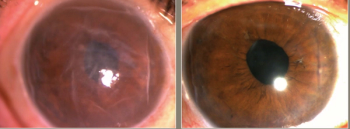
Results from Aurion Biotech's IOTA trial reveals that a corneal endothelial cell therapy showed improvements in visual acuity and central corneal thickness, according to a team of Japanese investigators.

Cynthia Matossian, MD, FACS, ABES, takes a look at the recent, sudden change in low-payment reimbursement by Medicare Administrative Contractors for LipFlow and MGD procedure codes.

Investigators sought to develop a severity scale for tomographic edema in FECD based on Scheimpflug tomography maps, and to evaluate intra- and inter-observer variation for assessing severity.

A cross sectional study investigated how chronic pain conditions outside of the eye impact corneal sensitivity.
A team of investigators at the Texas Tech University Health Sciences Center have developed a technology derived from corneal epithelial stem cells to improve outcomes for DED patients.
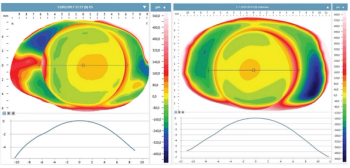
Nasotemporal sagittal height asymmetry a good biomarker of shortsightednes.

A study sought to implement and test a trained deep learning algorithm using pre-operative corneal topography scans in order to classify between keratoconus and normal corneas, stage the disease, and predict whether a patient will be likely to benefit from CXL treatment.

A retrospective review was performed to describe changes in corneal thickness and to identify the incidence of posterior corneal changes characteristic of keratoconus, following DMEK surgery. Here’s what investigators found.

Mutations in this glaucoma-associated gene may be commonly reported in many other neurodegenerative diseases.