




Cornea
Latest News
Advertisement
Video Series

CME Content












Advertisement
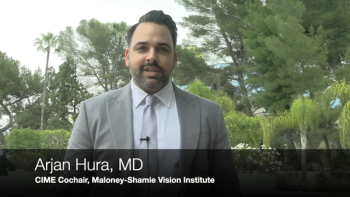
Hura highlighted some of the key takeaways from the Controversies in Modern Eye Care symposium where presenters and attendees shared their insights into the latest advancements in refractive surgery, retina care, and collaborative eye care.
Dr Richard Lindstrom speaks about the future of dry eye and shares pearls for young eye surgeons
The trial is evaluating AURN001, a combination cell therapy product comprised of neltependocel (allogeneic human corneal endothelial cells [CECs]) and Y-27632 for the treatment of corneal edema secondary to corneal endothelial dysfunction.

Joseph Izatt was a skilled researcher and inventor who played a foundational role in the development of optical coherence tomography.

According to the company, the feedback from the interactive meetings will provide guidance for the path to a PMA submission.
At this year's ASCRS meeting in Boston, Massachusetts, Ophthalmology Times Europe caught up with Eris Jordan, OD talked about the big plans the Boston-based startup has for the year ahead. Watch the full video to find out what's in store for the company and its novel cell therapy in Japan, Canada and the United States in 2024.

Neda Nikpoor, MD, shares highlights from her presentation on the Light Adjustable Lens during an ASCRS symposia on IOL calculations.
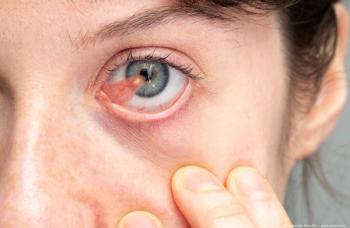
Pterygium is an ocular disease commonly referred to as “surfer’s eye,” which can result from exposure to high levels of UV radiation.
Ahead of the ASCRS 2024 meeting, TheiaNova CEO Carissa Fonseca, PhD, pitched a novel keratoconus treatment
Rahul S Tonk, MD, MBA, sat down to discuss a roundtable discussion he had on DMEK and DSEK surgery at this year's ASCRS meeting held in Boston, Massachusetts, from Friday, April 5, to Monday, April 8, 2024.

Results of the study indicated that systemic treatment led to elevations in liver function test results, with some patients experiencing values twice as high as normal.
Adam Muzychuk, MD, BSc, FRCSC, discusses his ASCRS 2024 presentation on toric lens use for patients with low astigmatism

Researchers conducted a retrospective chart review spanning from January 2015 to January 2021 to compare the incidence rates of infectious keratitis before and during the pandemic among PRK patients.
Greg Kunst, CEO of Aurion Biotech, discusses AURN001, a novel cell therapy targeting corneal endothelial disease
At ASCRS2024, George O. Waring IV, MD, FACS, provides an overview of his presentation highlighting outcomes for LASIK performed using an updated laser ablation algorithm
Ula Jurkunas, MD, sat down to discuss her presentation on the management of anterior corneal disease at this year's ASCRS meeting held in Boston, Massachusetts.

The company announced it will share clinical data at Eyecelerator and the American Society of Cataract and Refractive Surgery 2024 Annual Meeting in Boston.
The 1-time, intracameral injection is a cell therapy for the treatment of corneal edema secondary to corneal endothelial dysfunction.
Alice Epitropoulos, MD, discusses the importance of considering ocular surface health in cataract surgery patients.

Laser blended vision is a proven modality for presbyopia treatment, but its principles can be reproduced with EDOF IOLs
Alexander Movshovich, MD, PhD, a specialist in keratopigmentation, sat down to talk about the controversy surrounding the procedure after it went viral on social media.

Clara Chan, MD, shares surgical pearls for neurotrophic keratopathy and explores new pathways through neurotisation
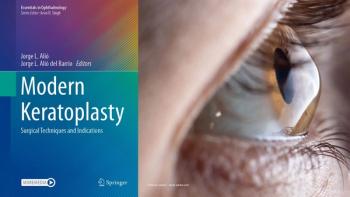
Penetrating keratoplasty remains a popular choice for certain patients

Early keratoconus screening advocated
Advertisement
Advertisement
Trending on Eye Care Network - Ophthalmology Times
1
One day, three approvals: FDA expands options for ocular redness, thyroid eye disease, and presbyopia
2
Matching artificial tears to dry eye phenotype: a Q&A with Omur Ucakhan, MD
3
Diabetic macular edema: an inflammatory disease in focus
4
Teprotumumab and TED: Sarah Cheng, MD, PhD, on orbital tissue changes
5