



Clinical Diagnosis
Latest News
Advertisement
Video Series

CME Content



Advertisement
Advanced autofluorescence reveals cellular pigment reservoirs with therapeutic potential at the Heidelberg 2025 International SPECTRALIS Symposium – And Beyond (ISS).
This noninvasive imaging tool reveals early brain pathology through the eye, promising faster and more accurate diagnoses as highlighted at the Heidelberg 2025 International SPECTRALIS Symposium – And Beyond (ISS).
Findings presented at the Heidelberg 2025 International SPECTRALIS Symposium — And Beyond (ISS) suggest detailed structural data could better inform therapeutic targeting and monitoring.
Improved axial resolution allows clearer visualization of early atrophic changes, including iRORA vs cRORA differentiation, as shared at the Heidelberg 2025 International SPECTRALIS Symposium – And Beyond (ISS).
From basal laminar deposits to foveal centering, a new framework refines what clinicians see—and what they treat—in outer retinal disease, as presented at the Heidelberg 2025 International SPECTRALIS Symposium – And Beyond (ISS).

With 35+ lectures, a NASA keynote, and a river cruise through historic Heidelberg, this year’s symposium blends science and scenery

On the heels of the drug's FDA approval, clinicians weigh in on acoltremon’s (Tryptyr) novel mechanism of action and its potential to address unmet needs in dry eye care
Early improvements in OSDI scores and tear osmolarity reinforce lifitegrast’s role in managing inflammation-driven dry eye disease.
A conversation with David S. Friedman, MD, PhD, on treating uncontrolled open-angle glaucoma in patients with limited options
At ARVO 2025, in Salt Lake City, Utah, Danielle Gauthier talked about her poster on autosomal dominant Alzheimer disease in relation to optic nerve head drusen.

Shifting from a regulatory role to driving innovation directly, Eydelman discusses how the Collaborative Community on Ophthalmic Innovation is reshaping the field, streamlining outdated processes, and advancing patient-centered solutions worldwide.

A machine learning model incorporating treated astigmatism and nuanced inputs is advancing the precision and personalization of arcuate keratotomy planning
Perfluorohexyloctane demonstrated rapid symptom relief in patients with dry eye, with effects reported as early as 5 minutes after dosing.
CCOI transforms ophthalmic innovation by uniting stakeholders, streamlining processes, and prioritizing patient perspectives for faster, impactful solutions.
Glaucoma management is shifting toward earlier, drop-sparing interventions using sustained drug delivery and advanced laser technologies that improve outcomes and quality of life for both patients and physicians.
Exploring how oral sedation and office-based surgery can enhance efficiency and patient experience
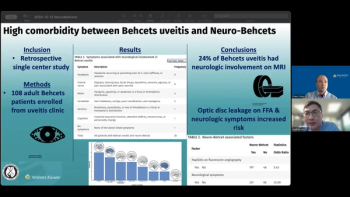
In cases with optic nerve hyperfluorescence or neurologic symptoms, prompt neuroimaging is warranted to rule out neuro-Behcet disease and guide multidisciplinary management.
The first SightLine meeting, held pre-ASCRS, reveals insights on physician-industry relationships, mentorship opportunities, and the practical applications of AI in healthcare.
Outcomes from high myopia LASIK using the Teneo laser platform demonstrate strong visual stability and patient satisfaction, with reduced dysphotopsias and minimal reliance on cycloplegia or nomograms.
A machine learning model using treated astigmatism and other nuanced inputs can significantly improve the accuracy and personalization of arcuate keratotomy planning
Advertisement
Advertisement
Trending on Eye Care Network - Ophthalmology Times
1
Thyroid Eye Disease in 2026: Disease state, recent developments, and the pipeline
2
OPGx-RDH12 enters clinic with first patient dosed in RDH12-LCA
3
Introducing Rising Star Darius Bordbar, MD: from county clinics to the retina
4
The Residency Report: Does donor diabetes affect DMEK outcomes?
5