The first-in-human study of the GalNAc-conjugated siRNA joins a fast-moving Stargardt pipeline as the FDA weighs the first potential approval for the disease.

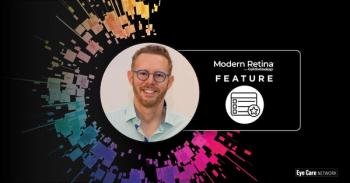
Darius Bordbar, MD, discusses his path to retina surgery and discusses how large databases may help uncover the true outcomes in rare diseases.
For Darius D. Bordbar, MD, the path to retina surgery began not in a lecture hall but in the waiting rooms of county hospital clinics in Texas. Now a second-year surgical retina fellow at Massachusetts Eye and Ear, Harvard Medical School, Boson, he drew on his family's experience of uninsured care and a lifelong fascination with cell biology to challenge long-held practice patterns with big data.
"Neither of my parents were from the United States, and our family was uninsured. So we would end up going to county hospital clinics to take care of my father," he explained.
Inspired by the doctors in the county clinic
What struck the teenage Bordbar, was not only the kindness of the physicians who cared for his father despite the family's limited means, but the way they thought.
"Beyond just being kind to people, they were behaving like scientists to improve our lives," he recalled. "They had this evidence-based, scientific nature in the way they spoke, as best as I could understand it as a young teenager." From that point on, he said, he knew he wanted to be a physician and to do research as a physician.
A detour from oncology
Bordbar attended medical school at Columbia University in New York. Given his father's illness and his undergraduate interest in cell and cancer biology, he was certain he was headed for oncology. Ophthalmology was not on his radar at all; he admits he "probably didn't even know it was a specialty within medicine."
That changed late in his third year. After nearly all of his clinical rotations, and after completing cancer research, he spent a single day in the retina clinic with Royce Chen, MD, a Columbia retina specialist who was then the residency program director.
"From that day on I was pretty much hooked," Bordbar said.
Chen showed him
"I was amazed," he said. "It was like all of my interests in cell biology and the micro world manifesting in clinical practice."
The patients resonated with him as well. "The patients were incredibly vulnerable, just like my family was at the time," he said. Patients with diabetes, in his view, were "the pathologic manifestation of the social determinants of health," with outcomes driven as much by access to care as by biology. For surgical patients with sight-threatening disease, "surgery was the difference between them going blind and having vision."
Giving back in Texas
Bordbar completed his ophthalmology residency at Baylor College of Medicine in Houston, a choice driven in part by a desire to return to his home state and serve the kind of community that had cared for his family.
Baylor's large county hospital system serves a vast uninsured population, many facing severe social determinants of health. "You have the opportunity to make a real difference," he said. "Residency was excellent training for me and an excellent opportunity to do something humanitarian for the community I grew up in." He attributed outstanding mentorship in residency by retina specialist Christina Weng, MD, MBA, as critical to his success and inspiring him to seek a career in retina.
He then moved to Boston for his retina fellowship at Mass Eye and Ear, where he has been pursuing both surgical training and research. "At this point, I cannot be happier with my life or my career," he said. "I'm among outstanding colleagues and outstanding mentors." He has been grateful to have received mentorship in retina by his numerous fellowship faculty including Dean Eliott, MD, John Miller, MD, Nimesh Patel, MD, and Demetrios Vavvas, MD, PhD.
Testing what trainees are taught
Bordbar's research grows directly out of the scientific outlook that first drew him to medicine. His central interest is strengthening evidence-based practice in ophthalmology, particularly when it comes to rare outcomes.
Compared with oncology, with its large patient populations and abundant trials, ophthalmology is a small field with fewer patients, fewer studies, and less data, he noted. As a result, some practices are passed down from mentors to trainees based on older evidence that may not be especially robust.
To get at the true evidence behind rare outcomes, Bordbar and colleagues turn to large databases, which can capture rare events that conventional retrospective clinical studies cannot.
Research interest: anti-VEGF therapy after stroke or myocardial infarction
One recent example, presented at the American Society of Retina Specialists (ASRS) annual meeting, examined a concern that is widely taught in residency and fellowship: that
This is not strong, robust data, but data that has guided a huge number of retina specialists, the entire generation of retina specialists that has been using anti-VEGF therapy.
He and his colleagues used a large database to study the theoretical concern that anti-VEGF therapy may be harmful. “We essentially showed that there was no significant increase in mortality or morbidity, and that the different agents had no real effect on systemic outcomes either. This has been the practice of a massive percentage of retina specialists, nationally and internationally, for over 2 decades, as long as anti-VEGF drugs have been in use, and we showed that it was not founded on evidence.”
More myth-busting with big data
The group has applied the same approach to other long-standing associations. In the past year, they published on the association between prostaglandin analogs and pseudophakic cystoid macular edema. Bordbar has also presented on, and continues to study, systemic outcomes after anti-VEGF therapy and laser treatment for retinopathy of prematurity (ROP).
These and other large-database studies target associations "that are always taught in residency and training and that affect our real-world practice without significant real-world evidence guiding them," he said.
A message to colleagues
Asked what he would like his peers to take away, Bordbar returned to the patients who drew him into retina.
"We're quite blessed in ophthalmology with the opportunity to help some of the most vulnerable patients in all of medicine," he said. Patients with diabetic retinopathy are among the most affected in the field socially, in terms of disability and medically, and patients with macular degeneration "would simply go blind if it weren't for our treatments."
His advice to ophthalmologists: "Always strive to deliver the best care, question all unknowns, and seek the scientific truth, because practicing the truth and delivering the most evidence-based care is what's going to best improve our patients' lives."