




AMD
Latest News
Advertisement
Video Series
CME Content













Advertisement
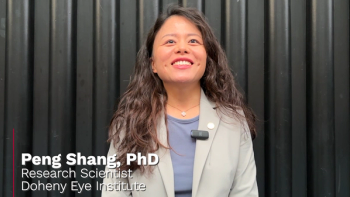
At ARVO 2025, in Salt Lake City, Utah, Peng Shang, PhD, talked about her presentation on how the Y402H polymorphism of Complement Factor H (CFH), a major genetic risk factor for AMD, and chronic oxidative stress affect the lipid profile of retinal pigment epithelial (RPE) cells.

Lineage Cell Therapeutics will be presenting data on the safety and tolerability of RG6501 (OpRegen) for the treatment of geographic atrophy, secondary to age-related macular degeneration during the upcoming Clinical Trials at the Summit 2025 meeting.
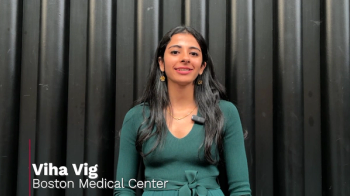
At ARVO 2025, in Salt Lake City, Utah, Viha Vig, talked about her poster presentation investigating the relationship between ocular and systemic mitochondrial diseases and dementia

Ashvattha Therapeutics reveals promising phase 2 results for migaldendranib, showcasing significant improvements in retinal disease treatment and reduced injection burden.

Ashvattha Therapeutics announced positive interim phase 2 results for migaldendranib for the treatment of AMD and DME.

SYL1801 is an investigational siRNA therapy administered via eye drops, rather than intravitreal injection, to treat nAMD.
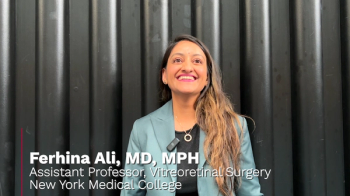
At ARVO 2025, in Salt Lake City, Utah, Ferhina Ali, MD, MPH, talked about her presentation on the early real-world use of aflibercept 8 mg in treatment-naive patients with neovascular age-related macular degeneration

SYL1801 is a treatment for neovascular macular degeneration administered via eye drops.

LumiThera's Valeda system offers groundbreaking non-invasive treatment for dry AMD, showing extended vision improvement and safety over 4.5 years.

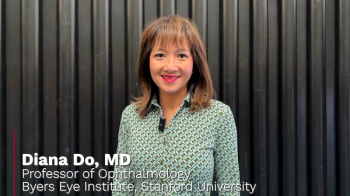
At ARVO 2025, in Salt Lake City, Utah, Diana Do, MD, gave an update on the LIGHTSITE III study of photobiomodulation for dry age-related macular degeneration.
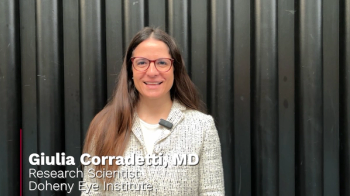
Giullia Coradetti, MD, offered insight into her research on a post-hoc analysis based on the GATHER 2 clinical trial data for geographic atrophy and age-related macular degeneration.

A recent analysis reveals that ellipsoidal zone-retinal pigment epithelial thickness predicts future visual loss in geographic atrophy patients, highlighting early intervention opportunities.


RWC 2025: Katherine Talcott, MD, discusses the potential connection of auto-immune conditions to AMD
This large database study explored the link between autoimmune problems and AMD.

Optigo Biotherapeutics presents promising preclinical data at ARVO.

The VAN-2401 phase 1 clinical trial will evaluate the use of KH658 for the treatment of wet AMD.

Galimedix Therapeutics advances GAL-101, an oral therapy targeting Alzheimer’s and AMD, completing phase 1 SAD study with promising safety results.


A study reveals that repeated anti-VEGF injections for AMD do not alter retinal vascular metrics over time, ensuring treatment stability.

The phase 2 clinical trial data evaluating the efficacy, safety, and dosing intervals of high-dose IBI302 were presented during the annual 2025 ARVO meeting.

Katherine Talcott, MD, a retina specialist at Cleveland Clinic, presented findings on EYP-1901 in the phase 2 DAVIO study.
The PRISM clinical trial assesses 4D-150 (4D Molecular Therapeutics) in adults with neovascular age-related macular degeneration, also known as wet AMD.
At the ARVO 2025 Annual Meeting in Salt Lake City, Utah, Nimesh Patel, MD, presented on the LUCIA and LUGANO phase 3 pivotal trials for EYP-1901 against aflibercept for the treatment of wet macular degeneration.
Advertisement
Advertisement
Trending on Eye Care Network - Ophthalmology Times
1
One day, three approvals: FDA expands options for ocular redness, thyroid eye disease, and presbyopia
2
Brepocitinib meets all Phase 3 end points in noninfectious uveitis
3
Diabetic macular edema: an inflammatory disease in focus
4
AAO 2026: GLP-1RA initiation not linked to anti-VEGF burden in DME
5