





AMD
Latest News
Advertisement
Video Series




CME Content













Advertisement

Ashvattha Therapeutics reveals phase 2 results for migaldendranib, showing significant vision improvements and reduced injection needs in retinal disease patients.

In her keynote address, Prof Schmidt-Erfurth focused on new artificial intelligence tools and their usage in addressing age-related macular degeneration.

Roche's Contivue platform gains EU CE mark, offering innovative treatment for neovascular AMD with fewer injections and promising long-term vision outcomes.


Outlook Therapeutics seeks FDA clarity on ONS-5010 after a complete response letter, aiming to address efficacy concerns for wet AMD treatment.

FDA issues a complete response letter to Outlook Therapeutics for ONS-5010, citing insufficient evidence of effectiveness for wet AMD treatment.

Advanz Pharma and Alvotech announced AVT06, a biosimilar to Eylea, was approved for neovascular age-related macular degeneration.

Advanz Pharma and Alvotech announced AVT06, a biosimilar to Eylea, was approved for neovascular age-related macular degeneration

Included is the supplemental Biologics License Application (sBLA) for EYLEA HD seeking approval for both the treatment of macular edema following retinal vein occlusion (RVO) and the broadening of the dosing schedule to include every 4-week dosing across approved indications.

The company previously provided an update in April 2025 stating its intention to lay off approximately 65% of the company after the COAST trial failed to meet its primary end point.


RAMQ is a public organization introduced in 1970, following the adoption of the universal health care system in Canada.

Catch up on recent advancements in retina care, including new therapies for age-related macular degeneration and macular telangiectasia, enhancing patient outcomes.

The role of anesthetics in streamlining efficiency and elevating patient care.


Patients weigh in on the value of provider communication.

Sandoz will oversee commercialization of the product across the European Union (excluding Germany), Switzerland, Norway, Australia, Hong Kong, Vietnam, and Malaysia under the terms of the agreement.


The DAVIO-2 study reveals EYP-1901's potential as a 6-month treatment for neovascular AMD, matching aflibercept's vision outcomes with fewer doses.


The Portal study is a long-term extension of the phase 3 Archway study

EyePoint Pharmaceuticals completes enrollment for the LUCIA trial, advancing DURAVYU's potential as a new treatment for wet AMD.
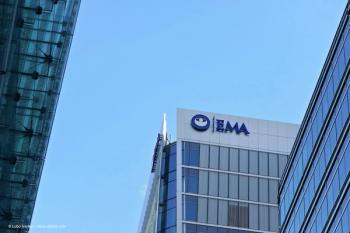
EYLUXV, a new biosimilar for treating serious eye conditions, gains positive EMA recommendation, promising improved patient access and outcomes.


Vonaprument has received fast track designation from the US Food and Drug Administration.
Advertisement
Advertisement
Trending on Eye Care Network - Ophthalmology Times
1
One day, three approvals: FDA expands options for ocular redness, thyroid eye disease, and presbyopia
2
Brepocitinib meets all Phase 3 end points in noninfectious uveitis
3
Diabetic macular edema: an inflammatory disease in focus
4
AAO 2026: GLP-1RA initiation not linked to anti-VEGF burden in DME
5