Dr. Margaret Chang details the facility requirements for PDS implantation, the specialized training surgeons need, and crucial factors to consider for the surgical implantation of PDS.
What facilities are required to implant the device, and what specific training does a surgeon need?
What are the key considerations for the surgical implantation and subsequent refilling of the PDS?
What are the major adverse effects associated with the PDS, and which patients are not suitable candidates for this delivery system?
How does the PDS with ranibizumab fit into the treatment landscape that also includes highly durable agents such as faricimab and high-dose aflibercept?
In this Q&A, Ping Moore, OD, covers emerging dry eye therapies, from selenium sulfide to next-gen cyclosporine, and how subtype-guided care shapes treatment choices.
The RMAT designation opens the door to a faster development pathway for EO2002 as a minimally invasive alternative to corneal transplantation, while Emmecell also advances a cell therapy for geographic atrophy.
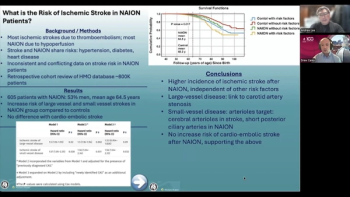
Andrew G. Lee, MD, and Drew Carey, MD, discuss findings from a retrospective study examining ischemic stroke risk in patients with non-arteritic anterior ischemic optic neuropathy and the implications for vascular risk factor management.
Offline smartphone AI fundus screening detects diabetic retinopathy, glaucoma, and macular degeneration in one capture, delivering high accuracy for low-resource eye care.