





















Bausch + Lomb and Modulight announce the photodynamic laser for use with photodynamic therapy was approved by the FDA for the treatment of patients with subfoveal choroidal neovascularization due to AMD.
Bausch + Lomb and Modulight announce the photodynamic laser for use with photodynamic therapy was approved by the FDA for the treatment of patients with subfoveal choroidal neovascularization due to AMD.

According to the company, the approval allows Eyenuk’s EyeArt AI eye screening system, already approved for detection of diabetic retinopathy, to aid millions of additional patients at risk for vision loss.

According to the company, the approval allows Eyenuk’s EyeArt AI eye screening system, already approved for detection of diabetic retinopathy, to aid millions of additional patients at risk for vision loss.

Researchers used obesity as a model to accelerate and exaggerate the stressors experienced by the body throughout life.

The study advances the understanding of the leading cause of visual impairment in adults.

Researchers used obesity as a model to accelerate and exaggerate the stressors experienced by the body throughout life.
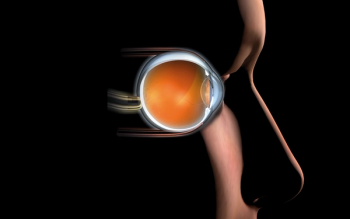
The study could lead to early diagnosis and treatment of age-related macular degeneration.
Daniel F Kiernan, MD, FACS, discusses idiosyncratic biologic response to anti-VEGF treatment in a patient with neovascular AMD.
Daniel F Kiernan, MD, FACS, reviews the case of an 83-year-old male patient with neovascular AMD.
Daniel F Kiernan, MD, FACS, discusses impressions and key takeaways from a neovascular AMD patient case, focusing on treatment intervals.
Daniel F Kiernan, MD, FACS, provides an overview of a patient case of a 79-year-old female with neovascular AMD.
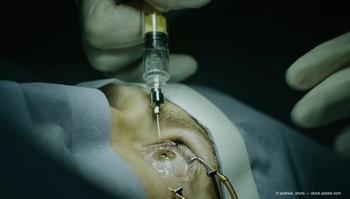
The researchers conducted a retrospective chart review of patients with typical exudative AMD that had been treated with anti-VEGF therapy injections.
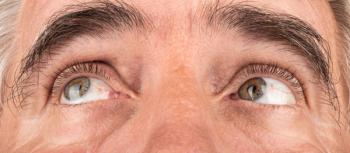
When dietary patterns were adjusted to include a Mediterranean diet, dietary nitrate intake was not associated with AMD progression independently.
Investigators conducted a cohort study to determine if there is a correlation between intake of nitrate and AMD progression based on previous suggestions that low nitrate levels in the diet may put patients at risk of AMD progression.

The researchers reported that there was no significant difference in the AMD prevalence among the 3 study groups.
Korean biotech company MDimune Inc. and scientists from the Clear Vision Research Lab at The Australian National University hope to turn recent research milestones into potential treatments for AMD.
According to investigators, the study used curated real-world data from the IRIS Registry to report risk of progression by stage.

The study, co-led by Griffith University’s Menzies Health Institute and South Korea’s Center for Convergent Research for Emerging Virus Infection, Korea Research Institute of Chemical Technology, aims to understand how SARS-CoV-2 affects the eyes and whether it could serve as a virus infection route.
The company said the submission follows the FDA acceptance of the ONS-5010 BLA for the treatment of wet AMD, with a PDUFA date of August 29, 2023.
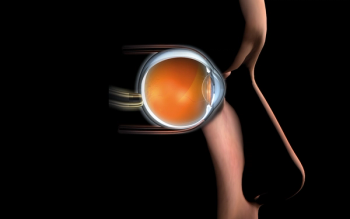
Scientists from the Clear Vision Research Lab at The Australian National University and the Korean biotech company MDimune Inc. hope to turn recent research milestones into potential treatments for AMD.

The company confirms target read-out around the end of 2023 and regulatory submission in Europe in H1 2024. The data will also play an important supporting role in U.S. regulatory submission.

Ophthalmologist discusses the impact of getting older on patients diagnosed with the disease.

The results represent a major step towards first in-human clinical studies for this program - the first potential therapy for patients with geographic atrophy secondary to AMD that addresses the underlying causes of the disease.

Researchers from the Deutsches Zentrum für Neurodegenerative Erkrankungen and the Center for Regenerative Therapies Dresden at TU Dresden have found that visual cells in the human retina may not simply die in some diseases, but are mechanically transported out of the retina beforehand.