
Extend the summer at EyeCon 2025—where clinical insight meets coastal vibes—September 26 and 27 at the Margaritaville Hollywood Beach Resort in Florida.
Extend the summer at EyeCon 2025—where clinical insight meets coastal vibes—September 26 and 27 at the Margaritaville Hollywood Beach Resort in Florida.
A 12-month follow-up indicated no dose limiting toxicity and no ocular or systemic adverse effects
Panelists discuss how they manage patients requiring both wet age-related macular degeneration (AMD) and geographic atrophy (GA) treatments by administering injections on separate days rather than on the same day to avoid workflow disruption, address the increased intraocular pressure from the larger 100-µL complement inhibitor dose by allowing patients time to acclimate in the chair with only a small percentage requiring pressure-relieving taps, and acknowledge that although this dual-therapy population represents a minority of their patients undergoing complement modulation, these experienced injection recipients are typically very accepting of additional treatments.
Panelists discuss how they present the modest efficacy of geographic atrophy (GA) therapies to patients by framing treatment as maintenance therapy that slows progression rather than providing improvement, using prior imaging to demonstrate disease advancement, acknowledging the inherent risk of developing wet age-related macular degeneration (AMD) while emphasizing that this preexisting risk is increased with complement inhibitor therapy, and offering hope for more effective future treatments.
João Pedro Marques, MD, MSc, PhD discusses a retrospective study of 800 patients with inherited retinal diseases
Panelists discuss how they approach therapy selection between the 2 FDA-approved geographic atrophy treatments by comparing pegcetacoplan’s potentially greater efficacy signals with avacincaptad pegol’s superior safety profile, with treatment choice often driven by individual patient factors such as motivation level, monocular status, and willingness to accept risk, while emphasizing that starting monthly dosing provides the best fallback position when patients experience treatment fatigue.
Panelists discuss how their management approach for geographic atrophy (GA) has evolved from a “come back in a year” mentality to actively offering treatment discussions within 2 to 3 months, with most patients showing interest in complement inhibitor therapy, particularly those with functional vision remaining who understand the progressive nature of their disease and have vision left to preserve.
Lai spoke with Modern Retina about the study of PER-001, a novel therapeutic targeting the endothelin-1 receptor.

Justis Ehlers, MD, FASRS, presented "PER-001, a Long-acting Endothelin Antagonist Intravitreal Implant, Improved Structure and Visual Function in Patients With Diabetic Retinopathy," during the 2025 ASRS meeting held in Long Beach, California.
Jay Chhablani, MD, presented the phase 1/2 clinical trial data for OCU410, at the 2025 annual meeting of the American Society of Retina Specialists.

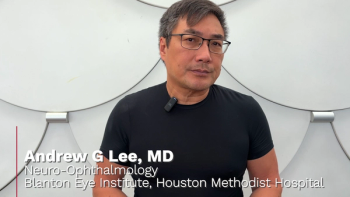
At ASRS 2025, Andrew G Lee, MD, gave key insight into the world of a neuro-ophthalmologist and why and when a retina specialist should consult a neuro-ophthalmologist
Panelists discuss how conversations with patients with geographic atrophy have evolved to emphasize the urgency of early intervention, with clinicians now able to offer hope through available treatments that can slow disease progression, while helping patients understand that their current vision represents the best they will ever have and leveraging family history awareness to motivate treatment consideration.
Panelists discuss how geographic atrophy (GA) presentations show clinical variability across patients while remaining consistently progressive, requiring a combination of imaging modalities including fundus photography, fundus autofluorescence, and OCT for diagnosis and monitoring, with OCT being most practical for routine clinical visits despite fundus autofluorescence serving as the gold standard for clinical trials.
The DRD Cure Accelerator, highlighted at the CCOI-Stanford Summit, is a global initiative advancing clinical research and collaborations to eliminate vision loss from diabetic retinal disease.

To mark Ophthalmology Times' 50th anniversary, we invited top experts to reflect on the most significant innovations in ophthalmology over the past five decades.