
At ARVO 2025, in Salt Lake City, Utah, Yuhua Zhang, PhD, talked about his presentation on in vivo imaging of retinal pigment epithelium metabolic function in age-related macular degeneration
At ARVO 2025, in Salt Lake City, Utah, Yuhua Zhang, PhD, talked about his presentation on in vivo imaging of retinal pigment epithelium metabolic function in age-related macular degeneration
At the 2025 ASCRS meeting, Dr Ang said small aperture IOLs can benefit all patients, especially those with complex corneas or who have undergone previous corneal refractive surgery
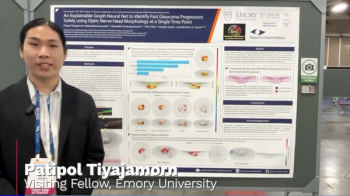
At ARVO 2025, in Salt Lake City, Utah, Patipol Tiyajamorn, talked about his poster on using graph neural networks to identify fast glaucoma progressors solely using optic nerve head morphology at a single time point
Retina specialist Priya Vakharia, MD, reveals promising ANX007 trial results, showing potential to prevent vision loss in geographic atrophy.
At ARVO 2025, in Salt Lake City, Utah, Anisha Kasi talked about her presentation on how her team used the TriNetX database, a large database of over 150 million patients worldwide, to validate the connection between hidradenitis suppurativa and inflammatory eye conditions.
At ARVO 2025, in Salt Lake City, Utah, Xiaolin Wang, MS, talked about her presentation on in vivo imaging of retinal pigment epithelium metabolic function in AMD.
At ARVO 2025, in Salt Lake City, Utah, Noemi Guemes-Villahoz, MD, PhD, talked about 12-month results of vision-related quality of life in myopic children using combination treatment with atropine and DIMS (Defocus Incorporated Multiple Segments) spectacle lenses.
At ARVO 2025, in Salt Lake City, Utah, Peng Shang, PhD, talked about her presentation on how the Y402H polymorphism of Complement Factor H (CFH), a major genetic risk factor for AMD, and chronic oxidative stress affect the lipid profile of retinal pigment epithelial (RPE) cells.
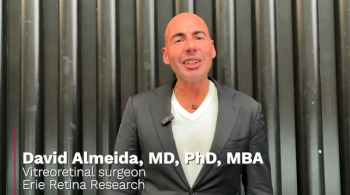
At ARVO 2025, in Salt Lake City, Utah, David Almeida, MD, MBA, PhD, talked about 12-month results from the PAVIA phase 2 trial of EYP-1901 in nonproliferative diabetic retinopathy.
Detecting mitochondrial dysfunction may give clinicians a chance to reduce the rate of cognitive decline in patients with dementia
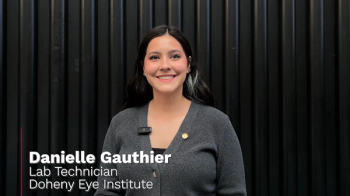
At ARVO 2025, in Salt Lake City, Utah, Danielle Gauthier talked about her poster on autosomal dominant Alzheimer disease in relation to optic nerve head drusen.
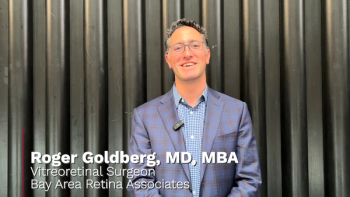
At ARVO 2025, in Salt Lake City, Utah, Roger Goldberg, MD, MBA, talked about his presentation on the effect of AREDS vitamins in geographic atrophy.
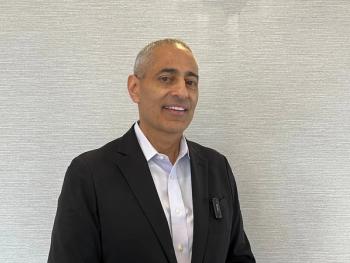
Ophthalmologist Tarek Hassan introduces new surgical approach for proliferative vitreoretinopathy, using precise small retinotomies instead of extensive retinal removal to improve patient outcomes.
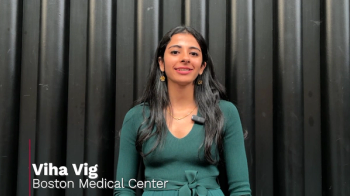
At ARVO 2025, in Salt Lake City, Utah, Viha Vig, talked about her poster presentation investigating the relationship between ocular and systemic mitochondrial diseases and dementia
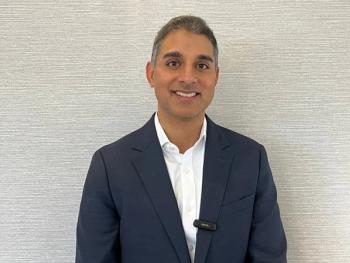
Ultra-wide field imaging shows nonperfusion and leakage independently predict diabetic retinopathy progression, suggesting earlier treatment with anti-VEGF or photocoagulation may prevent complications.
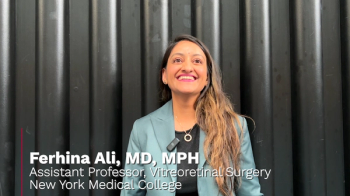
At ARVO 2025, in Salt Lake City, Utah, Ferhina Ali, MD, MPH, talked about her presentation on the early real-world use of aflibercept 8 mg in treatment-naive patients with neovascular age-related macular degeneration
Four-year study shows faricimab in treat-and-extend regimen maintains vision for diabetic macular edema patients with significantly fewer injections over time.
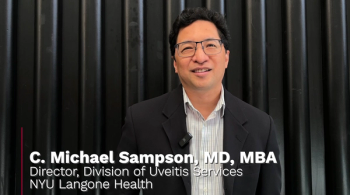
At ARVO 2025, in Salt Lake City, Utah, C Michael Samson, MD, MBA, gave insight into his data on immune cell profiling in birdshot retinochoroidopathy using single-cell RNA sequencing.
Kapil Mishra, MD, discusses an overview of radiation retinopathy and its challenges in treating uveal melanoma from his presentation "Radiation Retinopathy: Future Strategies,"
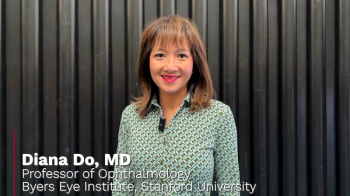
At ARVO 2025, in Salt Lake City, Utah, Diana Do, MD, gave an update on the LIGHTSITE III study of photobiomodulation for dry age-related macular degeneration.
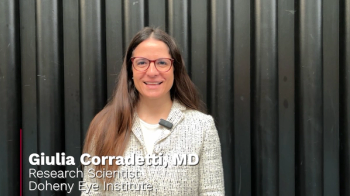
Giullia Coradetti, MD, offered insight into her research on a post-hoc analysis based on the GATHER 2 clinical trial data for geographic atrophy and age-related macular degeneration.
Duke professor Sharon Fekrat, MD, discusses AI-driven ophthalmology with smartphone diagnostics and robotic procedures, emphasizing global collaboration and innovative medical research.
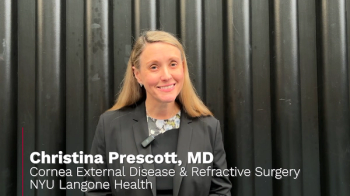
Christina Prescott, MD, talks about the rate of recurrence of stromal keratitis in the Zoster Eye Disease Study, both in the placebo and in the treatment group.
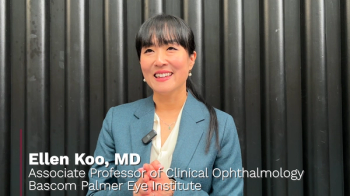
Ellen Koo, MD, presented data from first in-human clinical trials, looking at the results from magnetic cell therapy and reports on the efficacy and safety in the patients.
Perfluorohexyloctane demonstrated rapid symptom relief in patients with dry eye, with effects reported as early as 5 minutes after dosing.
A panelist discusses how nonimplant MIGS, such as viscocanaloplasty and viscoelastic delivery devices, offer long-term IOP reduction and medication savings, emphasizing their benefits for early intervention and improved postoperative quality of life, while noting limitations for more advanced glaucoma conditions.
A panelist discusses how Via360 viscodilation effectively reduced IOP and improved vision in a 90-year-old woman with chronic angle-closure glaucoma, offering a suitable surgical solution given her complex medication regimen and poor adherence.
A panelist discusses how differences in viscodilation devices—particularly the presence or absence of pressurized viscoelastic delivery—impact IOP outcomes in MIGS, highlighting the advantages and trade-offs of Omni, iTrack Advance, and Via360 based on surgical goals and ease of use.
A panelist discusses how combining cataract surgery with canaloplasty and trabeculotomy using the Via360 device offered an effective MIGS solution for a patient with open-angle glaucoma and poor medication adherence, reducing IOP while minimizing the need for filtering surgery.
A panelist discusses how selecting the right MIGS procedure based on individual patient factors—such as glaucoma severity, angle anatomy, and target IOP—can optimize outcomes and personalize glaucoma management.