
EURETINA's 25th anniversary meeting attracts 11,000 participants, showcasing cutting-edge research and fostering global networking among retina specialists.
EURETINA's 25th anniversary meeting attracts 11,000 participants, showcasing cutting-edge research and fostering global networking among retina specialists.
KOLs in the retina world reflect on advice they would share with fellows beginning their journey into retina, including the vast opportunities in healthcare and the importance of curiosity and collaboration for revolutionary advancements in retina medicine.
Today, over 150 practitioners from 20 countries in Australia, Asia and Europe enter their patient data into the Fight Retinal Blindness! Registry
Daniela Bacherini, MD, PhD, FEBO, said modern imaging modalities open up new possibilities in the peripheral retinal space.
KOLs in the retina world reflect on advice they would share with fellows beginning their journey into retina, including the vast opportunities in healthcare and the importance of curiosity and collaboration for revolutionary advancements in retina medicine.
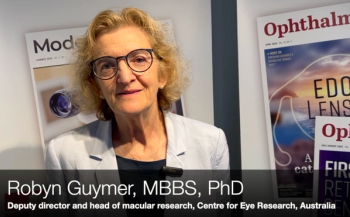
The ultimate goal of redefining endpoints is enabling earlier diagnosis and treatment, said Robyn Guymer, AM, MBBS, PhD, FRANZCO, FAHMS

We ask leading experts in the field what eye disease they would cure and why.
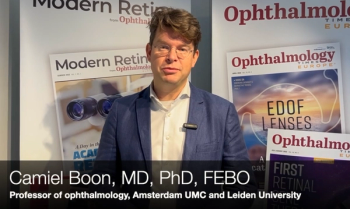
At the EURETINA congress, Prof Boon discussed controversies in treatment, some driven by critical prospective studies

We ask leading experts in the field what eye disease they would cure and why.
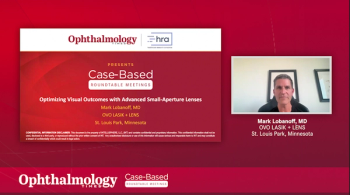
A panelist discusses how a 50-year-old male patient with stabilized keratoconus achieved excellent visual outcomes with an IC-8 small aperture IOL by targeting slight myopia to optimize the defocus curve, followed by adjunctive PRK to address central corneal astigmatism that was causing ghosting despite good uncorrected acuity, emphasizing the critical importance of controlling irregularities in the central 3-mm zone and ensuring nighttime pupil size remains under 5 mm for optimal results.
A panelist discusses how a 40-year-old female patient seeking freedom from glasses experienced a complicated course with a light adjustable lens that resulted in poor visual quality and 22 clinic visits, but was successfully salvaged through lens exchange to an IC-8 small aperture IOL after demonstrating the benefits with a simple pinhole occluder test.
A panelist discusses how the IC-8 Apthera small aperture IOL functions as a pinhole-based optical system that blocks distorted peripheral light while allowing focused light from both distance and near targets to travel through the same pathway, creating an extended depth of focus that ophthalmologists have long awaited in the United States.
We ask leading experts in the field what eye disease they would cure and why.
KOLs in the retina world reflect on advice they would share with fellows beginning their journey into retina, including the vast opportunities in healthcare and the importance of curiosity and collaboration for revolutionary advancements in retina medicine.
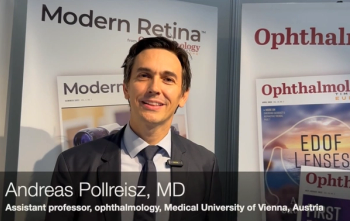
At the EURETINA congress, Prof Pollreisz shared his contemporary approach to multimodal imaging in patients with diabetes.
During the EURETINA session, Stela Vujosevic, MD, PhD, FEBO, posed questions about the current staging for diabetic macular edema and diabetic retinopathy.

We ask leading experts in the field what eye disease they would cure and why.
An expert discusses how she managed an unusual case of a patient with high myopia with angle closure and elevated intraocular pressure (IOP) through cataract extraction with toric lens implantation, combined with canaloplasty and endocyclophotocoagulation (ECP) to address both the refractive needs and anatomical causes of the condition.
A panelist discusses how the iDose implant is surgically placed into the scleral wall with precision, can be repositioned if needed, and remains stable even after procedures like goniotomy, making it a versatile option in glaucoma care.
An expert discusses how she treated a 70-year-old patient with high myopia with mild glaucoma and cataracts using a light adjustable lens combined with an iDose travoprost sustained-release implant to achieve spectacle-free and drop-free outcomes while maintaining excellent pressure control.
A panelist discusses how procedural pharmaceuticals like Durysta and iDose offer sustained drug delivery solutions tailored to patient needs, providing long-term efficacy and reducing dependence on daily eye drops.
A panelist discusses how interventional glaucoma emphasizes early, proactive treatment strategies to reduce IOP and medication burden while addressing patient adherence and long-term disease control.
An expert discusses how modern glaucoma treatment has evolved from a reactive one-size-fits-all approach of multiple drops followed by major surgery to a proactive, individualized strategy that emphasizes early procedural interventions to minimize medication burden and vision loss.
Artificial intelligence is quickly expanding the breadth and depth of information clinicians can interpret, Prof Uy said
At the EURETINA meeting, Professor Uy described the ways artificial intelligence can augment an existing imaging workflow.
From lids to retina, the 2-day event on September 26 and 27, 2025, at the Margaritaville Hollywood Beach Resort, Florida, offers a collaborative and comprehensive experience with actionable takeaways.
We ask leading experts in the field what eye disease they would cure and why.