
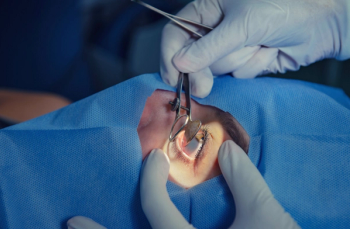
Physicians often use lenses due to abnormal corneal topography or high myopia

Physicians often use lenses due to abnormal corneal topography or high myopia

Advances in treatment and surgical techniques have transformed patient care.

Goniotomy-viscodilation cataract surgery controls IOP without medications.

Investigators reviewed visual acuity, multi-modal retinal imaging, electroretinography, family history.

Thanks to researchers like Russell N. Van Gelder, MD, PhD, the possibility of restoring sight to patients blinded by age-related macular degeneration or retinitis pigments is another step closer to reality.

Innovation, change has dominated the glaucoma specialty over the years.

During AAO 2020, Cathy G. Cohen, MHSA, CAE, AAO vice president for governmental affairs, offered some optimism for the future of health care under the Biden administration.

The US Food and Drug Administration has issued an emergency use authorization for the first COVID-19 diagnostic test for self-testing at home and that provides rapid results.

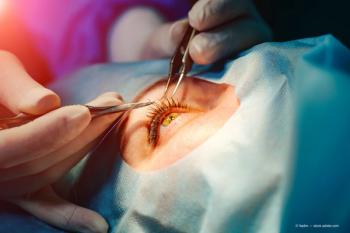
Advances in laser-vision correction provide visual results that often surpass 20/20.

Science is being tapped by professional sports league to train and develop officials.
A unique Behind-the-Scenes series from the American Academy of Ophthalmology Truhlsen-Marmor Museum of the Eye kicks off November 18, from noon to 1 pm Pacific, with “The National Trachoma Service.” Register now for this event.

Programs use detection and treatment to ease burden of eye disease.


When it comes to using a breath shield as protection against the spread of the coronavirus, bigger may be better, according to investigators.

Investigators looked at trends by geographic variation in practice patterns, perceptions toward opioids, and patient population
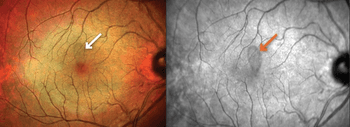
Bradley Smith, MD, presents at AAO 2020 on how fingolimod 0.5 mg, a first-line treatment for multiple sclerosis, may reduce both the number of relapses and disease progression in patients with relapsing-remitting MS as well as the incidence of uveitis.
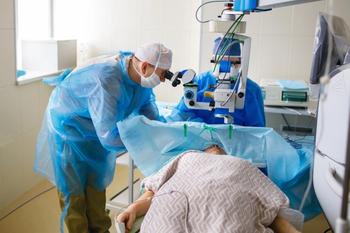
Speaking during the American Academy of Ophthalmology’s virtual 2020 annual meeting, Neal H. Shorstein, MD, explained how physicians at Kaiser Permanente have been using a prophylactic drop-free drug regimen before cataract surgery for more than a decade. Their regimen is so streamlined that the only drop that patients receive in anticipation of cataract surgery is a supplemental dilation drop instilled preoperatively while they are still in the holding area.
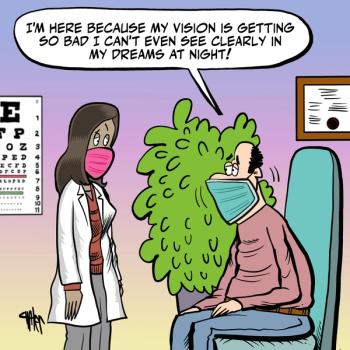
Check out the latest cartoon!

Rudy Nuijts of the University Eye Clinic Maastricht, the Netherlands, discusses the highlights of his AAO 2020 presentation on a combination treatment regimen for lowering the incidence of cystoid macular oedema following category surgery.
Cynthia Matossian, MD, FACS, ABES presents the highlights of a poster on outcomes with dexamethasone intraocular suspension 9% and concomitant postoperative anti-inflammatory medications.
Kristen Brotherson, vice president, US surgical marketing for Alcon, discusses some of the recent advances in cataract surgery-related technologies, including a new advanced lens for patients with presbyopia (AcrySof IQ Vivity IOL).
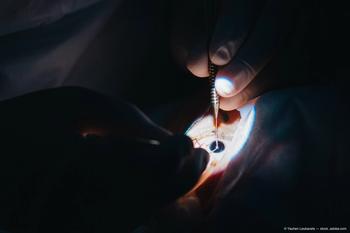
Tamer Mahmoud, MD, PhD, discusses autologous retinal transplant (ART) for macular holes, a procedure he developed, which is providing anatomic hole closure in the vast majority of cases as well as increases in visual acuity.

In a presentation at the American Academy of Ophthalmology’s virtual 2020 annual meeting, Amy K. Hutchinson, MD, explained that while Myopia has been occurring at epidemic rates worldwide, research has found that the use of orthokeratology and multifocal contact lenses can provide clinically meaningful reductions in myopia progression.

During a presentation at the American Academy of Ophthalmology’s 2020 virtual annual meeting, Kathleeen B. Digre, MD, details how a headache in conjunction with visual loss is a scenario that requires an in-depth examination, including evaluation of the visual fields, pupils, and fundus to gather clues to the diagnosis.

Glenn J. Jaffe, MD, presents a summary of the results of a confirmatory study on a previous Phase III trial that examined sustained drug delivery for the treatment of uveitis, as well as data on the 36-month results in the second, confirmatory phase 3 study of YUTIQ.
Ram Liebenthal, U.S. general manager for Heidelberg Engineering, discusses how the company continues to invest in the Spectralis platform in terms of hardware and software improvements.
Josh Anderson, head of U.S. retina sales and marketing for Alcon, outlines what attendees will learn including product updates, new technologies, and practice management materials for ophthalmologists and their patients during the COVID-19 pandemic.

Ted Leng, MD, MS, Byers Eye Institute at Stanford, and medical advisor for Verana Health, talks about data insights for retinal surgeons. Steven D. Schwartz, MD, Stein Eye Institute, UCLA, highlights his AAO presentation, “New Insight into Real-World U.S. Injection Data."
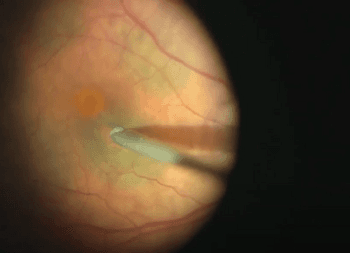
During Day 1 of AAO 2020, Carl Awh, MD, discusses the Micro-Vacuum Pick, a device for peeling internal limiting membranes that's providing vitreoretinal surgeons an alternative to forceps during surgeries.