














Lloyd Paul Aiello, MD, moderated a panel at the American Academy of Ophthalmology’s 2022 annual meeting in Chicago that focused on diabetic retinopathy. He shares some of the highlights of this session.

Lloyd Paul Aiello, MD, moderated a panel at the American Academy of Ophthalmology’s 2022 annual meeting in Chicago that focused on diabetic retinopathy. He shares some of the highlights of this session.

Genentech announced this week that faricimab-svoa (Vabysmo) achieved its primary endpoint of non-inferiority compared to aflibercept in RVO in the BALATON and COMINO clinical trials.

A previously uncharacterized area of the protein known as RPE65 spontaneously turns spiral-shaped when it encounters intracellular membranes, or thin structures that surround different parts of a cell.

According to investigators, surgeons should be aware of the high prevalence of zonular weakness and cystoid macular edema, which may warrant additional preparation in these patients.
The 10-year retrospective ALOFT study details the importance of digital remote monitoring for patients diagnosed with age-related macular degeneration.

Complimentary registration is open for this unique meeting designed to prepare young ophthalmologists for success in early practice.
A team of investigators evaluated VA outcomes after cataract surgery and the factors associated with good visual outcomes in a population of patients diagnosed with type 2 diabetes.

There literally are not enough hours in a day to allow physicians to comply with all the recommendations emanating from the various constituencies involved in issuing guidelines.
Harit Bhatt, MD, a Chicagoland-area retinal surgeon, shared his experience with the LEAF and LION portable lasers during a conversation at the American Academy of Ophthalmology’s 2022 annual meeting in Chicago.

The COVID-19 pandemic has led to greater comfort with robotic telepresence in eye screenings.

The company noted that the pediatric exclusivity determination is based on data from two Phase 3 trials – BUTTERFLEYE and FIREFLEYE.
An interactive agenda at the Ophthalmology Times® EyeCon 2022 at the JW Marriott Marco Island Beach Resort in Florida will foster an open exchange of ideas with fellow attendees from across the United States.
During a conversation at the American Academy of Ophthalmology’s 2022 annual meeting in Chicago, Rishi Singh, MD, offered highlights of the two-year results of faricimab in a pair of phase 3 clinical trials.
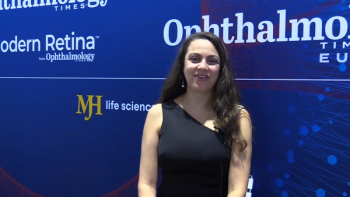
Lisa M. Nijm, MD, JD, shares highlights from the Real World Ophthalmology 'After Dark' networking reception held at the American Academy of Ophthalmology annual meeting. The next Real World Ophthalmology meeting on November 5—which will be virtual—will cover important clinical, business, and personal growth areas for young ophthalmologists.
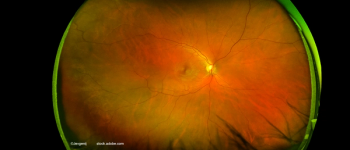
Baseline age, best-corrected visual acuity, and central subfield thickness play role in predicting the efficacy of both drugs.
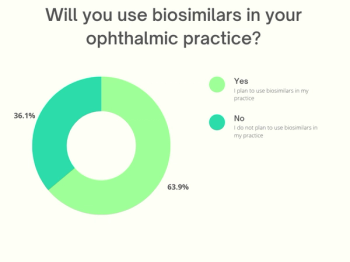
Results from our recent poll indicate that many ophthalmologists (63%) plan to use biosimilars in their clinical practice.
Chinese investigators found that obesity affects retinal structures in different ways depending on whether the obesity is generalized or abdominal.

According to University of California, Irvine researchers, current preclinical successes and clinical genome editing approaches for treating inherited retinal degenerative disease and stresses there is hope that in vivo gene editing will be the future treatment paradigm for these diseases.

Hear how ophthalmologists and optometrists in the United States are recognizing the importance of this year's awareness day.

Nanoscope Therapeutics Inc. announced the FDA has granted Fast Track Designation to MCO-010, an ambient-light activatable multi-characteristic opsin optogenetic monotherapy to restore vision in blind patients, for the treatment of retinitis pigmentosa via intravitreal injection.
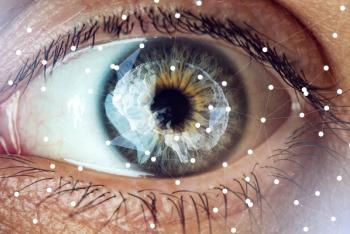
According to a study, vision loss and depression are common conditions with major health implications, but exactly why this association occurs remains a mystery.

According to a study by researchers at the Scheie Eye Institute in the Perelman School of Medicine at the University of Pennsylvania, patients’ low-light sensitivity improved by factors of thousands in a clinical trial.

A team of National Institutes of Health scientists have shed light on how genetic architecture determines gene expression, tissue-specific function, and disease phenotype in blinding diseases.
Murtaza Adam, MD, a vitreoretinal specialist with Colorado Retina Associates, shares a few principles he has found helpful when engaging with industry or trying to execute on your own innovation.
UCI team demonstrates the adult brain has the potential to partially recover from inherited blindness.