





Retina
Latest News
Advertisement
Video Series


CME Content











Advertisement

EyePoint Pharmaceuticals has dosed the first patient in the LUCIA Phase 3 trial of Duravyu for wet AMD. The study evaluates Duravyu’s efficacy, durability, and re-dosing every 6 months in both treatment-naïve and previously treated patients. Topline data is anticipated in 2026.

Prevent Blindness announces its fourth annual Geographic Atrophy Awareness Week, December 2 to 8, 2024. The organization offers free educational resources, including videos and guides, and supports GA patients through programs like Living Well With Low Vision.

Preclinical research highlights mRNA-based therapy's potential to inhibit scar tissue and abnormal blood vessel growth in proliferative vitreoretinopathy, addressing a critical unmet need in treatment.

While studies of obesity and tobacco and alcohol consumption showed that many chronic diseases are affected by the factors being studied, none had mentioned an effect on glaucoma progression.

In a study, a team of Korean researchers developed an AI model using OCT images to predict neovascular AMD treatment outcomes after anti-VEGF injections. The model highlights AI’s potential in personalized ophthalmic care.
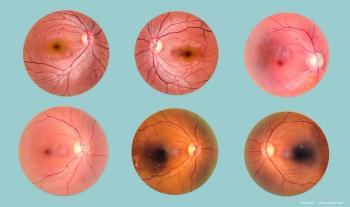
OCU410ST is indicated for the treatment of ABCA4-associated retinopathies including Stargardt disease, retinitis pigmentosa and cone-rod dystrophy 3 (CORD3)

Early results suggest participant diversity and novel measures will enable new, artificial intelligence-driven insights. As the study evolves, it could lead to significant advancements in understanding how environmental exposures contribute not only to diabetes but also to its complications, including those affecting eye health, such as diabetic retinopathy.

A study by a team of Chinese researchers highlights the potential of optical coherence tomography angiography (OCTA) in detecting retinal microvascular damage in renal hypertension patients. OCTA identifies reduced vascular density in key retinal regions, offering a noninvasive tool for early diagnosis and systemic disease management.

The investigators conducted a randomized controlled trial of 60 patients who underwent monitored anesthesia care sedation for oculoplastic procedures from August 2018 to November 2020.

Avant Technologies and Ainnova Tech have partnered to develop a low-cost retinal camera integrated with Ainnova’s Vision AI platform for early detection of ocular and systemic diseases. The technology will be marketed as a SaaS platform for primary care settings.

After closing, the combined company is expected to operate under the name Kalaris Therapeutics, Inc.

ARVN001 is indicated for the treatment of uveitic macular oedema and certain other ophthalmic indications

News
The California Institute for Regenerative Medicine has funded Keck School of Medicine of USC translational research advancing a therapy for dry age-related macular degeneration, one of the leading causes of blindness in older adults.

OPUVIZ, previously known as the biosimilar candidate SB15, has been approved for the treatment of nAMD, DME and other retinal diseases

CHMP issues positive opinion for marketing authorisation of aflibercept biosimilar FYB203 (Formycon)
The positive opinion marks a key regulatory step towards the approval of FYB203, which will go by the trade names AHZANTIVE and Baiama in the European Union

Connect, learn, and innovate in a family-friendly atmosphere: What to expect at EnVision Summit 2025
The EnVision Summit, co-founded by Bonnie An Henderson, MD, is a unique family-oriented, multispecialty ophthalmology CME conference, along with a newly introduced optometry track. Henderson sits down with Ophthalmology Times to talk about the 2025 conference that will take place February 14 to 17 at the Caribe Hilton San Juan, in Puerto Rico.

The CRL comes in response to a supplemental New Drug Application for Izervay, a treatment for geographic atrophy secondary to age-related macular degeneration

Ocugen announces positive preliminary data from OCU410 Phase 1 clinical trial for geographic atrophy
News
Key findings include reduced lesion growth, retinal tissue preservation, and improved visual function, demonstrating significant potential for the treatment option.

Optical coherence tomography will be in all eye care services by October 2025

Program director and co-founder Bonnie An Henderson, MD, sits down with Ophthalmology Times to talk about how the annual conference is a unique blend of cutting-edge science, professional growth, and community. The 2025 conference will take place February 14 to 17 at the Caribe Hilton San Juan, in Puerto Rico.

Options empower patients and providers to decrease treatment burden

Arun Upadhyay, PhD, discusses new study findings from trials of OCU400 (Ocugen)

News
A recent cohort study revealed low adoption of FDA-approved AI-based diabetic retinopathy detection, with less than 5% of diabetic patients receiving ophthalmic imaging. Researchers emphasize the need for improved awareness, cost-effectiveness, and integration to increase diabetic retinopathy screening rates.

The Healthcare Private Equity team has advised Retina Consultants of America (RCA) and Webster Equity Partners in the sale of RCA to Cencora.
Advertisement
Advertisement