

















Complimentary registration is open for this unique meeting designed to prepare young ophthalmologists for success in early practice.


Complimentary registration is open for this unique meeting designed to prepare young ophthalmologists for success in early practice.

The COVID-19 pandemic has led to greater comfort with robotic telepresence in eye screenings.

The company noted that the pediatric exclusivity determination is based on data from two Phase 3 trials – BUTTERFLEYE and FIREFLEYE.

An interactive agenda at the Ophthalmology Times® EyeCon 2022 at the JW Marriott Marco Island Beach Resort in Florida will foster an open exchange of ideas with fellow attendees from across the United States.
Baseline age, best-corrected visual acuity, and central subfield thickness play role in predicting the efficacy of both drugs.
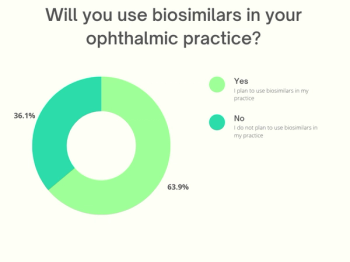
Results from our recent poll indicate that many ophthalmologists (63%) plan to use biosimilars in their clinical practice.

The therapy may offer novel treatment strategy with unique mechanism, modality for patients diagnosed with dry age-related macular degeneration.

A team of National Institutes of Health scientists have shed light on how genetic architecture determines gene expression, tissue-specific function, and disease phenotype in blinding diseases.

Murtaza Adam, MD, a vitreoretinal specialist with Colorado Retina Associates, shares a few principles he has found helpful when engaging with industry or trying to execute on your own innovation.

This post-hoc analysis was performed to evaluate immunogenicity over the long term.
The setting for this year's Ophthalmology Times® EyeCon 2022 at the JW Marriott Marco Island Beach Resort in Florida will provide the opportunity for clinical interaction between faculty and attendees along with the practicality of information.

The AVONELLE-X long-term extension study will continue to evaluate the efficacy, durability, and safety of faricimab in patients with neovascular AMD.
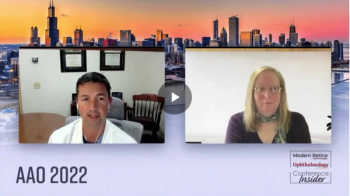
At the 2022 American Academy of Ophthalmology meeting, Justis Ehlers, MD, presented a talk titled, "Defining the Fluid Problem in Neovascular AMD: To Dry or Not to Dry?"

The authors noted that the proportion of patients losing fewer than 15 letters from the baseline BCVA score in the study eye was comparable between the two groups.

The clinical trial is examining the efficacy of two doses of UBX1325 compared to every other month treatment with aflibercept through 24 weeks.
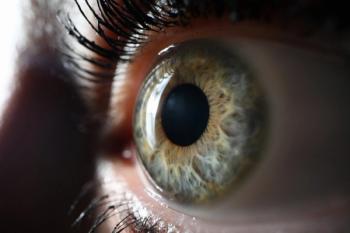
Faricimab simultaneously targets and inhibits two disease pathways involving Ang-2 and VEGF-A linked to a number of vision-threatening retinal conditions.

Researchers found that the rate of visual decline increased significantly in patients with age-related macular degeneration (AMD) during the COVID-19 lockdown who were followed over time.

LUNA trial will evaluate the 2x10^11 vg/eye (2E11) and a new lower 6x10^10 vg/eye (6E10) dose of Ixo-vec, with enhanced prophylactic steroid regimens in patients requiring frequent anti-VEGF injections. Interim data anticipated throughout 2023.
Heru debuts dark adaptation, the newest modality added to its wearable health and wellness platform’s vision screening line-up.

The first stage of the study will evaluate the safety and relative pharmacodynamic effect of different doses of subcutaneously administered D-4517.2 compared to intravitreal injection of aflibercept, an approved therapy, in both wet AMD and DME patients up to 12 weeks.

ONS-5010 is an investigational ophthalmic formulation of bevacizumab under development to be administered as an intravitreal injection for the treatment of wet AMD and other retinal diseases.
Researchers in Trinity’s School of Genetics and Microbiology developed a new gene therapy, ophNdi1, that is the first of its kind to directly target mitochondrial function in cells that are malfunctioning in AMD.

According to the company, the clinical trial is reviewing EYP-1901, an investigational sustained delivery anti-vascular endothelial growth factor (anti-VEGF) treatment for wet age-related macular degeneration (wet AMD).
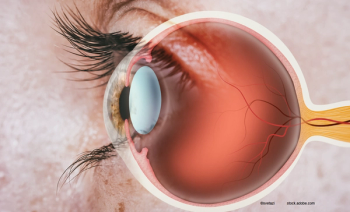
Retina indications for which ranibizumab-eqrn is interchangeable include neovascular (wet) age-related macular degeneration; macular edema following retinal vein occlusion; diabetic macular edema; diabetic retinopathy, and myopic choroidal neovascularization.

The doctors will join the Cataract and Primary Eye Care, Glaucoma, and Retina Services.