


















Nathan Steinle, MD, discusses top-line results of the OAKS and DERBY trials, testing the efficacy of pegcetacoplan for the treatment of geographic atrophy.

Nathan Steinle, MD, discusses top-line results of the OAKS and DERBY trials, testing the efficacy of pegcetacoplan for the treatment of geographic atrophy.
Carl Regillo, MD, takes us through the history of the port delivery system, from ideation to FDA approval.

Susvimo, previously called the Port Delivery System with ranibizumab, is a first-of-its-kind therapeutic approach for wet AMD and may help people with the disease maintain their vision with as few as two treatments per year.

During a presentation at the EURETINA 2021 Virtual Congress, Prof. Ben Burton detailed how dry AMD patients treated with photobiomodulation therapy have seen improvements in best-corrected visual acuity 9 months after treatment.
During a presentation at the EURETINA 2021 Virtual Congress, Daniel Jones, PhD, discussed GA and emphasized the need for additional study to gain a better understanding of the burden experienced by patients.

In a presentation at the EURETINA 2021 Virtual Congress, Cristina Cristian, MD, noted that an injection of brolucizumab treatment in patients with neovascular age-related macular degeneration led to a median improvement in visual acuity (VA) of 10.5 letters and the drug was well-tolerated.

Speaking during the EURETINA 2021 Virtual Congress, Marta Belmonte-Grau, MD, discussed the potential risk for posterior capsular rupture during cataract surgery.

Investigators find imaging method may be useful to monitor disease progression.
Novel treatments may be on the horizon for the advanced form of age-related macular degeneration.

Ophthalmologists face challenges of drug delivery for retinal diseases.

Key takeaways from a discussion on the management of age-related macular degeneration, diabetic macular edema, and inherited retinal disease and insight regarding what to look forward to as the field advances.

The impact of the COVID-19 pandemic on the management of patients with retinal disorders and considerations for how new practices may be adopted into future practice.
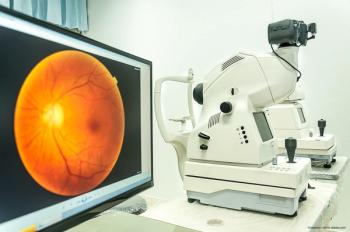
Option detects treatment-naive nonexudative macular neovascularization in eyes with dry age-related macular degeneration.

Findings from the Archway trial showed that the PDS effect is long-lasting, consistent, and comparable to those seen with monthly injections.
Dr Mariya Moosajee comments on the next generation of gene therapy for inherited retinal disease and highlights various systems under investigation.

Considerations for treating retinal disorders with sustained-release drug delivery implants in an effort to address current treatment challenges in the field.

In response to a previously published article, three ophthalmologists present their views on intravitreal pharmacotherapy injections.
An overview of delivery systems under investigation for retinal disorders and implications for future use.
A discussion highlighting new agents under investigation for retinal disorders and implications for future use based on data revealed in more recent clinical trials.

Outlook Therapeutics completes Phase 3 NORSE TWO safety and efficacy trial for ONS-5010, an investigational ophthalmic formulation of bevacizumab for treatment of wet AMD.
Ophthalmologists highlight recent treatment advances in diabetic macular edema and wet age-related macular degeneration.

If approved, Genentech’s treatment of faricimab will be the first and only medicine targeting two distinct pathways, Ang-2 and VEGF-A, that often cause retinal diseases that may cause vision loss.
Types of delivery methods currently being explored to improve treatment for patients with retinal disorders.

Following a discussion regarding drug delivery challenges in retinal disease, a panel of global experts suggest what types of technological requirements and improvements they would like to see occur in the field.

Challenges associated with delivering therapies currently available to treat retinal disorders and methods being explored to improve drug delivery to patients.