

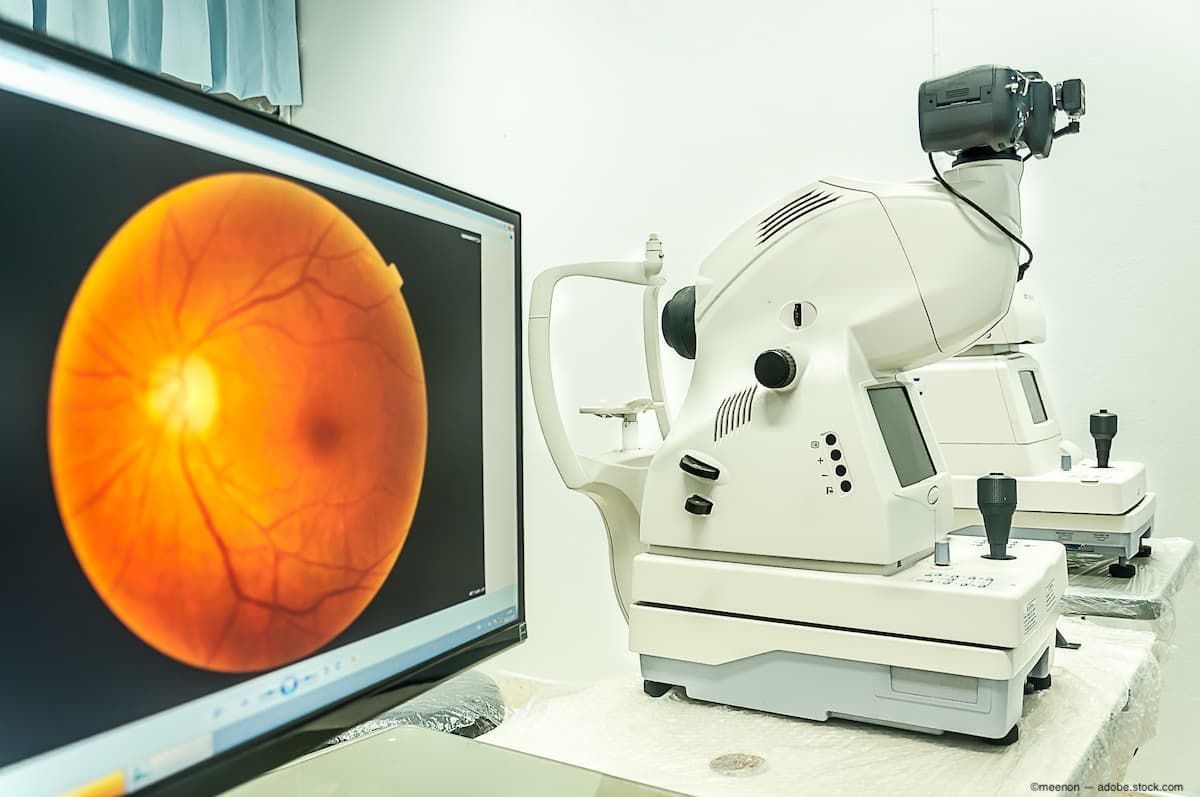

















Investigators found that Photobiomodulation may be a valid therapeutic option to treat large soft drusen and drusenoid pigment epithelial detachments in dry AMD and may slow the natural disease course.
Investigators found that Photobiomodulation may be a valid therapeutic option to treat large soft drusen and drusenoid pigment epithelial detachments in dry AMD and may slow the natural disease course.

In a presentation at the Association for Research in Vision and Ophthalmology annual meeting in New Orleans, SB15 demonstrates comparable efficacy, safety, immunogenicity, and pharmacokinetics profiles to reference aflibercept up to Week 56.

Deborah Ferrington, PhD, spoke with on our on-site team at the 2023 ARVO annual meeting in New Orleans about her presentation on using human donor tissue to identify the mechanism responsible for the death of the retinal pigment epithelium (RPE).

Eyevensys reported data showing the efficacy and durability of EYS809, a dual-gene plasmid in development for the treatment of wet age-related macular degeneration (AMD).

At ARVO in New Orleans, Luxa Biotechnology shared an update on the progress of a Phase 1/2a clinical trial evaluating transplantation of RPESC-RPE-4W to treat dry age-related macular degeneration (AMD).
Therapies to target geographic atrophy are in sight.

In a presentation during the Association for Research in Vision and Ophthalmology (ARVO) Annual Meeting, being held at the Ernest N. Morial Convention Center in New Orleans, Luxa Biotechnology offered details of a clinical trial evaluating transplantation of cells derived from adult retinal pigmented epithelium stem cells to treat dry AMD.

According to data presented at the Association for Research in Vision and Ophthalmology Annual Meeting in New Orleans, post-hoc analysis from the GATHER trials, for the first time, signals that reduced rate of vision loss in patients receiving avacincaptad pegol was correlated with reduced geographic atrophy (GA) growth.
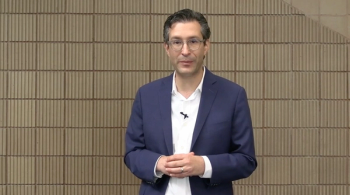
Ophthalmology Times® talked with Carl Danzig, MD, FASRS, at this year's ARVO meeting on the post hoc analysis for the GATHER trials regarding vision loss and patients receiving ACP 2/mg versus sham.

According to data presented at the Association for Research in Vision and Ophthalmology annual meeting in New Orleans, staggered administration of Ixo-vec in non-human primates showed peak aflibercept protein levels in the second eye within the targeted therapeutic range, supporting the potential for bilateral administration.

SB15 (Samsung Bioepis) has shown similar efficacy, pharmacokinetics, safety, immunogenicity to aflibercept after 56 Weeks in phase 3 clinical trial.
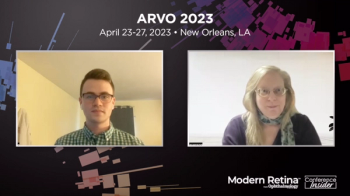
David Szanto, a medical student at Stony Brook, and working with the Department of Neurology at the Icahn School of Medicine at Mount Sinai, describes how an algorithm finds recurring patterns in the visual fields and the ganglion cell-inner plexiform layer thicknesses, and helps clinicians understand how prevalent those patterns are throughout the entire data.

Ophthalmology Times® talked with Deborah Ferrington, PhD, about her presentation on using human donor tissue to identify the mechanism responsible for the death of the retinal pigment epithelium.
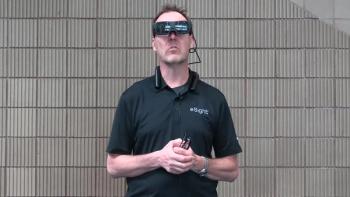
Ophthalmology Times® talked with Roland Mattern, Director of Sales and Marketing for eSight and eSight User Gary Foster at this year's ARVO meeting about eSight Go, the new model of smart glasses for low vision enhancement

A team of researchers used gene expression, epigenetic, and gene regulation analyses to discover genes, pathways, and regulatory features relevant to age-related macular degeneration (AMD).

The company said this week it plans to open the trial for enrollment this quarter and expects topline results by the third quarter of 2024.

Complement Therapeutics GmbH secured financing to continue the development and complete a Phase Ib clinical proof of concept of its lead product CTx001, an AAV gene therapy for the treatment of GA secondary to dry-AMD.
Aviceda Therapeutics announced that the FDA has cleared the Investigational New Drug application for AVD-104, enabling the company to proceed with initiation of Phase 2 clinical trials.
Study results see brolucizumab as a viable treatment for patients with neovascular age-related macular degeneration (nAMD) refractory to other anti-VEGF drugs.

The clearance of the Investigational New Drug Application will allow the company to initiate Phase 2 trials of the drug for the treatment of geographic atrophy (GA) secondary to age-related macular degeneration (AMD).

A research team made up of scientists from a trio of European universities and led by a Northumbria University academic, has received funding to research age-related macular degeneration.

According to National Eye Institute researchers, the variants generate malformed proteins that alter the stability of the membrane attack complex, which may drive a chronic inflammatory response in the retina.

The company could also consider partnerships or licensing agreements for some drugs of its ophthalmology pipeline, including pegcetacoplan.

A team of researchers at Buck Institute, working with Google Health and Zuckerberg San Francisco General Hospital, are studying the eye as a window into human aging.

GAL-101 is a Phase 2/3-ready small molecule used to treat ophthalmic indications with high unmet medical need.