
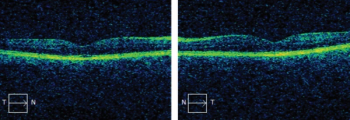
Investigators find value in screening for macular disease in preoperative evaluation

Investigators find value in screening for macular disease in preoperative evaluation

Susan Coultas, PhD, and Preeya Gupta, MD, share their hopes for continued innovation in the ophthalmic space — including dry eye and retina — as well as the importance of the clinical research process.

Candidate continues to demonstrate encouraging safety, tolerability, and efficacy
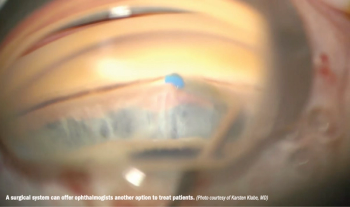
Investigators note the need for less medication over 12-month period
Checking own work postoperatively offers value to ophthalmologists

Sharing postoperative care can lead to better work-life balance

The FDA on Sunday issued an emergency use authorization to allow treatment with COVID-19 convalescent plasma for patients who are hospitalized with the disease.

Pandemic is disrupting clinical facilities, putting individuals’ ocular health at risk

Michael X. Repka, MD, vice chair of clinical practice at Wilmer Eye Institute (Johns Hopkins University) speaks on the institution's latest protocol changes allowing for the resumption of elective surgery as well as the adaptations clinicians have had to make in order to ensure the continuation of clinical practice at Wilmer Eye Institute.
Summer is typically a busy and spirited season for ophthalmology match candidates. Medical students endeavor to build a personal brand, draft their personal statements, update their curriculum vitae, and secure letters of recommendation in preparation for their ophthalmology residency applications.
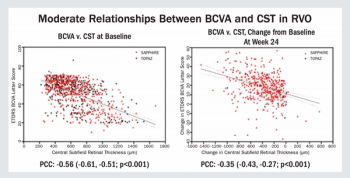
Research results can help ophthalmologists treating patients with macular edema

Investigators conducted a slit lamp biomicroscope experiment, simulating a patient undergoing an eye examination and then spontaneously coughing, spraying droplets.
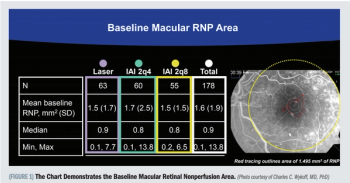
Investigators examine and analyze outcomes of aflibercept compared with laser treatment in patients
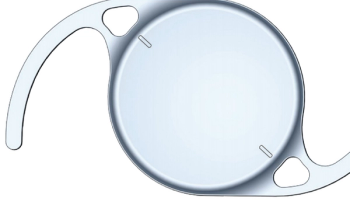
No matter the technology used, it is necessary to customize the implant choice based on the patient’s needs to achieve optimal refractive outcomes.

Ophthalmologists share their outlook for the current state and future of the ophthalmic profession, how coronavirus pandemic has altered the profession as well as how —now, more than ever — patient care remains a number one priority for ophthalmologists.

One ophthalmologist offers insight on how to help patients treat their dry eye symptoms when working from home amid the pandemic.

Despite current flexibility, future enforcement could prove to be troublesome

Accreditation programs demonstrate a strong commitment to excellence in patient safety, standardized quality, fiscal responsibility, and collaboration between patients and health care workers.

The use of a human monoclonal antibody (Narsoplimab, Omeros) to treat acute respiratory distress syndrome (ARDS) associated with COVID-19 resulted in recovery and survival of the affected patients.
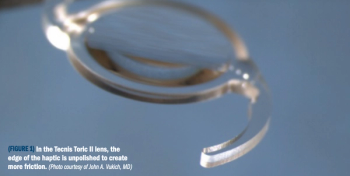
Lens offering surgeons a reassuring amount of resistance to movement in the eye

According to a recent study, communities across the country are dealing with an increased number of mental health challenges due to “COVID-19–associated morbidity, mortality, and mitigation activities.”

Emerging technology may be able to fill existing imaging diagnostic gaps

Retina specialists Caesar Luo, MD, of Bay Area Retina Associates (Walnut Creek, CA) and S.K. Steven Houston III, MD, of Florida Retina Institute, share their outlooks on retina innovation in the "year of the eye" amid a global pandemic.
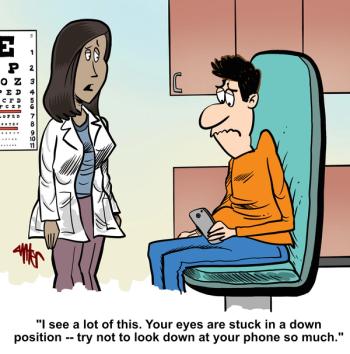
Diagnosing a 'down looker'

To prepare students and their families for the new school year, the American Academy of Ophthalmology is sharing a back-to-online school checklist to help prevent digital eye strain.

COVID-19 pandemic is accelerating cultural paradigm shift for medical professionals
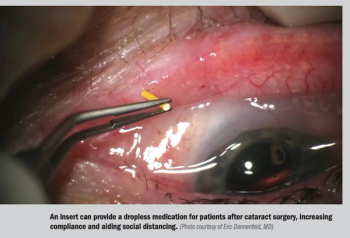
Following cataract surgery, the dropless option is proving to be a preferred method during recovery

The FDA this week granted the fourth Orphan Drug Designation for a novel gene therapy product candidate (OCU400, Ocugen Inc.) in the treatment of PDE6B gene mutation-associated retinal diseases.
Researchers note that more study of conjunctivitis is needed in patients with COVID-19
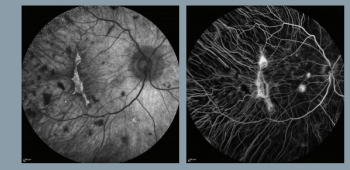
Gene therapy to treat choroideremia shows potential for maintaining or improving vision