

Latest Conference Articles
Advertisement

The two meetings will be held concurrently from December 4-7 in Florence, Italy.
Advertisement

Discover cutting-edge retinal technologies and treatments at the FLORetina International Congress in Florence, featuring top exhibitors and expert presentations.



AAO 2025 revealed that true-color widefield imaging, AI-powered home OCT, and refined FAERS analyses are collectively transforming retinal diagnostics into a more precise, continuous, and safety-aware system.
Advertisement

Chhablani discusses key findings on retinal vasculitis from the FAERS database, highlighting trends and safety in intravitreal treatments.
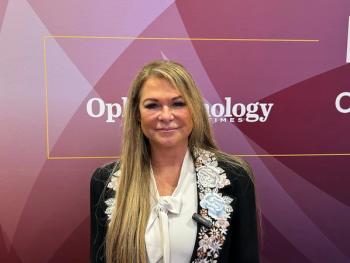
AnnMarie Hipsley, DPT, PhD, explores innovative approaches in ocular biomechanics, shifting focus from lenses to holistic treatments for presbyopia, enhancing vision care.
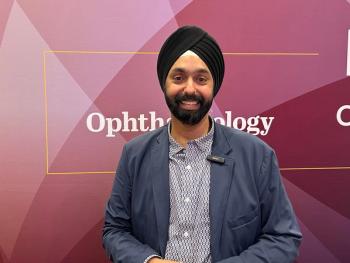
Inder Paul Singh, MD, discusses groundbreaking findings on the iDose implant's efficacy and safety in glaucoma management during cataract surgery.
Advertisement
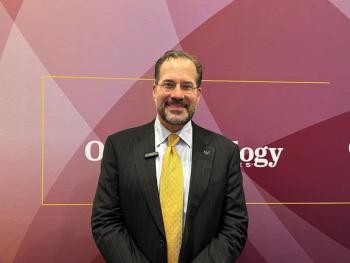
David A. Eichenbaum, MD, FASRS, discusses findings on UBX-1325 for diabetic macular edema, highlighting a shift towards personalized, multi-mechanism therapies.
Hipsley shares insights into ocular biomechanics and dynamic range of focus, that can help the field to work toward vision restoration and increase eye health.

Research on aflibercept 8 mg reveals promising real-world outcomes for treating wet AMD and diabetic macular edema, enhancing vision and safety.
Discover how RGB technology enhances eye disease diagnosis, improving accuracy and efficiency in clinical practice with advanced imaging techniques.
Advanced imaging technologies like intraoperative OCT and heads-up displays enhance surgical precision and patient outcomes in retina surgery.

Stephen Tsang, MD, PhD, reviews promising optogenetic therapy results for retinitis pigmentosa and Stargardt disease, enhancing vision and mobility for patients.
A study reveals that cryopreserved amniotic membrane enhances recovery and reduces infection risk in post-corneal cross-linking patients.
Kenneth C. Fan, MD, discusses promising visual improvements from MCO-010 therapy for Stargardt disease at AAO 2025, highlighting future treatment potential.

Sharon Fekrat, MD, FACS, FASRS, shares insights on the retinal manifestations of antipsychotic medications.
Surgeons explore innovative cataract surgery techniques that significantly lower intraocular pressure while ensuring patient safety and comfort.
Anat Loewenstein, MD, discusses the transformative impact of home OCT and AI on monitoring retinal diseases at AAO 2025.
Discover the latest advancements in laser vision correction, including next-gen LASIK techniques that achieve unprecedented visual outcomes.
It seems there is no text provided for summarization. Please provide the text you'd like summarized, and I'll be happy to help!

Karolinne M. Rocha, MD, PhD, shares advancements in vision correction and patient satisfaction at the AAO 2025 meeting.

Johnson & Johnson reaches 100,000 TECNIS ODYSSEY IOLs implanted, and presented data on in vision correction and patient satisfaction at the AAO 2025 meeting.
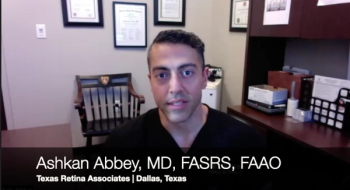
Data suggests that EYP-1901 can reduce the number of injections and treatment burden for patients
Advertisement
Advertisement