

Arshad M. Khanani, MD, MA, discusses phase 3 SOL-1 data showing axitinib sustained vision in wet AMD for 9-12 months after 1 dose, outperforming aflibercept 2 mg.
Arshad M. Khanani, MD, MA, discusses phase 3 SOL-1 data showing axitinib sustained vision in wet AMD for 9-12 months after 1 dose, outperforming aflibercept 2 mg.

Applying phase 3 LUGANO/LUCIA criteria to the phase 2 DAVIO 2 population showed stable vision and anatomy with the vorolanib insert EYP-1901 in wet AMD, Aleksandra Rachitskaya, MD, FASRS, reported at ASRS 2026.
OLN324 outperformed faricimab on anatomic outcomes as early as week 1 in the JADE trial, with no cases of intraocular inflammation across both dose groups.
Initiating aflibercept 8 mg or faricimab as a first-line therapy was associated with longer treatment intervals and superior anatomic outcomes in a real-world analysis of more than 12,000 eyes.

The 2-day program at the Gaylord Opryland Resort will bring together established and emerging eye care leaders for sessions on leadership development, artificial intelligence, inclusion, and career growth.

SOL-1 data show OTX-TKI extends rescue-free control in treatment-naive wet AMD, shaping AI-driven trial design and longer-interval care.

Meeting founder and co-chair Arshad M. Khanani, MD, MA, FASRS, shares what attendees can expect during this year's program, opening the evening of June 12 and running through June 13 in Las Vegas, Nevada.
Sharon Fekrat, MD, FACS, FASRS, reviews the science behind dopamine signaling in the retina and its potential role in the progression of age-related macular degeneration.

Dimitra Skondra, MD, PhD, FASRS, shares her perspective on the evolving treatment landscape for dry age-related macular degeneration and the key questions facing the field.
Carl D. Regillo, MD, FACS, reviews long-term efficacy and safety findings from the Port Delivery System clinical trial program.
Michael Singer, MD, discusses the role of steroids, biomarkers, and second-generation therapies in diabetic macular edema management.

Aixa Alarcon, PhD, and colleagues reported natural image analysis may better predict real-world visual performance of premium intraocular lenses than traditional single-frequency MTF testing, while also capturing the impact of dysphotopsias and residual astigmatism.

In this interview from the 2026 Retina World Congress, Katherine Talcott, MD underscores that retinal vein occlusions (RVOs) should prompt retina specialists to look beyond the eye and ensure patients are connected to primary care and cardiology. She highlights the importance of systemic risk factor management and interdisciplinary coordination as essential components of comprehensive RVO care.

Multimodal imaging, OCT biomarkers, and the case for early diagnosis as treatment options emerge for macular telangiectasia.
Ashkan Abbey, MD, reviews findings from the DAVIO2 and VERONA clinical trials for the bioerodible intravitreal insert.
Ultra-widefield pediatric retinal scans plus adaptable AI reveal hidden eye issues during routine visits, enabling comfortable, scalable screening and earlier specialist referrals.
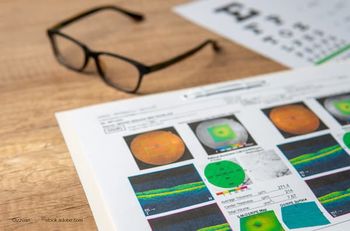
Siegfried G. Priglinger, MD, FEBO, weighs in on the emerging rationale for gas-free, position-free macular hole surgery using an ILM flap.

Patricio G. Schlottmann, MD, examines why injection frequency drives treatment failure in wet AMD and the particular challenges facing patients in Latin America.

Caveolin‑1 is a membrane-associated protein expressed in many cell types that plays a key role in modulating inflammatory signaling.

Victor M. Villegas, MD, discusses supraorbital vibration as an adjunct to topical anesthesia in a high-volume retina practice.
Posture, operating room setup, and small workflow adjustments can reduce cumulative neck and back strain over time.
Jay Chhablani, MD, on multimodal imaging, OCT biomarkers, and the importance of early diagnosis as treatment options emerge
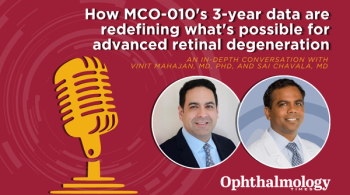
Two leading retinal specialists break down MCO-010's 3-year efficacy and safety data, the significance of contralateral eye findings, and how this gene-agnostic optogenetic approach could fill a critical gap for patients with advanced inherited retinal degeneration who have limited treatment options.
Jay Chhablani, MD, a retina specialist from UPMC Vision Institute and director of the Choroidal Analysis and Research Lab at the University of Pittsburgh, discussed recent advancements in choroidal imaging.

Matias Iglicki, MD, PhD, discusses why internal limiting membrane peeling deserves greater consideration in carefully selected patients with DME.

Uveitis expert Nisha Acharya, recipient of ARVO’s Mildred Weisenfeld Award, discusses how clinical trials and big data are reshaping treatment, vaccination, and vision outcomes.

Charlie Zhang, MD, reflects on the rising incidence, diagnostic challenges, and multidisciplinary management of immune checkpoint inhibitor–associated uveitis.

Avacincaptad pegol may help preserve driving-related vision in geographic atrophy, but post hoc data did not reach statistical significance.
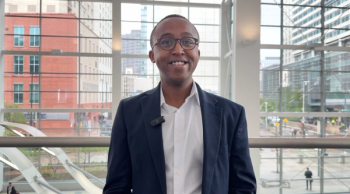
Paul Nderitu discusses Global RETFound, a diverse, worldwide retinal AI model that outperforms existing tools and sets a new standard for equitable, open-access medical AI.
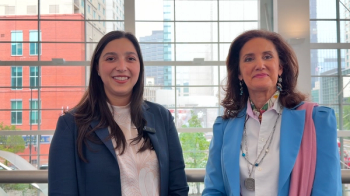
NYU researchers discuss using CellChek C widefield specular microscopy to visualize and quantify corneal nerves in dry eye disease, revealing reduced nerve fiber length and inferior whorl changes and offering a practical alternative to in vivo confocal imaging.