

Across sessions, speakers emphasized that AI is not a replacement for physician judgment.
Across sessions, speakers emphasized that AI is not a replacement for physician judgment.
Shameema Sikder, MD, details a session she presented with Roomasa Channa, MD, at EnVision Summit 2026.

Improved guidance on preservatives and allergens needed to ensure safety.

Real-world data shows systemic immunomodulators beat local steroids for chronic uveitis, cutting glaucoma, cataract, CME, and ERM risks.

Bonnie An Henderson, MD, founder of EnVision Summit, highlights how the annual conference integrates MD and OD tracks, practical subspecialty updates, and structured opportunities for connection across career stages.
The 22nd International Scientific Symposium on Ophthalmic Imaging will take place 18–19 September 2026 in Singapore, marking an expanded scientific scope while maintaining its focus on imaging in research and clinical practice.
Oluwatosin U. Smith, MD, highlights how the foundation provides education, research, and access-to-care for patients and clinicians globally and locally.
Aaron Y. Lee, MD, MSCI, explains how temporal optical coherence tomography modeling may improve longitudinal disease tracking and clinical decision-making at Angiogenesis 2026.

The 2025 program built on its evolving reputation as a multispecialty educational forum that successfully integrates ophthalmology and optometry, premium CME content, and a family-friendly format to foster professional growth without sacrificing work–life balance.
EnVision Summit insights spotlight complex glaucoma cases, MIGS pitfalls, and personalized surgery choices—preview the issues driving 2026 debates in Puerto Rico.

Family-friendly format empowers continuing education.
Marta Pazos, MD, PhD, examined the role of optical coherence tomography, artificial intelligence, and clinical evaluation in early glaucoma management.
Steffen Hamann, PhD, FEBO, FRCOphth, discusses how optic disc drusen can mimic glaucoma and discussed evolving imaging and research strategies.
Andrew Tatham, MD, MBA, FRCOphth, FEBO, outlines the role of micro-invasive glaucoma surgery alongside established glaucoma procedures, focusing on safety, patient selection, and future directions.

AI is reshaping clinical practice in retinal imaging and workflow optimization, according to Priv.-Doz. Dr. med. Jan H. Terheyden, FEBO.

Prof. Dr. Luís Abegão Pinto outlines how real-world datasets can improve artificial intelligence accuracy, reduce bias, and support clinical decision-making at scale.
Prof. Dr. med. Wolf A. Lagrèze highlights the clinical role, limitations, and future potential of optical coherence tomography in glaucoma and neuro-ophthalmic disease.
Prof. Dr. med. Wolf A. Lagrèze highlights the clinical role, limitations, and future potential of optical coherence tomography in glaucoma and neuro-ophthalmic disease.

Ahead of the 2nd International Glaucoma Symposium in Mainz, Germany, Stephan Schulz of Heidelberg Engineering outlines how the program blends everyday clinical challenges with advances in AI, imaging, and surgery.

As the 2nd International Glaucoma Symposium approaches in Mainz, Germany, Stephan Schulz highlights how the program bridges everyday clinical needs with the latest advances in AI, imaging, and surgery.

This one-day symposium on January 31, 2026, will bring together clinicians and experts at the University Eye Clinic in Mainz to discuss optic neuropathies and diagnostic trends.
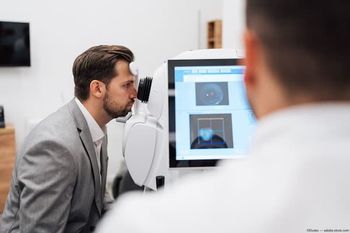
The January 31, 2026, conference in Mainz, Germany, will focus on advances in optic neuropathy diagnosis, artificial intelligence applications, and surgical perspectives

US and international glaucoma specialists will converge in Mainz, Germany, on 31 January 2026, to map the next era of glaucoma care—covering AI diagnostics, optic neuropathy evaluation, and modern surgical approaches.

At the 2nd International Glaucoma Symposium on 31 January 2026, leading clinicians and researchers will share cutting-edge insights on modern surgical techniques, optic neuropathy assessment, and artificial intelligence-driven diagnostics.

The pandemic reshapes treatment intervals for neovascular AMD, revealing flexible strategies that maintain visual outcomes and enhance patient care.

Harvard researchers used data to shed light on pediatric neurotrophic keratopathy, revealing key insights into prevalence, vision outcomes, and treatment approaches.

Explore early MacTel diagnosis with OCT/FA, who qualifies for Encelto implant, and how costs, reimbursement, and surgery shape timely retina care.

Sahar Bedrood, MD, PhD; Inder Paul Singh, MD; and AnnMarie Hipsley, DPT, PhD, recount moments that blended professional milestones with mentorship and legacy.
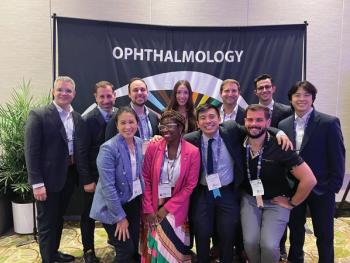
The value of attending industry meetings at the beginning of a career in ophthalmology.

Discover key insights from the AAO 2025 meeting, highlighting advancements in real-world data, gene therapies, multitargeting treatments, and AI in retina care.