
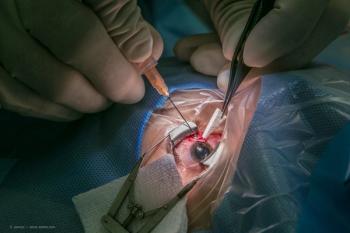
A trio of ASCRS presentations collectively offer insight to surgeons, suggesting that glaucoma drops harm meibomian glands, while combining cataract surgery with MIGS can boost long-term IOP control.
A trio of ASCRS presentations collectively offer insight to surgeons, suggesting that glaucoma drops harm meibomian glands, while combining cataract surgery with MIGS can boost long-term IOP control.
Oluwatosin U. Smith, MD, provides an overview of angle-based techniques, cyclodialysis cleft repair, and minimally invasive approaches to glaucoma surgical complications.
Expanded guidance incorporates advanced diagnostics and reinforces treatment of conditions such as Demodex blepharitis and neuropathic pain, explains Christopher E. Starr, MD, FACS.
Chang described how the ASCRS Functional Vision Working Group is proposing a structured framework centered on visual quality, visual range, and visual symptoms to guide lens classification.

Five-year pediatric Boston KPro results show vision gains, but low retention and high membrane, melt and glaucoma risks persist.



Prof. Sobha Sivaprasad discusses why GA's multistage nature demands a broader therapeutic approach—and what evidence will shape clinical decision-making.
Prof. Anat Loewenstein questioned whether treat-and-extend will remain the preferred strategy as longer-acting therapies emerge.
Andrew G. Lee, MD, presents the “no” perspective on whether GLP-1 agonists cause non-arteritic anterior ischemic optic neuropathy, arguing that current evidence shows association but not proven causation.

The 17th annual Congress on Controversies in Ophthalmology takes place on 20–21 March 2026 in Kraków, Poland, bringing together an international faculty for two days of structured debate on the most pressing questions in the field.
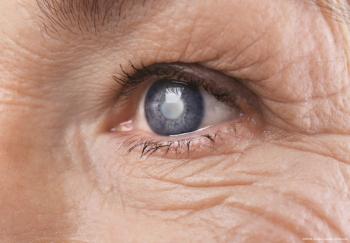
Marta Pazos, MD, PhD, on how OCT and emerging AI can help spot preperimetric glaucoma years before vision loss while avoiding false positives from myopia and disc anatomy.


Experts share practical and research-based advancements, offering actionable strategies in diagnosis, treatment, and early detection.
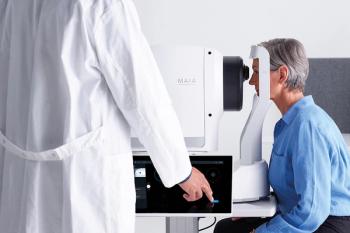
Learn how OCT aids neuro-ophthalmology, where it falls short, and why AI plus neurologist–ophthalmologist teamwork prevents misdiagnosis.
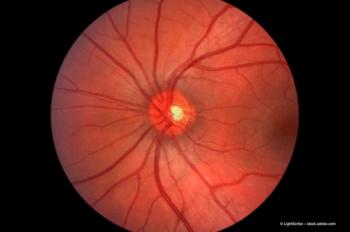
Steffen Hamann, PhD, FEBO, FRCOphth, offers insight into the landscape for optic disc drusen and the impact of advances in OCT.

Take a look at some, but certainly not all, that you may have missed from this year’s EnVision Summit.

Real-world nAMD/DME care highlights durable anti-VEGF options and emerging TKIs and gene therapy to cut injection burden, improve vision, and reduce fluid.

Steffen Schmitz-Valckenberg, MD, discusses how optical coherence tomography-based models may enable rapid, noninvasive assessment of functional loss in GA at Angiogenesis 2026.

Experts debate real-world retina cases—mystery vitreous hemorrhage, floater vitrectomy, buckle comeback, PDR laser vs anti-VEGF, GA timing.

Inder Paul Singh, MD, spoke alongside Mary Qiu, MD, and Danica J. Marrelli, OD, FAAO, AAODip, in a CE Spotlight Symposium at the conference.
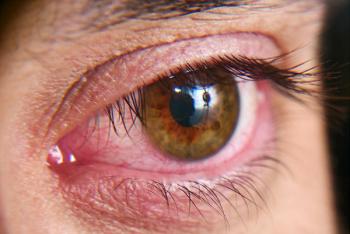
Dry eye care shifts to spectrum-based screening and targeted therapies, from TRPM8 agonists to evaporation shields, with upcoming anti-inflammatories promising faster relief.
Zarmeena Vendal, MD, discussed the intersections between cataract surgery and glaucoma.
Inder Paul Singh, MD, discusses his practice's approach to office-based surgery.
McCabe, MD, presented alongside P. Dee Stephenson, MD, FACS, for the product theater titled "Know Your Dry Eye: Navigating the Challenges of Real-World Dry Eye Cases."
Explore how glaucoma care merges with refractive cataract surgery, covering MIGS choices, ocular surface optimization, and IOL selection to maximize vision quality.
Rahul Tonk, MD, MBA, gives an overview of the cases he discussed during his portion of a segment on refractive surgery.
Risk stratification, patch graft selection, tube repositioning, and multidisciplinary care all play a role in minimizing erosion and protecting long-term outcomes.
Nicole Bajic, MD, outlines key takeaways from her case study involving Descemet membrane detachment occurring in the setting of focal canaloplasty using the Streamline Surgical System.
Pathik P. Amin, OD, FAAO, details his segment of an educational track session on glaucoma at this year's conference.