




Technology
Latest News

Advertisement
Video Series





CME Content













Advertisement

Answers to common questions that can help kick-start the journey into the metaverse to learn from the many virtual educational meetings and conference opportunities while mingling with colleagues worldwide.
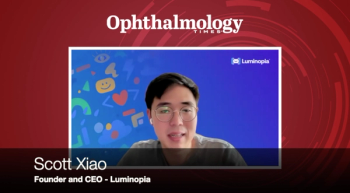
Scott Xiao, co-founder and CEO of Luminopia, sat with Ophthalmology Times to discuss the PUPiL Registry and how the VR treatment for children with amblyopia works and can revolutionize amblyopia treatment.
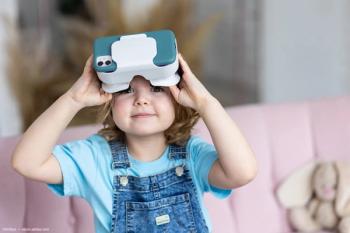
The approach to treating amblyopia in young children couples proprietary therapeutic software with virtual reality (VR) headsets and popular children's TV shows

Investigators looked to see if a large language model could provide safe, accurate, and readable information to patient inquiries about cataract surgery.
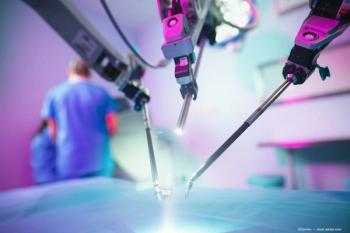
The electromagnetic driving systems are proposed for the flexible 5-DOF magnetic manipulation of a micro-robot within the posterior eye, enabling precise targeted drug delivery.

The COVID-19 pandemic changed medicine forever, and now scientists are forging a new path for healthcare in the future, including in ophthalmology.

The UME module adds to the list of ophthalmic diseases available in the dataset.

When considering change, patient needs should be at the center of any decision.
Office transitions to a portable vision diagnostic and patient engagement system.
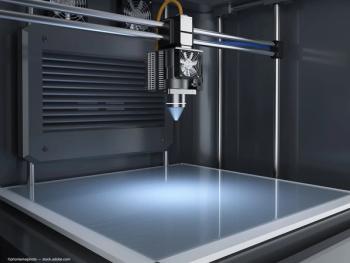
This research ultimately could enhance the manufacture of eye implants universally used in cataract and refractive surgeries.

Joseph Izatt was a skilled researcher and inventor who played a foundational role in the development of optical coherence tomography.

Cataract simulation platform uses virtual reality to train ophthalmologists

A brief analysis showed that ChatGPT 3.5 performed better.

Scientists at the National Institutes of Health use artificial intelligence called ‘P-GAN’ to improve next-generation imaging of cells in the back of the eye.
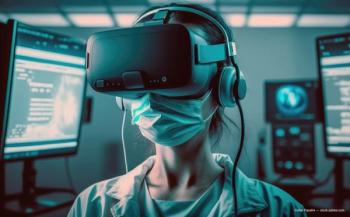
According to the companies, the tool is affordable, portable, scalable, and intentionally designed to train surgeons in low- and middle-income countries, home to 9 out of 10 people with vision loss due to the difficulty of accessing eye care. The VR tool is being unveiled at the American Society of Cataract and Refractive Surgery Annual Meeting in Boston.
Explore cutting-edge ophthalmology innovations in this new series on the Ophthalmology Times EyePod podcast. Throughout this series, we'll hear insights from various stakeholders in clinical practice, academia, and industry. In this episode, host Ehsan Sadri, MD, engages in a conversation with Jeffry Weinhuff, managing partner at Visionary Ventures, exploring trends and offering advice for individuals driven by an entrepreneurial mindset.

The NOVA clinical trial has found statistical non-inferiority to current clinical standards for sensitivities at individual test locations, glaucoma staging using Medicare definitions, and an exceptionally high correlation of 0.94 in mean deviation.
The company noted that individuals can purchase the ARx AI headset and register for access to the Seeing AI app through the provided links or download the latest version of the NaviLens app.

Study demonstrates that patients achieved long-term visual acuity gains following CureSight treatment.

ChatGPT-4 (OpenAI) had an overall “fair” performance when answering multiple-choice ophthalmic questions unrelated to multifocal imaging.

AI matched and outshone human specialists.
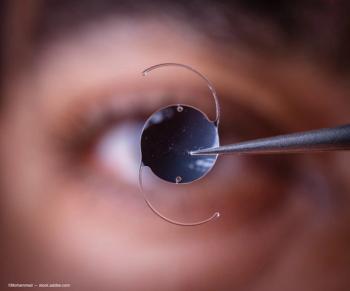
The implantable lenses can offer an advantage over laser surgery.

Chao Zhou, PhD, a professor of biomedical engineering in the McKelvey School of Engineering at the university, and team received the award from the Advanced Research Projects Agency for Health (ARPA-H).

Massachusetts Eye and Ear researchers came up with a mobile app called All_Aboard, designed to be used along with mainstream GPS systems and focuses on improving micro-navigation.
Advertisement
Advertisement
Trending on Eye Care Network - Ophthalmology Times
1
One day, three approvals: FDA expands options for ocular redness, thyroid eye disease, and presbyopia
2
Matching artificial tears to dry eye phenotype: a Q&A with Omur Ucakhan, MD
3
Women’s Health: Identifying dry eye in rheumatoid arthritis can make all the difference
4
Diabetic macular edema: an inflammatory disease in focus
5