IRIS Registry data showed no change in anti-VEGF frequency, vision, or retinal thickness after patients with DME began a GLP-1RA.
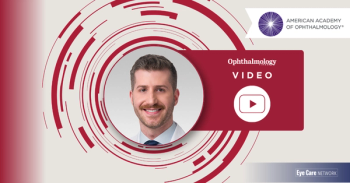
Jai Parekh, MD, MA, FAAO, says AI is poised to transform eye care—from retinal and glaucoma imaging to cataract surgery—without disrupting it.
Artificial intelligence (AI) is set to reshape multiple corners of eye care, according to Jai Parekh, MD, MA, FAAO, who shared his perspective on the technology's trajectory in an interview recorded during the 44th Congress of the ESCRS (ESCRS 2026), held 11–15 September in London.
Parekh, who said he studied AI at the Massachusetts Institute of Technology (MIT) before training in medicine, said AI already has a role to play in diabetes-related retinal imaging and in glaucoma imaging. He also expects it to help clinicians navigate an expanding menu of glaucoma treatment options—including minimally invasive glaucoma surgery (MIGS) devices, drops, and incisional surgeries—to identify which patients are best suited to which technology at a given point in time.
Parekh said he expects AI's role to extend to the ocular surface as well, given the number of technologies and pharmaceuticals already available there, and to cataract surgery, an area of practice he described as a particular passion. “Not every IOL is right for every patient at every point in time,” he said, adding that AI can help match patients with the right intraocular lens (IOL).
Parekh linked AI's value directly to patient education. “I'm fully supportive of seeing the most educated patient possible in my office,” he said, adding that patients who arrive already informed streamline the visit and lead to “a happier patient and a happier office.” He said AI-driven information could also help support staff—including technicians, coordinators, scribes, and managers—become better educated, creating “a better ecosystem” overall.
Parekh acknowledged concerns that AI could disrupt eye care, but rejected the premise. “It's going to be disruptive in an innovative way, and it's going to make us all better,” he said, comparing the moment to the introduction of the iPhone in 2007. He pointed to AI's adoption in oncology, dermatology, and radiology as evidence that eye care can follow the same path. “If radiologists can do it, and dermatologists can do it, and oncologists can do it, then I think eye care can do it as well,” he said.