






Retina
Latest News
Advertisement
Video Series





CME Content











Advertisement

Finnish researchers report on registry data and changing workload resulting from anti-VEGF therapies
The number of patients with retinal vascular diseases is expected to increase over time due to the aging population and lifestyle changes
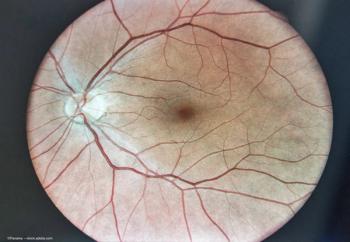
Enhancing durability and reducing treatment burden.

Investigators conducted a retrospective clinical audit to determine why patients do not adhere to the guidelines among about 9,000 patients in a practice.

Our top 10 print stories highlight the core content concepts we explored this year

The report details the results of preclinical discovery, engineering and characterization studies evaluating the safety, retinal cell transduction, transgene expression and clinical activity of proprietary evolved intravitreal vector R100 and 4D-150.

QUASAR is a global, double-masked, active-controlled phase 3 trial evaluating the efficacy and safety of EYLEA HD, compared to EYLEA, in patients with RVO, including those with central, branch and hemiretinal vein occlusions.

Espansione Group's Light Modulation Low-level Light Therapy (LLLT) is used in ophthalmology and dermatology

The company is advancing its Phase I/II trial and exploring accelerated approval pathways in the US and Europe.

A global survey explores the impact of geographic atrophy (GA) on quality of life, revealing similar challenges for individuals with unilateral and bilateral GA. Researchers also highlight the need for improved education, support, and treatment options.

The European Commission will assess the marketing authorisation for Eydenzelt (reference product Eylea)

In the LIGHTHOUSE study, Atsena Therapeutics is evaluating ATSN-201 gene therapy for X-linked retinoschisis, leveraging AAV.SPR capsid for central retina transduction without foveal detachment risks.

Researchers at the USC Ginsburg Institute for Biomedical Therapeutics and the USC Roski Eye Institute are advancing a new treatment for dry age-related macular degeneration, a leading cause of blindness in older adults.

Within 4 months of AEYE-DS's deployment, diabetic retinopathy screening adherence increased from 29 percent to 49 percent.

USC is leading a research team aiming to better understand retinitis pigmentosa and inform future treatments.

The PFS is approved for treatment of neovascular age-related macular degeneration, diabetic macular oedema and macular oedema following retinal vein occlusion

A retrospective study assessed elevated neutrophil-to-lymphocyte ratios and systemic immune-inflammation index levels in patients with different subtypes of DMO

According to presentations at FLORetina ICOOR 2024 in Florence, Italy, data show promising early improvements in low luminance visual acuity, a key measure of visual function. A pivotal Phase 2/3 VISTA trial for laru-zova in XLRP is currently enrolling.

The Belgian B Corp company, founded in 2016, is partially owned by Rayner and distributed in over 20 European countries.
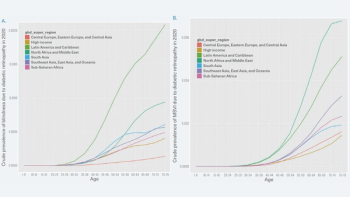
Clinicians must consider redefining the metrics and intention behind functional outcomes, according to experts from the European Association for the Study of Diabetic Eye Complications

Presentation closely resembled mitogen-activated extracellular signal-regulated kinase inhibitor–associated retinopathy

Researchers described the presence of multiple bilateral serous retinal detachments (SRDs) found in 3 women after they used hair dyes.

The annual meeting brought fourth announcements and insights from companies in the retina care space

Ahead of this year's Floretina meeting and International Congress on OCT Angiography, En Face OCT and Advances in OCT (ICOOR), David Hutton of Ophthalmology Times spoke with Charles Wykoff, MD, PhD. At FLORetina ICOOR, he presented on a number of topics, including diabetic retinopathy—the subject of his conversation with the Eye Care Network.

The authors searched PubMed, Scopus, MEDLINE, ScienceDirect, and ClinicalTrials.gov, and selected studies based on reports with an association between RVO and heart attack risk.
Dr Wykoff addressed the top three questions retina specialists have about retinal non-perfusion
Advertisement
Advertisement