




Retina
Latest News

Advertisement
Video Series


CME Content











Advertisement

ARCATUS or ARVN001 was developed by Clearside Biomedical and commercialised in the Asia-Pacific region by Arctic Vision

The NPI-001 (N-acetylcysteine amide) tablets are a proprietary investigational therapy for the treatment of patients with retinitis pigmentosa.
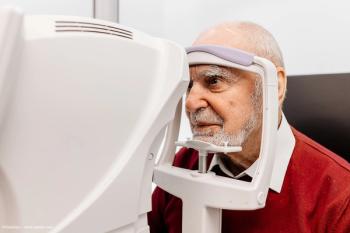
Predictive software will use retinal imaging to identify patient risk for Alzheimer and other neurodegenerative diseases
Changes can result in bacterial contamination, loss of drug activity, and inflammation

The study findings suggest that patients should be educated about adherence to cold storage guidelines
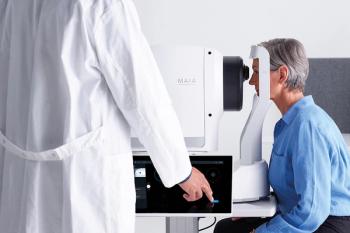
The updated device is designed to meet market diagnostic needs, including within geographic atrophy research

Cost among other factors may deter patients from screening, especially in rural and low-resource settings.
The transferrin vectorised therapy is being investigated for use in patients with dry age-related macular degeneration and geographic atrophy

Previously, Teva was established as the European commercialisation partner of FYB201, Formycon's biosimilar to ranibizumab (Lucentis).

Teva partners with Klinge Biopharma, Lotus Pharmaceutical for commercialisation of Formycon’s FYB203 (biosimilar aflibercept)
Published: | Updated:
The commercialisation agreements for the biosimilar to aflibercept (Eylea) cover Israel, major parts of Europe and the Asia-Pacific Region

The study built on previous research indicating specific retinal variables can serve as disease-related biomarkers in neurodegenerative diseases


The authors investigated systemic adverse events associated with commercial mydriatics administered during retinopathy of prematurity (ROP) screening

ViGeneron also received approval for dose escalation in the ongoing phase 1b clinical trial.

ViGeneron, based in Munich, also received approval for dose escalation in the ongoing phase 1b clinical trial

Investigators reported that the trial demonstrated significant improvements in visual function and retinal structure for patients with optic neuritis

In October, Oxular began a phase 2 trial for its therapeutic candidate OXU-001, for treatment of diabetic macular oedema

Patients with fibromyalgia experienced changes in the macular ganglion cell layer and retinal nerve fiber layer

The multinational, multicenter, prospective RESTORE Study is the 5-year follow-up study of the phase 3 clinical RESCUE and REVERSE Studies of lenadogene nolparvovec to treat vision loss from LHON due to the MT-ND4 mutation.

The RESTORE Study is the follow-up study of the RESCUE and REVERSE studies of lenadogene nolparvovec to treat vision loss from LHON
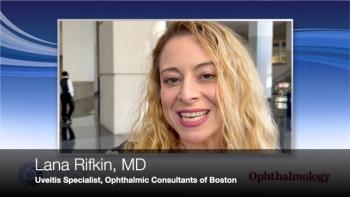
Lana Rifkin, MD, a uveitis specialist at Ophthalmic Consultants of Boston, shared insights into her work and her role as committee chair of the uveitis section for the upcoming EnVision Summit, which will be held from February 14 to 17, 2025, at the Caribe Hilton San Juan in Puerto Rico.

The rationale was that commercial mydriatics administered during retinopathy of prematurity (ROP) screening have been associated with cardiorespiratory and gastrointestinal adverse events.

Investigators emphasised the need for continued efforts to raise awareness and support patients in attending regular screening

Hot topics around the globe, from clinical trials to the solar eclipse

Trending topics and milestone stories from our year in ophthalmology.
Advertisement
Advertisement