









During a presentation at the EURETINA 2021 Virtual Congress, Dr Anat Loewenstein discussed how artificial intelligence can optimize optical coherence tomography.

During a presentation at the EURETINA 2021 Virtual Congress, Dr Anat Loewenstein discussed how artificial intelligence can optimize optical coherence tomography.
During a presentation at the EURETINA 2021 Virtual Congress, Dr José-Alain Sahel explains that optogenetics involves the use of artificial photoreceptors from specific retinal cells to restore vision by transferring a gene that encodes for a light-sensitive protein that causes neuronal cells to respond to light stimulation.
Dr Javier Zarranz-Ventura discusses the key highlights from his presentation on a clinical investigation of suitable naïve versus pretreated DMO patients, and what it means for future research.

Prof Carel B. Hoyng discusses his presenation regarding macula dystrophies, including Stargardt disease, Best disease, X-linked retinoschisis, and the peripherin-2 (PRPH2) gene.
Dr Jennifer Sun explores the question of whether ophthalmologists should be using anti-VEGF agents to treat patients with nonproliferative diabetic retinopathy (NPDR).
Professor Quan Dong Nguyen speaks on the highlights of his presentation regarding new biological treatments of posterior uveitis.
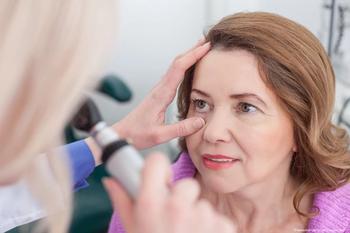
Treating the disease can be a challenge, and at the EURETINA 2021 Virtual Congress, Dr Chekitaan Singh discussed a case study detailing the care of a patient who had already lost vision in one eye from a similar issue.

Speaking during the EURETINA 2021 Virtual Congress, Dr Marta Belmonte-Grau discussed the potential risk for posterior capsular rupture during cataract surgery.
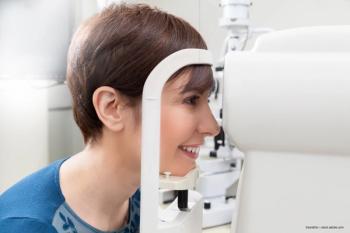
In the 30 years since optical coherence tomography was first described, it has become one of the most widely used technologies for imaging the human eye.

Integration of spectral domain optical coherence tomography with ultra-wide field imaging can increase accurate detection of diabetic macular oedema and epiretinal membrane.
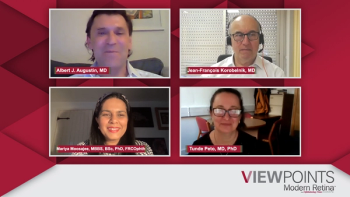
Key takeaways from a discussion on the management of age-related macular degeneration, diabetic macular edema, and inherited retinal disease and insight regarding what to look forward to as the field advances.
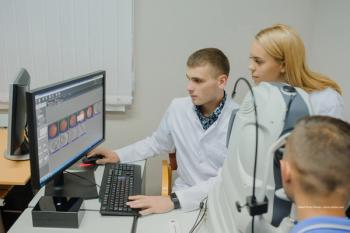
Results may represent a retinal degenerative change.
The impact of the COVID-19 pandemic on the management of patients with retinal disorders and considerations for how new practices may be adopted into future practice.
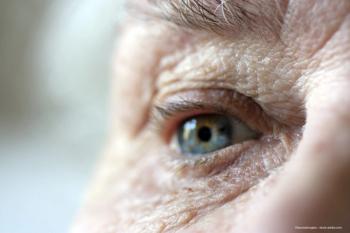
Fluorescence lifetime imaging ophthalmoscopy may be useful to monitor the progression of AMD as well as the effectiveness of treatment approaches.
Dr Mariya Moosajee comments on the next generation of gene therapy for inherited retinal disease and highlights various systems under investigation.

Programming includes 16 EURETINA sessions; 22 symposia; 44 instructional courses; 85 hours of content, and more than 300 speakers.
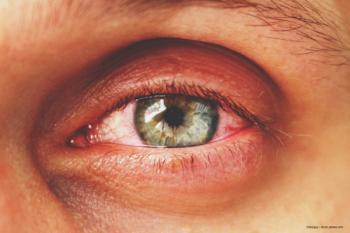
Long-term treatment helps chronic, vision-threatening disease.
Considerations for treating retinal disorders with sustained-release drug delivery implants in an effort to address current treatment challenges in the field.

Ophthalmologists face challenges of drug delivery for retinal diseases.

In response to a previously published article, three ophthalmologists present their views on intravitreal pharmacotherapy injections.
An overview of delivery systems under investigation for retinal disorders and implications for future use.
A discussion highlighting new agents under investigation for retinal disorders and implications for future use based on data revealed in more recent clinical trials.

With at least 24 inherited retinal disease (IRD) clinical trials ongoing in the United States, and additional studies of stem cell therapy in several IRD indications, hope is on the horizon for many patients.
Study of subjects with rare inherited form of AD shows increased retinal capillary perfusion during the presymptomatic stage.

The U.S. FDA granted orphan drug designation to ADX-2191, methotrexate for intravitreal injection, as treatment for retinitis pigmentosa.