



Retina
Latest News

Advertisement
Video Series
CME Content











Advertisement
At Angiogenesis, Dr David Brown presented the Phase 2 results of the CANDELA study for high dose aflibercept 8 milligram for wet AMD; here, he discusses those results.

A brief overview of findings presented at the 2022 Angiogenesis, Exudation and Degeneration meeting hosted by Bascom Palmer.

Investigators in the Netherlands have developed an RNA therapy to halt the progression of Stargardt disease.
Dr Carel Hoyng divulges the main takeaways from his Angiogenesis presentation, including the origins of Stargardt disease, correct diagnosis, ongoing gene therapy trials and the future of therapy.
Dr Carl Regillo discusses the 100-week results of KESTREL and KITE, two pivotal Phase 3 studies for brolucizumab for the treatment of diabetic macular oedema.
Dr Arshad M. Khanani reviews the Phase 2 part A results of the KALAHARI study of THR-149 for the treatment of DMO.

KALAHARI study finds THR-149 to be safe, well-tolerated with preliminary efficacy as treatment for DMO patients who respond suboptimally to anti-VEGF.
During her talk at Angiogenesis, Dr Anat Loewenstein outlines how artificial intelligence could revolutionize diabetic retinopathy screening.

Faricimab is the first bispecific antibody designed for intraocular use that blocks 2 pathways, the angiopoietin-2 (Ang-2) and the vascular endothelial growth factor (VEGF) A pathways.
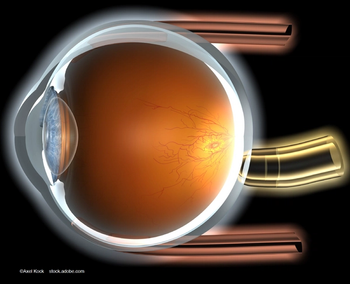
Most patients who had received monthly injections, that is, 92%, preferred the PDS after switching, with 88% having a very strong preference.
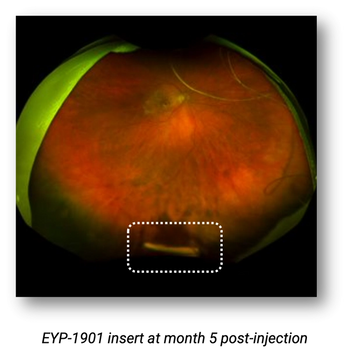
Previously treated patients showed significantly reduced treatment burden.
At Angiogenesis, Dr SriniVas R. Sadda discusses how choriocapillaris may predict the rate of progression of atrophy.

In a presentation at the Bascom Palmer Eye Institute’s 19th annual Angiogenesis, Exudation and Degeneration 2022 Virtual Edition, Dr Glenn J. Jaffe noted that the analysis showed, for the first time, a decreased growth rate in the central foveal area by a therapeutic intervention when compared with sham treatment.
Dr Nadia K. Waheed reviews the latest updates on the FOCUS trial, evaluating AAV-based viral vector GT005 for the treatment of geographic atrophy.
Dr David S. Boyer describes how blocking Connexin-43 may improve the retinal vascular system function in patients with diabetes, potentially creating a future of oral medication for treatment of diabetic retinopathy and AMD.

A once-daily oral drug targets inflammatory processes and thus far has been found to be well tolerated in a Phase 2 safety trial.
Dr Katherine Talcott discusses baseline factors—CST thickness, hemoglobin A1C, and baseline vision—and their effects on DMO resolution.

A new home telemedicine system generates valuable data on disease and the dynamics of fluid exudation.

A team of investigators are working on a simple test that may someday identify those who can stop therapy.

Genentech’s treatment of faricimab is the first and only FDA-approved medicine targeting two distinct pathways, angiopoietin (Ang)-2 and vascular endothelial growth factor (VEGF)-A, that often cause retinal diseases that may cause visual loss.

The improvement became evident during an average time of 6 months.
Dr Firas Rahhal discusses Outlook Therapeutics’ Phase 3 pivotal NORSE TWO trial for ONS-5010.

Ophthalmologists gather to discuss neovascular and exudative diseases of the eye and the revolutionary therapies on the horizon.

A University of California Davis, United States, study shows that small serving of the fruit increased protective pigments in the eye.

The difference between retina’s biological age and person’s real age linked to heightened death risk, with a team of Australian investigators finding that evidence suggests the microvasculature in the retina may be a reliable indicator of the overall health of the body’s circulatory system and the brain.
Advertisement
Advertisement