





Retina
Latest News
Advertisement
Video Series






CME Content











Advertisement

Data from the 30 month GALE extension study indicated that continuous treatment with pegcetacoplan injection showed increasing beneficial effects over that timeframe in patients with geographic atrophy (GA).
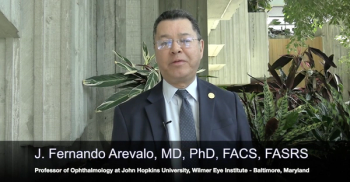
Fernando Arevalo, MD, PhD, FACS, FASRS, spoke with our team to share information on his presentation on the treatment of progressively symptomatic retinal detachments associated to retinoschisis cases at the 2023 ASRS annual meeting.

At the 2023 ASRS meeting in Seattle, Washington, Durga Borkar, MD, MMCi, joined our team to discuss the FARETINA-DME study.

During presentations at the American Society for Retina Specialists 41st Annual Meeting in Seattle, the company noted that there was no indication that drug product or manufacturing issues contributed to rare events of retinal vasculitis.

According to the company, a pair of presentations at the American Society of Retina Specialists annual meeting in Seattle highlight CLS-AX as a promising wet AMD treatment with a new mechanism of action and the potential for longer duration of effect than current therapies.

Mark Breazzano, MD, FACS, who is presenting Outcomes and Clinical Features Predictive of Fungal Endophthalmitis at the 2023 ASRS meeting in Seattle, Washington spoke with our team about this research.

The company noted at the American Society of Retina Specialists meeting in Seattle the phase 2 Dose Expansion (N=50) initial interim efficacy and safety data presentation expected at medical conference in H1 2024.
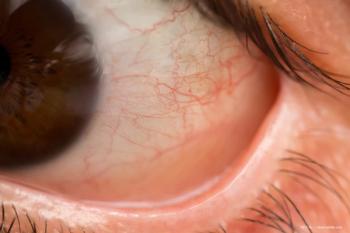
Lim and colleagues conducted a retrospective study to establish the normalized NBFI using OCTA and test if that index is sufficiently sensitive for detecting early DR.

Researchers found that using automated methods to determine the VA showed “robust performance in predicting visual impairment”

The company announced it has scheduled an End-of-Phase 2 meeting with the FDA in Q4 2023 to discuss the specifics of the APX3330 development program.

According to the companies, this partnership will leverage RetinAI's innovative digital health technologies and RCA's network of clinics to analyze real-world health clinical and imaging data.

For visual recovery to occur, there must be photoreceptors left that can be rescued.

According to a study, the experimental eye drop treatment was twice as effective as the standard injection therapy at reducing swelling and improving blood flow within the retina of mice with RVO.

According to researchers at Duke University Medical Center, the tool demonstrates the potential for a non-invasive and inexpensive way to diagnose a common precursor of Alzheimer’s disease.
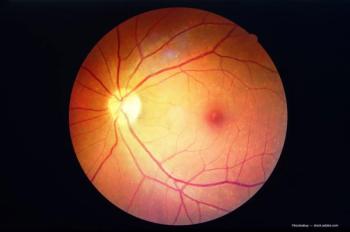
Investigators set out to evaluate how well an AI system works when integrated into a handheld smartphone-based retinal camera to screen patients for DR using 1 retinal image in each eye.

According to the companies, R100 is an adeno-associated virus (AAV) vector invented by 4DMT for intravitreal delivery. It has the ability to penetrate the internal limiting membrane barrier and to efficiently transduce the entire retina, resulting in robust transgene expression within retinal cells.

A new study found an approach that identifies high-risk patients so all preemies don’t need to undergo an invasive eye exam.

A study found the approach identifies high-risk patients so all preemies don’t need to undergo an invasive eye exam.

Clinical trial investigator Victor H. Gonzalez, MD, presented data at the 83rd Scientific Sessions of the American Diabetes Association in San Diego, California.
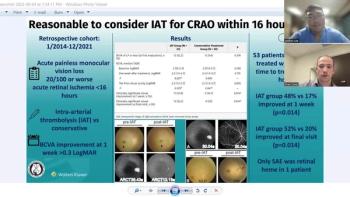
Andrew Lee, MD, and Andrew Carey, MD, sit down on another episode of the NeuroOp Guru to discuss IAT for CRAO within 16 hours.

Results reported in JAMA Ophthalmology show that about 20% of those with diabetic retinopathy have a case that could threaten their vision.
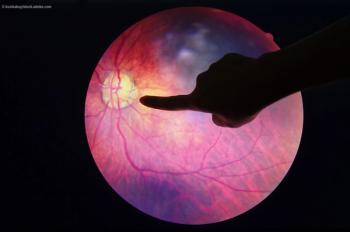
A late breaking poster at the event in San Diego presented by Paolo S. Silva, MD, reveals AI algorithms for diabetic retinopathy progression risk estimation.

According to researchers, the new imaging approach reveals changes in retinal microcirculation may indicate brain diseases that involve reduced blood flow.

Kaushal Solanki, PhD, discusses how ophthalmologists can now use the Topcon NW400 retinal camera with its EyeArt AI system to automatically detect diabetic retinopathy.
Eyenuk receives FDA clearance for additional camera for autonomous detection of diabetic retinopathy
The company noted the FDA clearance also includes its proprietary Real-Time Quality Feedback to improve the gradeability of retinal images and reduce the need for eye dilation, expanding the choice for primary care clinics to screen people with diabetes.
Advertisement
Advertisement