





Pediatrics
Latest News
Advertisement
Video Series



Shorts

0:54
Could bedside OCT spot neurodevelopmental risk in infants before symptoms?
a month ago
by
Cytnthia Toth, MD(+2 more)
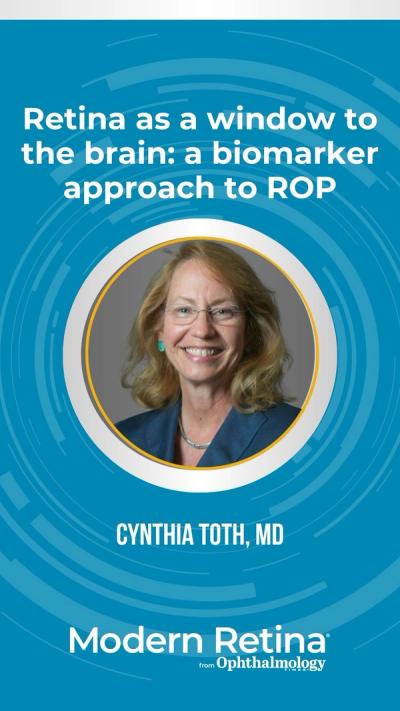
0:57
Retina as a window to the brain: a biomarker approach to ROP
a month ago
by
Cytnthia Toth, MD(+2 more)

0:37
Tracking infant brain health at the bedside
a month ago
by
Cytnthia Toth, MD(+2 more)
0:42
Can a retinal scan predict autism risk?
2 months ago
by
Cytnthia Toth, MD(+2 more)
CME Content






Advertisement

Noha Ekdawi, MD, FAAP, explains why pediatric myopia demands individualized, progression-based management. She details how they sequence spectacle defocus lenses, low-dose atropine, and specialty contacts; drive long-term adherence; and frame lifetime risk for parents without causing alarm.
The first half of 2026 turned on inherited pediatric eye disease, with 2 gene therapy programs advancing toward registration and a high-profile complete response letter in a childhood-onset optic neuropathy.

Cynthia Toth, MD, of Duke University, discusses new BabySTEPS research showing that retinal nerve fiber layer and choroidal thickness on OCT correlate with 2-year neurodevelopmental outcomes in preterm infants and what it will take to bring bedside screening into routine NICU care.
A new survey has discovered a gap between the value parents place on children's vision and the comprehensive eye care that teens and young adults receive.

Ultra-widefield imaging reveals early retinal risk in pediatric patients.
Three-year gene therapy data, an FDA reversal in wet AMD, light-powered dry eye treatment, a new macular supplement, and progress in childhood glaucoma—our review breaks down the 5 May 2026 stories that matter.

Michigan pediatric ophthalmologist advances childhood glaucoma care with longer-lasting Ahmed valves, Ologen, and new clues on prematurity glaucoma.

Five-year pediatric Boston KPro results show vision gains, but low retention and high membrane, melt and glaucoma risks persist.

This study sheds light on the use of 0.05% atropine, which has been reported to be effective against myopia progression in some but not all studies.

Phase 3 shows epi-on oxygen CXL flattens pediatric keratoconus, improves vision, and stays well tolerated—now commercially available.
New STAR trial subgroup data show SYD-101 low-dose atropine slows pediatric myopia, especially ages 3–12 and fast progressors, with good tolerability.
Meta-analysis finds refraction change better than axial length thresholds for tracking childhood myopia, urging growth-curve AL monitoring to flag retinal risk.

Aflibercept briefly reverses severe ROP in tiny preemies, yet nearly half relapse within weeks—prompting laser rescue and renewed safety questions.
AI reads infant retinal scans to flag lung disease early, while transient vision loss warns of looming stroke and heart events.
Jennifer E. Thorne, MD, PhD, discusses evidence from the ADJUST trial, including relapse risk, retreatment success, and how clinicians should monitor children when considering adalimumab discontinuation.
According to the company, this is the first and only single-use kit on the market that includes the diagnostic lens.


Second-year medical student Rishika Garg, from the University of Oklahoma College of Medicine in Oklahoma City, shares insights from a nationwide analysis revealing inconsistencies in ophthalmology residency leave policies.

OPGx-LCA5 is designed to address a form of Leber congenital amaurosis that results from biallelic mutations in the LCA5 gene, which encodes the lebercilin protein, the investigators explained.

PolyActiva and RareSight collaborate to create innovative therapies for rare pediatric retinal diseases, aiming to transform treatment and improve children's vision.
The trial met both its primary efficacy and key secondary endpoints.
Specialists discuss diagnostic technologies, treatment strategies, and research that are improving outcomes for young patients

The decision follows results from the Phase 3 STAR trial, among the largest global studies of low-dose atropine in pediatric myopia.

The trial results show promising for the evaluated gene therapy for the treatments of LCA, showing significant vision improvements in pediatric patients.
Advertisement
Advertisement