










Pediatrics
Latest News
Advertisement
CME Content
Advertisement

The report urges the US Department of Health and Human Services, in collaboration with departments of education at the state level, to take measures to ensure that children receive a vision screening before first grade and a comprehensive eye exam, when needed.

According to the organization, the map and report provide public, professionals and decisionmakers with data on children’s vision issues at the county and state level.

Prevent Blindness is planning a series of events and program partnerships leading up to World Sight Day on Oct. 10, 2024.
The day will be held on October 10. It is coordinated by the International Agency for the Prevention of Blindness under the “Love Your Eyes” campaign banner, and is putting children at the center of the campaign.

CN6 palsy from the COVID-19 virus is rare, and can occur in infants as young as 7 months.


Researchers from the Shanghai Jiao Tong University School of Medicine developed a deep learning–based model for early identification of myopia, strabismus, and ptosis using 1419 facial photographs from 476 individuals.

According to the company, VCN-01, its lead product candidate, is a systemic, selective, stroma-degrading oncolytic adenovirus. The FDA had previously granted orphan drug designation to VCN-01 for treatment of retinoblastoma.
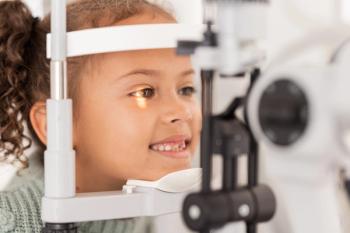
Prevent Blindness provides opportunities for awareness and action in support of new legislation to provide much-needed funding for children’s vision programs in the United States.

The approach to treating amblyopia in young children couples proprietary therapeutic software with virtual reality (VR) headsets and popular children's TV shows

NVK002 atropine 0.01% (Vyluma Inc.) “meaningfully slowed” myopia progression in myopic pediatric patients over a 36-month period.

The Type A meeting addressed questions the FDA had about the late-stage product candidate

Low birth weight, blood transfusion, necrotising enterocolitis, bronchopulmonary dysplasia and antenatal steroid and surfactant therapies are among the factors that affect the development of ROP.

Data from the trial found that MyopiaX proved clinically safe and tolerable, in addition to showing clinical effect on the rate of myopia progression.

The Early Detection of Vision Impairment in Children (EDVI) Act would establish the first federal program to address children’s vision and eye health.
New research findings presented at this year's ARVO meeting compare two groups of paediatric patients in Nepal
News
Researchers examined disparities in service coverage of pediatric ophthalmologists and pediatric optometrists in relation to patient demographics to cast a light on at-risk populations and provide data for future decisions.
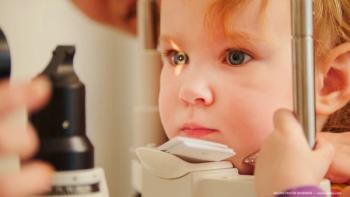
Early keratoconus screening advocated

Evaluating injections of anti-VEGF drugs into the intra-anterior chamber may be a viable alternative, but further study is required.

Siloam Vision and Orbis team up to develop infrastructure to save the vision of premature infants.

According to the company, MicroPine, currently in late phase III for pediatric progressive myopia, will complement Eyenovia’s commercial-stage asset, Mydcombi, as well as its pre-PDUFA candidate, APP13007.

The first step in management is increasing the time spent outside

Analysis showed low-dose, preservative-free formulation of atropine is effective in slowing progression in children aged 3 to 17, living in the US and European Union.
Advertisement
Advertisement