








Accelerated changes in the spherical equivalent refraction (SER) and axial length were seen but no changes in the lens power and thickness were seen in pediatric patients.


Prevent Blindness urges West Virginia State Legislature to reject bill removing newborn eye infection protection
Accelerated changes in the spherical equivalent refraction (SER) and axial length were seen but no changes in the lens power and thickness were seen in pediatric patients.

The study findings indicated that lifestyle changes associated with the COVID-19 pandemic were connected to an increase in childhood astigmatisms.

The award honors Ludwig von Sallmann, MD, a “distinguished international ophthalmologist and ophthalmic investigator whose contributions greatly increased the basic and clinical understanding of vision and ophthalmology.”
The FDA has set a PDUFA target action date of October 23, 2025, for the low-dose atropine formulation.

Inflammation and scarring are the primary obstacles with pirfenidone.

These tools help fill a gap that current technologies cannot achieve as effectively.

Children experienced sudden vision loss, visual field constriction, nyctalopia and dyschromatopsia following febrile illness.
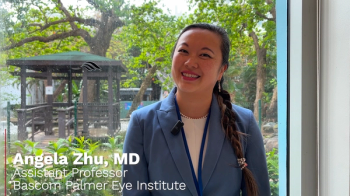
At the Envision Summit 2025 in San Juan, Puerto Rico, Angela Zhu, MD, offered advice on cataract surgery for all ages, focusing on pediatrics.

At the Envision Summit 2025 in San Juan, Puerto Rico, Nita Valikodath, MD, MS, gave insight into a challenging case of a 14-year-old boy who had trauma-related retinal detachment in his right eye, where a further macula-on retinal detachment with retinal dialysis was found in the left.

The research team conducted a prospective study to assess any barriers to parental compliance with vision testing in preschoolers aged 3 to 6 years.

Ooms' poster at the Association of University Professors of Ophthalmology annual meeting highlighted a study on gray area complications in strabismus surgery, showing that trainees are more likely than attendings to disclose these complications despite having similar baseline anxiety levels. Ooms is a PGY-4 ophthalmology resident at the Dean McGee Eye Institute.

Zhaoke Ophthalmology Limited is responsible for developing and obtaining regulatory approval for NVK-002 in Greater China, South Korea, and the Southeast Asian territories.

Cost among other factors may deter patients from screening, especially in rural and low-resource settings.
The rationale was that commercial mydriatics administered during retinopathy of prematurity (ROP) screening have been associated with cardiorespiratory and gastrointestinal adverse events.


Researchers at the University of Colorado Anschutz Medical Campus found that characters with crossed or drifting eyes are more likely to play more minor roles in animated movies and be considered unintelligent or villainous. These depictions, the researchers say, can have harmful effects for children with strabismus by perpetuating stereotypes.
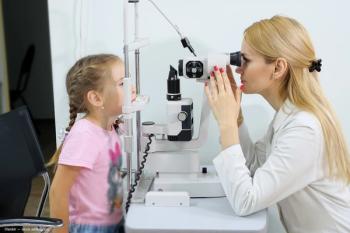
In the wake of a report by a group of researchers in China detailing the increasing prevalence of myopia worldwide, Daniel Cyr, MD, a pediatric ophthalmologist at Stony Brook Medicine, agreed with its assessment, telling Ophthalmology Times he is seeing an increase in pediatric myopia at his clinic in New York.

Research is needed to establish the best diagnostic and management strategies for increasingly common condition

News
The designations underscore the unmet need in Stargardt disease, a rare and serious pediatric disease for which no treatment exists.

NEI Initiative aims to boost awareness, standardize diagnosis, and improve care for children with CVI through multidisciplinary collaboration and emerging technologies.

Analysis highlights discrepancies between adult, pediatric cataract procedures.

FELIQS plans to conduct a Phase 1b/2 study of FLQ-101 (tROPhy-1 study) both in the US and Japan in the first quarter of 2025.

NEI Initiative aims to boost awareness, standardize diagnosis, and improve care for children with CVI through multidisciplinary collaboration and emerging technologies.

A study clarifies the relationship between postnatal weight gain and ROP development.

News
According to a presentation at the American Academy of Ophthalmology’s annual meeting in Chicago, a new study shows customized eyeglasses successfully addressed children’s complex eye needs.