
A machine learning model using treated astigmatism and other nuanced inputs can significantly improve the accuracy and personalization of arcuate keratotomy planning
A machine learning model using treated astigmatism and other nuanced inputs can significantly improve the accuracy and personalization of arcuate keratotomy planning
The Virtual Eye Simulation Analyzer is an AI-driven digital twin of the human eye designed to model aging and personalize presbyopia treatment across the lifecycle.
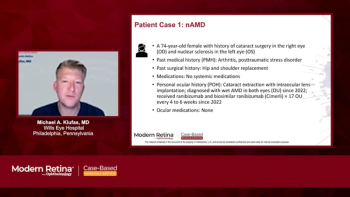
A panelist discusses how a woman aged 77 years with bilateral neovascular age-related macular degeneration (nAMD) demonstrated different responses to treatments between her eyes, showing a superior response to faricimab in her right eye compared with ranibizumab, highlighting how some patients may respond better to specific anti-VEGF agents.
A panelist discusses how a man aged 79 years with long-duration diabetes and treatment-naive diabetic macular edema (DME) responded well to aflibercept 8-mg therapy, progressing from 4-week loading doses to an extended 10-week interval with resolution of macular edema and improved vision from 20/60 to 20/30.
A panelist discusses how a woman aged 74 years with neovascular age-related macular degeneration (nAMD) showed improved disease control and vision in her right eye after switching from ranibizumab to a high-dose aflibercept (8 mg) treatment that successfully extended intervals to 10 weeks.
Shehzad Batliwala, DO, known to his patients as Dr. Shehz, appeared on the ASCRS Foundation Symposium, where he discussed performing refractive surgery in low-resource, high-risk areas.
A novel vitrectomy device shows promising safety and efficacy in the targeted removal of symptomatic vitreous opacities in pseudophakic eyes
Researchers evaluate key measures for tracking disease progression in Usher syndrome type 2–related retinal degeneration
Lisa Nijm, MD, says preoperative osmolarity testing can help clinicians manage patient expectations and improve surgical results.
Endoscopic cyclophotocoagulation (ECP) has major potential for patients with glaucoma
The retrospective study assessed corneal cross-linking complications at Wills Eye Hospital from 2018 to 2023.
Use of the LENSAR Ally femtosecond laser for arcuate incisions was associated with improved early visual outcomes and reduced need for postoperative adjustments in premium IOL patients.

Patricia Buehler, MD, MPH, presented a poster and two patient films at the ASCRS annual meeting, focused on minimally-invasive blepharoplasty device Ziplyft (Osheru).

AI’s use in diagnostic tools, surgical guidance, and its ethical considerations in ophthalmology are transforming the field
A study reports minimal rotation and improved near vision following implantation of the Eyhance toric lens.
Sheng Lim, MD, FRCOphth, discussed the CONCEPT study, which compared standalone cataract surgery to cataract surgery with ECP.
Data show excellent refractive stability, strong visual acuity across all distances, and contrast sensitivity comparable to monofocal IOLs.
Alex Hacopian, MD, speaks about patient-reported outcomes from a presbyopia-correcting IOL at the 2025 ASCRS annual meeting.

Majmudar encourages young surgeons to seek hands-on experience early and often, stressing the importance of real-world practice beyond the classroom.
Brett Bielory, MD, discusses his poster at the ASCRS annual meeting, which focuses on an under-diagnosed corneal pathology: neurotrophic keratitis.
Explore innovative glaucoma treatments and technologies, including AI, home monitoring, and new surgical options, to enhance patient care.
For patients with high myopia, an implantable ICL offers certain advantages over LASIK or other traditional refractive surgeries, Dr. Kim said.
Abby Markward, MBA, executive director of the ASCRS Foundation and the ASOA, provides a sneak peek of the posterior segment-focused event.
A new event called SightLine and a series on adoption, implementation, integration (AII) draw the attention of ophthalmic administrators.
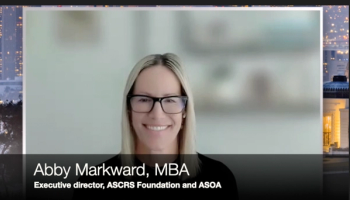
Abby Markward, MBA, executive director of the ASCRS Foundation and ASOA, discusses the foundation's global initiatives and the ASCRS Party for a Purpose.
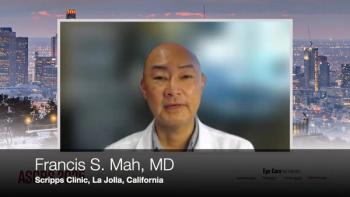
Mah previews a packed 2025 Annual Meeting, from the debut of SightLine to Dr. Glaucomflecken’s return to the main stage, and outlines his priorities for the year ahead as incoming ASCRS president.
In celebration of Ophthalmology Times' 50th anniversary, we asked leading experts in the field what they see as the biggest innovation in ophthalmology in the past 5 decades.
In celebration of Ophthalmology Times 50th anniversary, we asked leading experts in the field what they see as the biggest innovation in ophthalmology in the last 5 decades.