
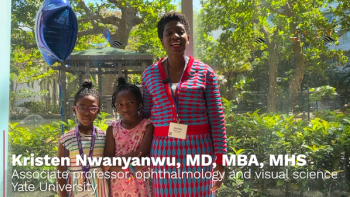
At the Envision Summit 2025 in San Juan, Puerto Rico, Kristen Nwanyanwu, MD, MBA, MHS, joined by her children, discussed her talk on eradicating TRD and the family-friendly environment of the conference.
At the Envision Summit 2025 in San Juan, Puerto Rico, Kristen Nwanyanwu, MD, MBA, MHS, joined by her children, discussed her talk on eradicating TRD and the family-friendly environment of the conference.
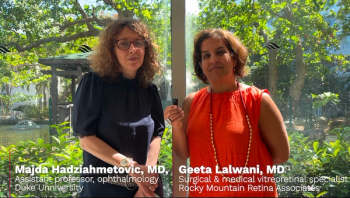
At the Envision Summit 2025 in San Juan, Puerto Rico, retina program chairs Geeta Lalwani, MD, and Majda Hadziahmetovic, MD, discussed Hadziahmetovic's presentation on deep learning models of neovascular AMD as well as their time at the conference.
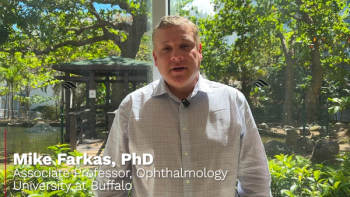
At the Envision Summit 2025 in San Juan, Puerto Rico, Mike Farkas, MD, discussed gene therapy research for retinal degenerations that sidetracks the current "status quo" therapies of AAV-based replacement and CRISPR-Cas9 genome editing.
Direct selective laser trabeculoplasty enhances the experience for both patients and physicians, he notes, while also mitigating issues related to poor adherence and ocular surface disease from topical therapy.
At the Envision Summit 2025 in San Juan, Puerto Rico, Kelly Donovan, MD, talked about her graduate research on the earliest phase of diabetic retinopathy, and trying to understand how hyperglycemia translates into disease.
Panelists discuss how longer-acting treatments will enable extended intervals between visits while requiring careful adjustment of monitoring protocols and clinic workflows to balance reduced treatment burden with maintaining adequate disease surveillance.
At the Envision Summit 2025 in San Juan, Puerto Rico, Oleg Alekseev, MD, PhD, talked about difficulties in diagnosing inherited retinal degenerations due to mutations in over 300 different genes.
At the Envision Summit 2025 in San Juan, Puerto Rico, Ollya Fromal, MD, gave advice on how retina specialists can manage add-ons in their busy retina clinics.
At the Envision Summit 2025 in San Juan, Puerto Rico, Giulia Corradetti, MD discussed AI applications in the identification and prediction of OCT structural biomarkers in intermediate AMD.

Ying Han, MD, PhD discusses glaucoma management strategies, including transitioning care between ophthalmologists and optometrists, improving diagnosis, and the hope for future glaucoma developments.
At the Envision Summit 2025 in San Juan, Puerto Rico, Sharon Fekrat, MD, FACS, FASRS talked about multi-modal retinal and choroidal imaging to diagnose and identify neurodegenerative diseases using machine learning.
The focus in recent years has shifted to reducing the long-term burden of medical therapy, minimizing the risk of medication toxicity and persistent ocular surface disease.

Shah discusses several studies from the IRIS registry and plans for a retina program at next year's event to address the growing interest in retina procedures and techniques.
At the Envision Summit 2025 in San Juan, Puerto Rico, Rachel Simpson, MD, talked about new developments in glaucoma treatment and really how to tailor glaucoma treatment to the patient.
At the Envision Summit 2025 in San Juan, Puerto Rico, Angela Zhu, MD, offered advice on cataract surgery for all ages, focusing on pediatrics.

Professor Anat Loewenstein, MD, speaks about her presentation from the 22nd Annual Angiogenesis, Exudation, and Degeneration Meeting
At the Envision Summit 2025 in San Juan, Puerto Rico, Sherrol Reynolds, OD, FAAO, participated in a discussion on patient-centered care and the newest treatment strategies in neovascular AMD and DME.
At the Envision Summit 2025 in San Juan, Puerto Rico, Ashley Wallace Tucker, OD, FAAO, FSLS, gave insight into advancements in keratoconus management and the importance of early detection as well as tips and advice on fitting scleral contact lens

Examining the performance of AI algorithms versus human graders in neovascular age-related macular degeneration
The 15th annual meeting, taking from March 24–28 in Snowmass, Colorado, will deliver high-impact discussions on macular disease, artificial intelligence in ophthalmology, and breakthrough therapies—plus opportunities for networking on and off the slopes.
At the Envision Summit 2025 in San Juan, Puerto Rico, Lana Rifkin, MD, gave clinicians advice on how, and when it may be most appropriate to use the new G2211 code.
At the Envision Summit 2025 in San Juan, Puerto Rico, Arjan Hura, MD, talked about EVO ICL surgery, its benefits, and how every ophthalmologist has the ability and training to conduct the surgery even if they aren't aware.
At the Envision Summit 2025 in San Juan, Puerto Rico, Nita Valikodath, MD, MS, gave insight into a challenging case of a 14-year-old boy who had trauma-related retinal detachment in his right eye, where a further macula-on retinal detachment with retinal dialysis was found in the left.
At the Envision Summit 2025 in San Juan, Puerto Rico, Deepak Sambhara, MD, gave insight into the 96-week post hoc fluid outcomes analysis of patients who participated in the phase 3 clinical trial PULSAR.
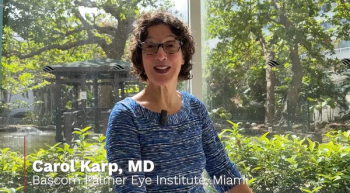
At the Envision Summit 2025 in San Juan, Puerto Rico, Carol Karp, MD, discussed new research presented by her fellows at the meeting on AI for the diagnosis of ocular surface tumors as well as a new "tear biopsy" for the detection of cancer.
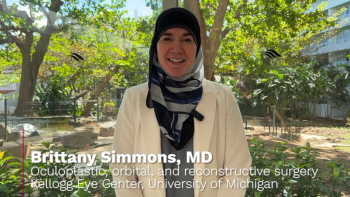
At the Envision Summit 2025 in San Juan, Puerto Rico, Brittany Simmons, MD, discussed periorbital injuries and how they can affect the soft tissue and bones around the eye and gives insight into how clinicians should best go about treating it.
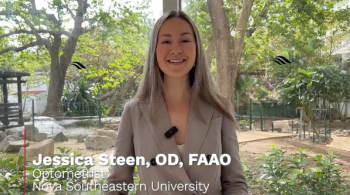
At the Envision Summit 2025 in San Juan, Puerto Rico, Jessica Steen, OD, FAAO talked with glaucoma surgeons on the importance of comanaging patients throughout their lifetime.
Laxmi Devisetty, MD, and Eva Kim, MD, look ahead at upcoming sessions focusing on geographic atrophy and refractive and cataract surgery at the Envision Summit 2025.
Panelists discuss how loading doses remain crucial for treatment-naive patients to achieve rapid disease control, while patients switching therapies may require modified approaches based on their prior treatment response and disease activity.
Panelists discuss how real-world evidence provides crucial insights into treatment effectiveness across diverse patient populations and clinical settings while highlighting challenges in maintaining clinical trial protocols’ stringent adherence and monitoring in everyday practice.