

Opinion|Videos|May 27, 2025
Full Range of Vision IOLs for Patients Wanting Spectacle Independence
Author(s)Steven J. Dell, MD
A panelist discusses how he managed a 57-year-old tennis player with dry eye and Hashimoto thyroiditis by selecting a Toric enVista IOL for her refractive lens exchange, noting the patient’s satisfaction despite a temporary market recall of the lens.
Advertisement
Video content above is prompted by the following:Refractive Lens Exchange in Patient With Dry Eye
Key Discussion Topics
- Complex patient profile
- A 57-year-old woman with Hashimoto thyroiditis and dry eye
- Low hyperope with trace nuclear sclerosis (refractive lens exchange candidate)
- Avid tennis player requiring good stereopsis
- Contact lens intolerant with dependence on reading glasses over contacts
- Preoperative management
- Preoperative optimization of ocular surface to improve topography
- Inferior steepening on topography related to dry eye, not keratoconus
- Lens selection considerations
- Monovision contraindicated due to tennis requiring stereopsis
- Extended depth of focus lenses insufficient for patient’s reading needs
- Consultation with Canadian colleagues regarding enVista intraocular lens (IOL) performance in patients with dry eye
Notable Insights and Outcomes
- Dell observed rapid visual recovery with enVista IOLs even in suboptimal corneal conditions
- Patient received a Toric enVista IOL (placed at axis 326°, 25°)
- On postoperative day 1, coinciding with a voluntary recall of the enVista IOL, patient reported excellent uncorrected distance and near vision
- At 1-week follow-up, patient remained satisfied despite the recall
- The subsequent reintroduction of enVista to the market allowed for potential matching IOL placement in the fellow eye
Concluding Observations
- Late laser vision correction enhancements remain complicated but increasingly important
- PRK is likely the best option for enhancement after laser vision correction, though still imperfect
- Modern IOL designs have made refractive precision critical in this demanding patient population
Advertisement
Related to this article

Length and width, not thickness, emerge as key drivers of higher-order aberrations.

Frantz EyeCare reports 98% of Light Adjustable Lens patients achieved refractive accuracy within ±0.50 D of target, exceeding published national cataract surgery benchmarks.

In this Q&A, Ping Moore, OD, covers emerging dry eye therapies, from selenium sulfide to next-gen cyclosporine, and how subtype-guided care shapes treatment choices.

Ophthalmology is projected to face one of the steepest physician shortages of any subspecialty by 2038.

Two investigational pipeline therapies take aim at the root causes of dry eye disease

Cataract surgery becomes refractive: learn how IOL choices and preop counseling across distance, intermediate and near turn 20/20 into 20/happy.

The RMAT designation opens the door to a faster development pathway for EO2002 as a minimally invasive alternative to corneal transplantation, while Emmecell also advances a cell therapy for geographic atrophy.
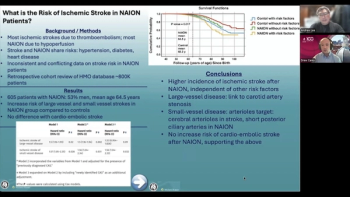
Andrew G. Lee, MD, and Drew Carey, MD, discuss findings from a retrospective study examining ischemic stroke risk in patients with non-arteritic anterior ischemic optic neuropathy and the implications for vascular risk factor management.
Advertisement
Advertisement
Trending on Eye Care Network - Ophthalmology Times
1
Brepocitinib meets all Phase 3 end points in noninfectious uveitis
2
Matching artificial tears to dry eye phenotype: a Q&A with Omur Ucakhan, MD
3
Demodex blepharitis: Diagnosis, treatment response, and recurrence
4
Myopia control using spectacle lenses with highly aspherical lenslets
5