
Martin Friedlander, MD, PhD, discusses phase 3 macular telangiectasia findings, highlighting the potential for a decade-long alternative to intravitreal injections.
Martin Friedlander, MD, PhD, discusses phase 3 macular telangiectasia findings, highlighting the potential for a decade-long alternative to intravitreal injections.
The interventional glaucoma mindset can maximise quality of life, but requires clinicians to act fast
Yvonne Ou, MD, a professor of ophthalmology at the University of California San Francisco, spoke about lifestyle modifications for glaucoma at this year's Glaucoma 360 meeting.
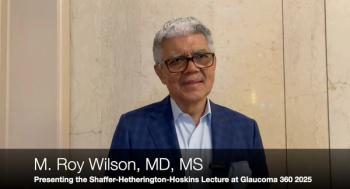
M. Roy Wilson, presented the Shaffer-Hetherington-Hoskins Lecture at the Glaucoma 360 meeting held in San Francisco, California. This lecture was entitled, "Rethinking Race as a Risk Factor for Glaucoma: What Really Matters?"
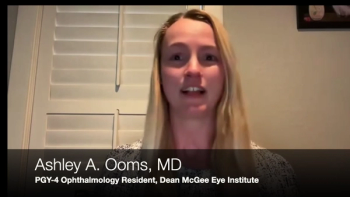
Ooms' poster at the Association of University Professors of Ophthalmology annual meeting highlighted a study on gray area complications in strabismus surgery, showing that trainees are more likely than attendings to disclose these complications despite having similar baseline anxiety levels. Ooms is a PGY-4 ophthalmology resident at the Dean McGee Eye Institute.
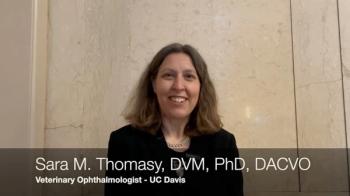
Ophthalmology Times spoke with Sarah M. Thomasy, DVM, PhD, DACVO, a veterinary ophthalmologist at UC Davis about how her research can align with human glaucoma research to move the entire field
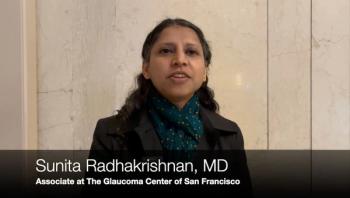
Sunita Radhakrishnan, MD, shares insights on the use of electric neurostimulation and its potential use in the treatment of glaucoma, as evidenced by its current use in Europe and the upcoming trials for use in the US.
Shan Lin, MD, speaks to the new MIGS entering the glaucoma space and providing additional options for patients and providers as they work to preserve vision and work towards a better future for glaucoma treatment options.
Andrew Iwach, MD, co-founder of the Glaucoma 360 meeting shares that value this meeting has for residents and fellows as they embark on their careers and the future additions to the meeting that will include retina discussions.
Inder Paul Singh, MD, speaks to the potential of artificial intelligence (AI) in the management of the glaucoma disease state as well as the current challenges of drug delivery in treating patients with glaucoma.

John Berdahl, MD, discusses a non-surgical, non-drug treatment for glaucoma approved by the FDA in 2024. The pump uses negative pressure to lower eye pressure by an average of 39% in clinical trials, with a good safety profile.
Andrew Iwach, MD, shares how Glaucoma 360 got its start and how today's meeting focuses on innovation that can benefit patients with glaucoma as the condition is monitored and treated.
Panelists discuss how both medications demonstrate favorable safety profiles in clinical trials, with aflibercept 8 mg benefiting from extensive 2-mg safety data, while acknowledging the need to monitor intraocular pressure due to increased injection volume, particularly in at-risk patients.
Panelists discuss how faricimab’s dual inhibition of Ang-2 provides additional benefits in vascular stability and inflammation reduction beyond VEGF-A suppression alone, potentially leading to improved durability and treatment outcomes in selected patients.
Sonia H. Yoo, MD, a cornea, cataract, and refractive surgery specialist and a member of the planning committee for the EnVision Summit, highlights a session focused on the latest advancements in lens implant technologies, refractive procedures, and imaging innovations. The summit will be held from February 14 to 17, 2025, at the Caribe Hilton San Juan in Puerto Rico.
Panelists explore how the introduction of tyrosine kinase inhibitors (TKIs) could affect the perceived benefits of the port delivery system, as these agents may offer an alternative approach to reducing injection burden while potentially providing broader therapeutic effects.

Ashkan Abbey, MD, shares insights from the one-year data for the phase 2 DAVIO2 trial and the impact of tyrosine kinase inhibitors on reducing treatment burden.
Colby highlights the strides made and challenges that remain for women in ophthalmology, emphasizing the importance of mentorship, individualized professional growth, and resilience in a competitive field, drawing from her experience as Chair of the Department of Ophthalmology at NYU Grossman School of Medicine.
A panelist discusses how different phacoemulsification technologies, including vacuum-based and fluid-based systems like the Quatera 700, impact surgical efficiency and chamber stability during cataract procedures, emphasizing the importance of optimized fluidics settings for safe outcomes.
A panelist discusses how various factors influence IOL selection for cataract surgery patients, including patient lifestyle needs, ocular conditions, and specific lens features like the CT Lucia 621P's wide diopter range and spherical aberration compensation capabilities.
Panelists discuss how novel intravitreal agents faricimab and high-dose aflibercept 8mg offer potential advantages in treating retinal diseases through their extended durability and dual mechanism of action.
Panelists discuss how faricimab’s bispecific antibody design uniquely targets both VEGF-A and Ang-2 pathways, addressing the complementary role of Ang-2 in vascular destabilization and inflammation in retinal diseases.
Panelists discuss how careful patient selection and management of potential complications - including surgical risks, device-related adverse events, and cost-benefit considerations requiring operating room resources - are crucial factors in successfully implementing the port delivery system in clinical practice.
Panelists discuss how ideal candidates for aflibercept 8 mg include patients with stable disease on current anti-VEGF therapy who seek reduced treatment burden, newly diagnosed patients, and those demonstrating good response to initial loading doses.
Panelists discuss how the port delivery system (PDS) refill procedure, while performed in an office setting, involves a different technique of accessing and replenishing the implant’s drug reservoir through the conjunctiva and requires specialized training compared with standard intravitreal injections.
Panelists discuss how the Port Delivery System (PDS) presents important considerations around adverse effects, patient selection criteria, and adoption challenges including surgical requirements and cost-benefit analyses that must be carefully weighed when integrating this technology into retinal practice.
Dr Jordan Graff highlights key steps in implanting the port delivery system, emphasizing incision and closure techniques with video clips.
Panelists discuss how the phase 3 PULSAR and PHOTON trials demonstrated the efficacy of aflibercept 8 mg through a design comparing 12- and 16-week dosing intervals to the aflibercept 2 mg standard 8-week dosing, with primary end points assessing noninferiority in visual acuity maintenance.
Panelists discuss how patients experiencing frequent anti-VEGF treatment burdens with 4- to 8-week intervals between injections are ideal candidates for PDS as an alternative delivery method.