
Use of a drug to correct the eyelid position could eliminate the complications associated with surgery.

Use of a drug to correct the eyelid position could eliminate the complications associated with surgery.
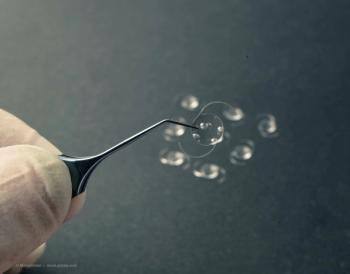
Trifocal IOLs can, if implanted with caution, be suitable for patients with keratoconus.

Investigators uncovered evidence that CaMKII could prove to be a desirable therapeutic target for vision preservation in conditions that damage the axons and somas of retinal ganglion cells.

Investigators have found that optical coherence tomography findings could prove to be a diagnostic tool for COVID-19.

Sustained findings over long term indicate no rebound of disease.

A team of investigators used corneal confocal microscopy to identify corneal nerve damage in cases of long COVID.

First step is ruling out ocular nystagmus, saccadic disorder.
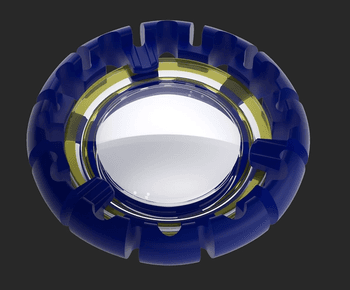
Eric Donnenfeld, MD, presents results of the year-long Grail Study demonstrating the safety and performance of the Juvene IOL from LensGen Inc.
Mitchell A. Jackson, MD, presents details of a retrospective review of dexamethasone intraocular suspension 9%, including reduced postoperative inflammation.
Steven Greenstein, MD, reports on results of epi-off corneal collagen cross-linking treatment in keratoconus and ectasia patients 10 years after undergoing laser refractive surgery.
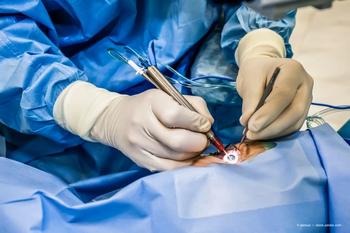
Mark Gallardo, MD, reports 12-month outcomes of iStent inject® combined with cataract surgery in a predominantly Hispanic patient population with mild to moderate open-angle glaucoma (OAG) and comorbid cataract.
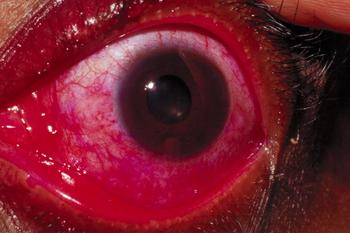
Eric Donnenfeld, MD, highlights study results exhibiting risuteganib as a potential treatment option for dry eye disease.
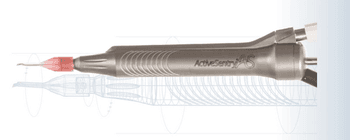
Hisaharu Suzuki, MD, PhD, provides insight on how a handpiece maintains the anterior chamber stability even when occlusion occurs, suggesting its usefulness for a safe and efficient surgery.
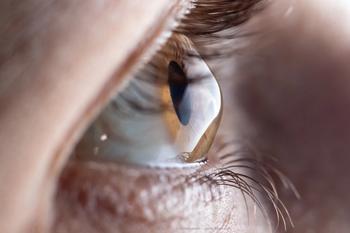
Kathryn M. Hatch, MD, details how collagen CXL is evolving with the goals of reducing complications and actually improving visual acuity.
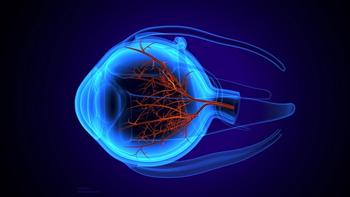
Basil Williams, Jr., MD, reports on the association between development of elevated intraocular pressure and numerous commonly performed vitreoretinal treatments.

Jonathan D. Shader, DO, CPA, presents a case study involving an uncommon cause of posterior-intermediate uveitis: the black ink used to create a tattoo.
Case study looks at a 90-year-old patient with a sebaceous gland carcinoma with corneal and bulbar conjunctival involvement, but the eyelid was spared.
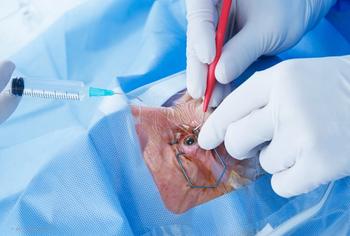
Cathleen McCabe, MD, presents results of a retrospective study highlighting the effectiveness of dexamethasone intraocular suspension 9% following cataract surgery.

Case study of 2 sisters with Leber’s congenital amaurosis (LCA) analyzes ocular findings, connection.
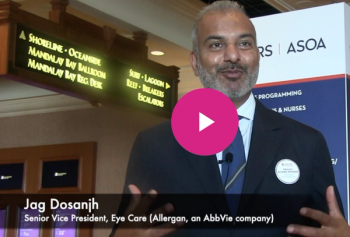
Jag Dosanjh, senior vice president of U.S. Eye Care, Allergan, an AbbVie company, offers a preview of the company's latest innovations, developments, and what attendees can look forward to at ASCRS 2021.

This announcement was made at the 2021 ASCRS annual meeting.

A new report has found that glaucoma specialists’ procedure of choice has changed as a result of the COVID-19 pandemic.

Dual imaging may reduce costs, unnecessary referrals, telehealth study results show.

This research was a finalist in the 2020 Ophthalmology Times® Research Scholar Honoree Program.

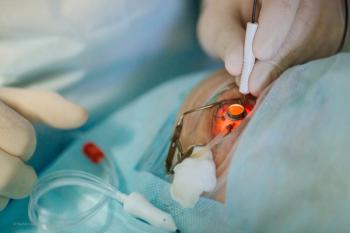
Physician offers practical advice for the use of systems.
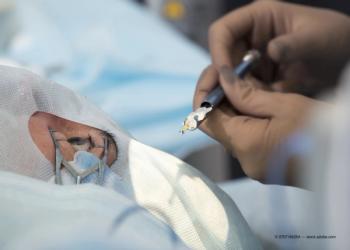
AAO, Surgical Care Coalition teaming up to ensure the final version of the rule is fair to ophthalmologists and surgeons as one company is expressing its disappointment in the proposal.

Nanoscope Therapeutics Inc. has dosed its first patient in a late-stage Phase 2b trial of a gene therapy that delivers multi-characteristic opsin to retinal cells.
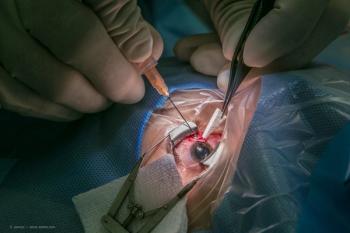
Although minimally invasive procedure gives hope, additional research is required.