

Save the dates for this virtual interactive conference featuring top US ophthalmologists

Save the dates for this virtual interactive conference featuring top US ophthalmologists
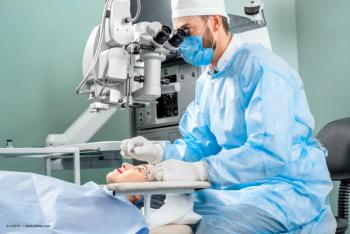
The novel sustained-release technology has potential to eliminate the need for eye drops after cataract surgery.
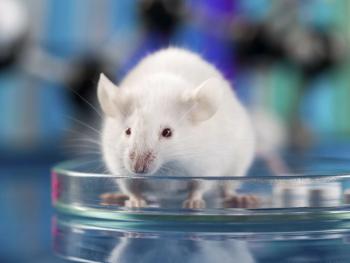
Successful treatment options can offer hope for patients with inherited disease.

Investigators conducted a retrospective consecutive study in which they compared the outcomes using this approach with the results achieved with local anesthesia alone during cataract surgery.

Using its proprietary software, the company has been able to create models in a fraction of the time typically needed for fitting one.

This model can restore visual function and provide good intermediate and near vision in both photopic and mesopic conditions.

According to Yvonne Ou, MD, the test can objectively detect relative changes in the on and off pathways.

Widefield fundus autofluorescence detects subtle findings, which can result in better outcomes.

Approaches include anti-vascular endothelial growth factor agents, fine needle diathermy, and corneal collagen crosslinking.
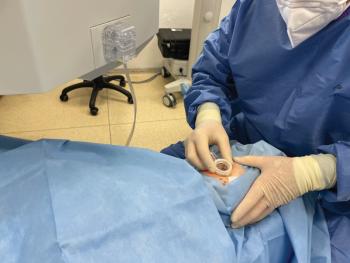
Performing cataract surgery on young patients can be a challenge, and the evolving technology can be used in cataract surgery for young children.

The company's AI-enabled mobile telemedicine platform helps clinicians capture retinal images and screen for vision-threatening eye diseases, such as diabetic retinopathy, glaucoma and age-related macular degeneration.
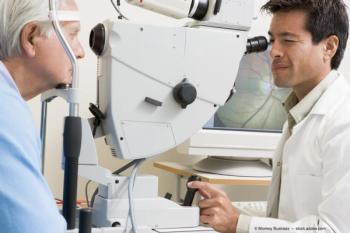
The VIVID study focuses on three novel topical ophthalmic formulations under investigation for the treatment of presbyopia

The company’s re:Vive technology features 6 vision diagnostic exams, supported by 5 reimbursable CPT codes in 1 wearable solution.

Investigators believe the therapy could prove to be an option for the treatment of other retinopathies.

Triamcinolone acetonide injection approved for treatment of macular edema.
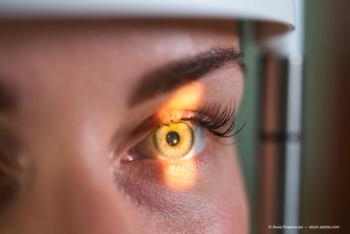
A pilot study tests the technology to obtain remote fundus imaging of patients.

Investigators find that youth show altered ocular movements, reduced amplitude of accommodation.
Investigators set out to better define therapeutic options for controlling the inflammatory response and reducing the risk of pseudophakic cystoid macular edema after cataract surgery.
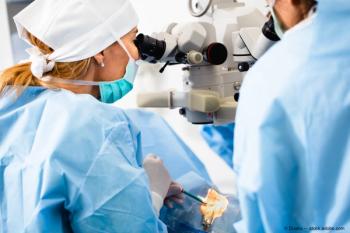
The unique MOA may deliver a synergistic effect when prescribed post-surgically.
An experience at the grocery store serves as a reminder of the importance of fundraising for eye research.

A brief overview of the plethora of findings presented at the 2021 American Academy of Ophthalmology meeting held November 12-15 in New Orleans, LA.

Investigators hoping to develop a novel artificial intelligence model.
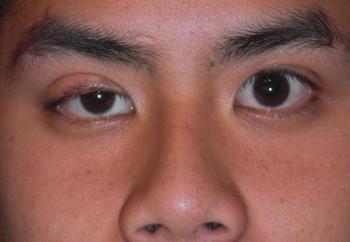
Oxymetazoline hydrochloride has been recognized by the publication as a winner of its Best of Beauty Breakthrough Award.

Sotrovimab, a monoclonal antibody, appears to reduce the risk of progression of mild-to-moderate cases of COVID-19 in patients at high risk of progression.
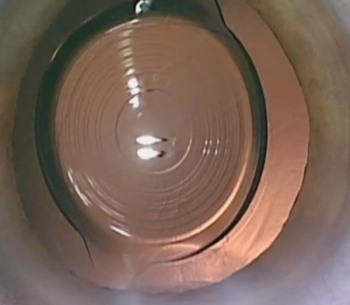
Lens combines diffractive multifocal and extended depth-of-focus properties.
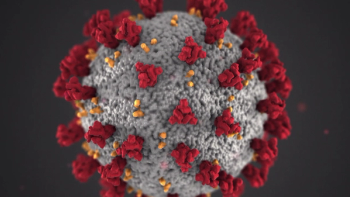
Investigators in California are conducting FDA-approved, double-blind, placebo-controlled phase 1 trials of traditional Eastern medicines to determine the safety and efficacy in mild-to-moderate cases of COVID-19.
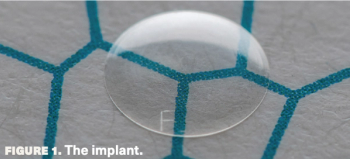
New acrylic implant provides option for patients with endothelial dysfunction.

The agreement also includes an exclusive option for Novartis to acquire Kedalion and its AcuStream technology. No financial terms were disclosed.
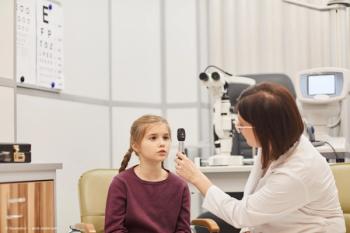
The Children’s Vision Equity Alliance was created to improve acces in children’s vision and eye health, working to advance equity in children’s vision and eye health through education, access, policies, and partnerships.
The 12-Month OMNI data from the prospective, multicenter GEMINI clinical trial show statistically significant postoperative reductions in mean IOP and suppression of daily IOP fluctuations.