
Ultra-widefield pediatric retinal scans plus adaptable AI reveal hidden eye issues during routine visits, enabling comfortable, scalable screening and earlier specialist referrals.

Ultra-widefield pediatric retinal scans plus adaptable AI reveal hidden eye issues during routine visits, enabling comfortable, scalable screening and earlier specialist referrals.

Caveolin‑1 is a membrane-associated protein expressed in many cell types that plays a key role in modulating inflammatory signaling.
Jay Chhablani, MD, a retina specialist from UPMC Vision Institute and director of the Choroidal Analysis and Research Lab at the University of Pittsburgh, discussed recent advancements in choroidal imaging.
Uveitis expert Nisha Acharya, recipient of ARVO’s Mildred Weisenfeld Award, discusses how clinical trials and big data are reshaping treatment, vaccination, and vision outcomes.
Paul Nderitu discusses Global RETFound, a diverse, worldwide retinal AI model that outperforms existing tools and sets a new standard for equitable, open-access medical AI.
NYU researchers discuss using CellChek C widefield specular microscopy to visualize and quantify corneal nerves in dry eye disease, revealing reduced nerve fiber length and inferior whorl changes and offering a practical alternative to in vivo confocal imaging.
At ARVO Michael Siatkowski, MD, and Jody Summers, PhD, stopped to discuss the rising rates of myopia in children and if anti-inflammatory drugs could play a role in slowing progression.
Single-shot optogenetic injection restores light sensitivity in advanced retinitis pigmentosa, delivering sustained vision gains for years with strong safety, expanding hope beyond gene-specific therapy.
Aaron Lee, MD, and Cecilia Lee, MD, co-recipients of this year's Cogan Award at ARVO, reflect on what the award lecture means to them and their careers.
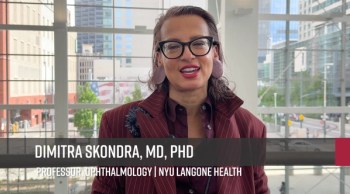
Dimitra Skondra, MD, PhD, discussed her talk on how the diet and gut microbiome can affect the development of age-related macular degeneration.
AI-assisted screening in glaucoma clinics flags patient distress early, improving adherence and outcomes without adding staff burden.
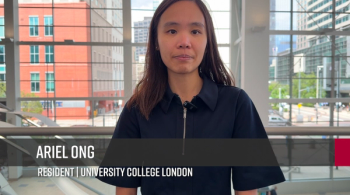
Ariel Ong, a fellow from University College London, discussed her ARVO poster, looking at her work on developing a scalable pipeline for data extraction from ophthalmic clinical letters and what significance that could have in managing patients.
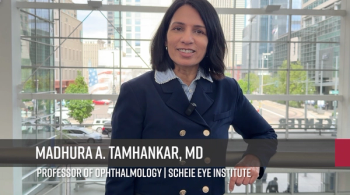
Madhura Tamhankar, MD, took some time at the ARVO conference in Denver, Colorado, to discuss a poster on disease progression in thyroid eye disease, stressing what we know about the Rundle Curve may not be accurate.
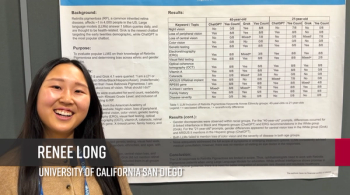
The poster looked into the LLM's potential for biases in gender and race when it came to its knowledge of retinitis pigmentosa.
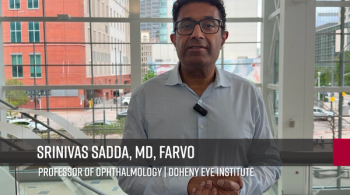
Srinivas Sadda, MD, FARVO, immediate past president of ARVO, discusses the impact the organization has had on his career and how he wants to help the next generation.
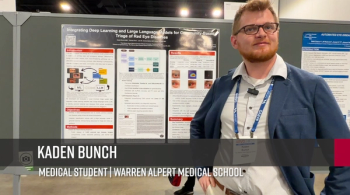
Kaden Bunch, a fourth-year medical student from the Warren Alpert Medical School of Brown University, talked about his poster on large language models and the effectiveness of diagnosing red eye diseases.
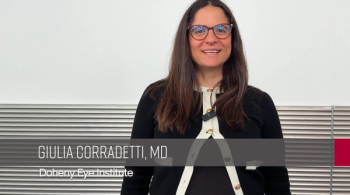
At this year's ARVO meeting in Denver, Colorado, Giulia Corradetti spoke on how baseline OCT biomarkers can predict anatomic response in neovascular age-related macular degeneration when treated with faricimab.
Christopher E. Starr, MD, FACS, highlights diagnostic gaps in dry eye, emphasizing neuropathic corneal pain and reviewing emerging therapies and pipeline treatments in ocular surface disease.
A tissue-sparing technique using a triple-layer decellularized basement membrane is associated with shorter OR time, rapid recovery, and no reported recurrences in a retrospective series.
Quesada discusses a robotic femtosecond laser platform for LASIK, focusing on flap accuracy, stromal bed precision, and the role of integrated OCT imaging.
An analysis of lifitegrast trial subgroups showed that earlier treatment and milder baseline disease were associated with faster and greater symptom improvement.
Combining peristaltic and Venturi pump technology during phacoemulsification may reduce ultrasound time and support endothelial preservation.
Dan B. Tran, MD, compared refractive accuracy, cylinder correction, and postoperative adjustment rates between femtosecond laser–assisted and manual capsulotomy in Light Adjustable Lens cases.
George O. Waring IV, MD, FACS, discussed how “tolerance” may expand the QRS functional vision model, with new data on IOL performance in residual astigmatism and defocus.
Oluwatosin U. Smith, MD, provides an overview of angle-based techniques, cyclodialysis cleft repair, and minimally invasive approaches to glaucoma surgical complications.
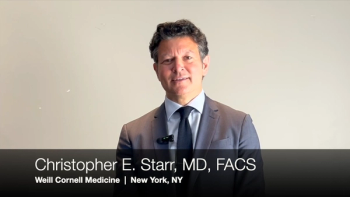
Expanded guidance incorporates advanced diagnostics and reinforces treatment of conditions such as Demodex blepharitis and neuropathic pain, explains Christopher E. Starr, MD, FACS.
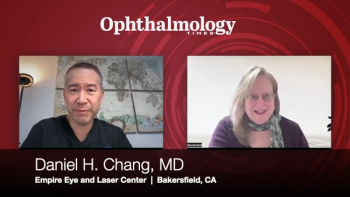
Chang described how the ASCRS Functional Vision Working Group is proposing a structured framework centered on visual quality, visual range, and visual symptoms to guide lens classification.
Bill B. Trattler, MD, Crystal Brimer, OD, Cynthia Matossian, MD, FACS, and Kelly K. Nichols, OD, MPH, PhD, discuss dry eye disease and the various approaches clinicians can take to treat the disease in part 4 of the Viewpoints Podcast.
Bill B. Trattler, MD, Crystal Brimer, OD, Cynthia Matossian, MD, FACS, and Kelly K. Nichols, OD, MPH, PhD, discuss dry eye disease and the various approaches clinicians can take to treat the disease in part 3 of the Viewpoints Podcast.
Bill B. Trattler, MD, Crystal Brimer, OD, Cynthia Matossian, MD, FACS, and Kelly K. Nichols, OD, MPH, PhD, discuss dry eye disease and the various approaches clinicians can take to treat the disease in the second part of the Viewpoints Podcast.