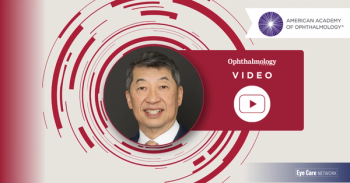
At AAO 2026, Michael T. Yen, MD, reviewed REVEAL-1 efficacy and hearing safety data for subcutaneous elegrobart in active TED.

At AAO 2026, Michael T. Yen, MD, explained how at-home subcutaneous elegrobart could ease treatment burden in thyroid eye disease.
At the
Current IV therapies require patients to travel to an infusion center for pretreatment preparation, the infusion itself, and post-treatment monitoring. “Even though the infusion may be 45 minutes or an hour, it’s still a significant time commitment for them to actually travel,” Yen said.
If elegrobart is approved, Yen expects patients would most likely self-administer it at home with an autoinjector, as with other subcutaneous treatments across medicine. “So from a treatment burden, it’s much more convenient for the patients,” he said.
Yen cautioned against viewing a subcutaneous option as a full replacement for IV therapy. “I think it’s a mistake to think that a subcutaneous treatment option will completely replace the IV infusion therapies,” he said. Each modality will have a role depending on the patient, the circumstances, and disease severity. Yen sees a subcutaneous option as attractive for patients who cannot logistically receive infusions and for those who find the adverse event profile of IV infusions unacceptable.
The trial has not yet been completed, and only topline results at 24 weeks have been released. Investigators are still evaluating durability, including whether patients experience reactivation or relapse after treatment. Yen said more time is needed to fully understand the adverse event profile before clinicians have a complete picture of how elegrobart could affect TED management. Viridian anticipates submitting a Biologics License Application to the US Food and Drug Administration for elegrobart in the first quarter of 2027.¹
Yen reviews the REVEAL-1 efficacy and hearing safety results in