
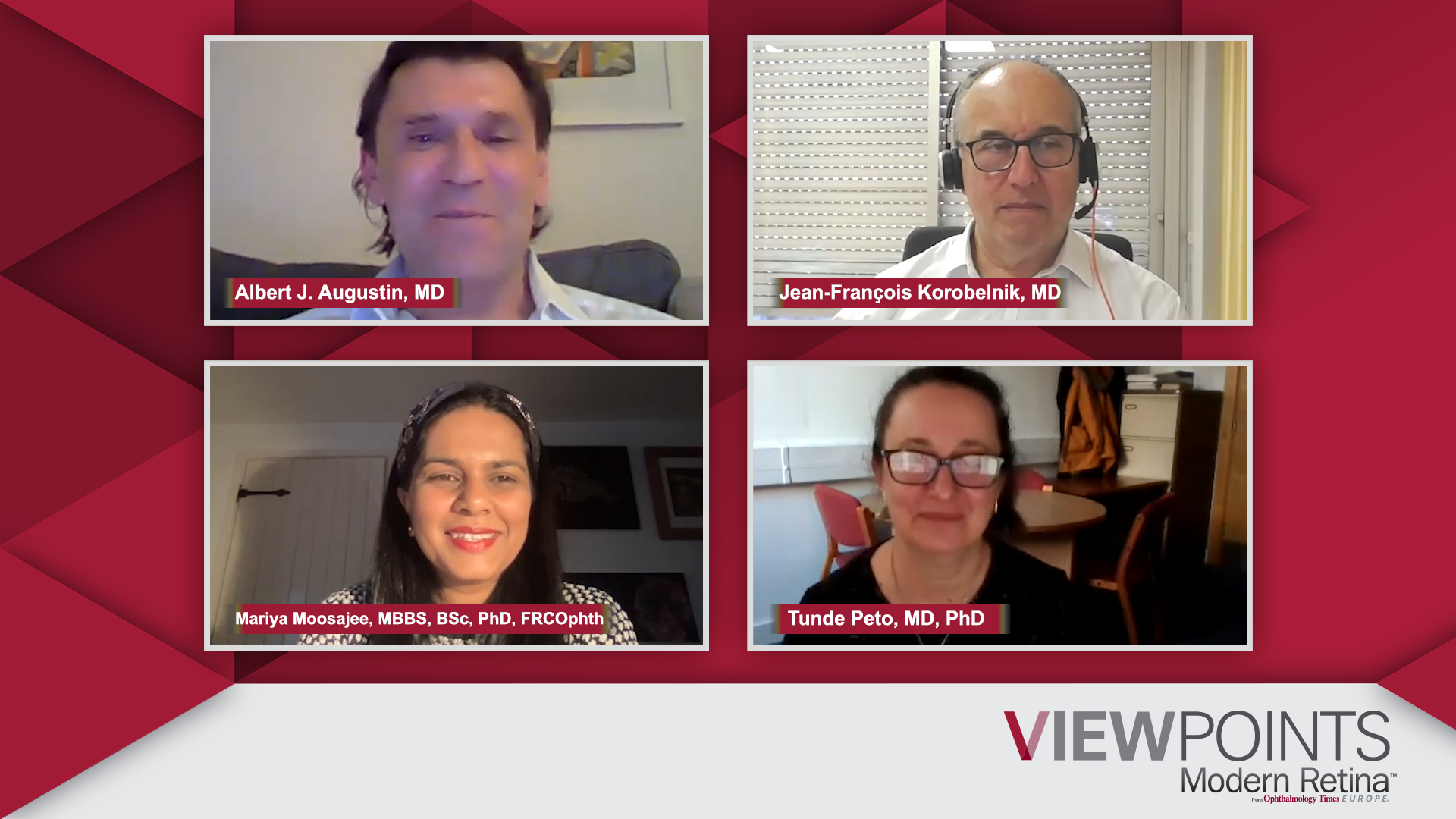















Following a discussion regarding drug delivery challenges in retinal disease, a panel of global experts suggest what types of technological requirements and improvements they would like to see occur in the field.

Following a discussion regarding drug delivery challenges in retinal disease, a panel of global experts suggest what types of technological requirements and improvements they would like to see occur in the field.

Challenges associated with delivering therapies currently available to treat retinal disorders and methods being explored to improve drug delivery to patients.

Drawbacks and challenges associated with the administration of anti-VEGF injections currently available to treat retinal diseases.

Dr Mariya Moosajee highlights therapies approved as well as under study to improve treatment for patients with inherited retinal disease.

A discussion regarding the roles of various treatments available for diabetic macular edema and considerations for selecting and sequencing therapy.
An overview of the current treatment landscape for age-related macular degeneration and factors that impact treatment selection.
Types of tests and criteria that can be used to diagnose conditions such as age-related macular degeneration, diabetic macular edema, and inherited retinal disease.
A panel of global experts who treat patients with retinal diseases suggest causes of age-related macular degeneration, diabetic macular edema, and inherited retinal disease.
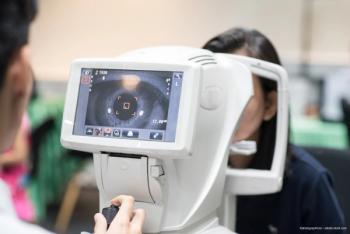
According to researchers, fluorescence lifetime imaging ophthalmoscopy reveals disease-related patterns not visible with other imaging modalities.

Ophthalmology, with its heavy reliance on imaging, is an innovator in the field of artificial intelligence in medicine.

PDUFA action date of October 30, 2021, is assigned for investigational therapy with a proposed indication of treatment of macular edema associated with uveitis.

Investigators are conducting retinal gene therapy trials that offer potential new treatments for inherited causes of vision loss.

Research teams in various countries are pioneering different methods of data processing and deep-learning AI to create new models of care.
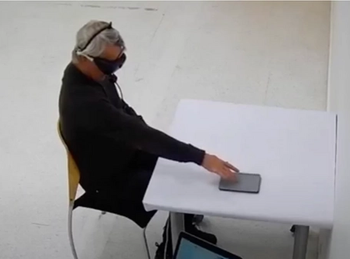
An international research team has shown that optogenetic therapy has helped to partially regain visual function in a patient with retinitis pigmentosa. This is a milestone towards a gene therapy that could restore vision.
Dr. Michael Mbagwu speaks on the highlights of his virtual 2021 ARVO presentation regarding the development of an algorithm tool that links patient imaging to their clinical data, specifically within the AAO IRIS Registry.
Dr. Daniel F. Kiernan discusses key findings of a clinical study analyzing the effect of dexamethasone intracameral drug-delivery suspension on macular thickness based on OCT testing following vitreoretinal surgery.
Dr Uwe Oberheide discusses the key findings of his virtual ARVO 2021 presentation on modelling of IOLs for patients with AMD by ray tracing.

Investigators found that a fluocinolone acetonide implant maintained good real-world vision levels in patients with diabetic macular oedema who had good baseline vision.

In a real-world study of patients with treatment-naïve and previously treated diabetic macular oedema, injection of intravitreal dexamethasone 0.7-mg implant provided effective disease control with initial and repeat injections, regardless of reinjection interval.

Topical eye drop treatments for the posterior segment would offer easier, less invasive options than those currently available. This would reduce the burden on both patients and their caregivers, increasing adherence and improving outcomes.
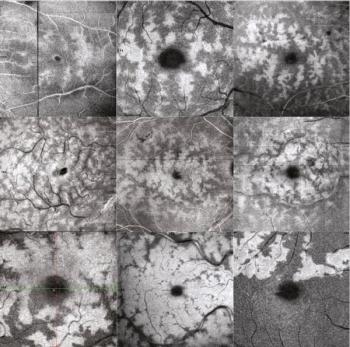
En-face OCT has advantages that make it very useful for characterising macular anatomy and pathologic features of various macular disorders.
Anat Loewenstein, MD, MHA, explores dual Ang-2/VEGF-A inhibition in the management of diabetic macular edema and exudative age-related macular degeneration.
Angiogenesis, Exudation, and Degeneration 2021 Virtual Symposium highlights and thoughts on current treatments options for DME and exudative AMD are discussed.
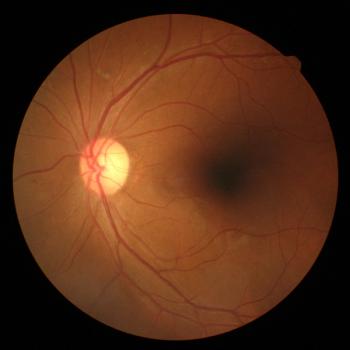
In the DRCR Retina Network Protocol V, which studied management strategies for eyes with centre-involving DMO and good visual acuity, the majority of eyes randomly assigned to initial observation completed the 2-year study without needing anti-VEGF therapy for vision loss and nearly one-third had spontaneous resolution of DMO.

Although the majority of patients experience benefit with brolucizumab for the treatment of nAMD without severe adverse events, the risk of retinal vasculitis and/or retinal vascular occlusion needs to be balanced with potential benefits.