





Retina
Latest News
Advertisement
Video Series





CME Content











Advertisement
In a poster presented at the Association for Research in Vision and Ophthalmology’s 2022 annual meeting, Dr Osama Ibrahim Hirayama and colleagues offered results that demonstrating that anisometropia and astigmatic error were greater among the patients with high myopia compared with the other groups. Compared with the subjects with no myopia, those with high myopia reported significantly more dryness, less photophobia, and less pain.
Dr David Bingaman of Ora Clinical discusses today’s need to accelerate clinical studies and increase investments in retina and challenging disease states.
The axitinib intravitreal implant (OTX-TKI) is being evaluated to treat wet age-related macular degeneration in a phase 1b clinical trial.

At ARVO 2022, Dr Jason S. Slakter presents data on the efficacy and safety of OPT-302 when combined with ranibizumab for polypoidal choroidal vasculopathy.
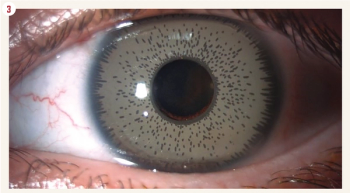
Authors of a retrospective study into complications associated with iris implants advise that the procedure should be considered as malpractice.

In one study of children with solitary unilateral retinoblastoma, the youngest children were found to have the greatest risk for a germline mutation.
Researchers at the University of Southern California have stimulated the retinas of blind mice using focused ultrasound technology.

Options under investigation for the treatment of AMD include interruption of the dry AMD disease process and gene therapy to prompt the retina to heal itself.
A multicentre, retrospective, consecutive international study on infants with ROP who were treated with anti-VEGF injections demonstrated good outcomes and low complication rates.

The trial marks the first-ever in vivo delivery of an experimental CRISPR gene editing medicine to a paediatric patient, with the company on track to complete dosing of the paediatric mid-dose cohort in the first half of 2022.

An end-of-week review of what happened in ophthalmology from April 9-April 15.

This affordable device allows the view through a slit lamp to be shared in real time or recorded, for teaching purposes and for reference.
A large retrospective analysis was carried out to investigate various risk factors for endophthalmitis as well as the effect of using a hydrogel sealant.

Approval is based on year 1 data from the Phase III KESTREL and KITE trials investigating brolucizumab 6 mg versus aflibercept 2 mg in DMO patients.
Developments in imaging, translational research and clinical trials of treatments for retinal diseases dominated discussion at the two-day Bascom Palmer Eye Institute Angiogenesis, Exudation, and Degeneration 2022 virtual conference.

Lower dose of bevacizumab is as effective as a higher dose for treating retinopathy of prematurity.

Dr Taiichi Hikichi counteracted the potential inflammatory effect of brolucizumab by combining its administration with a sub-Tenon’s capsule injection of triamcinolone acetonide.

The company’s announcement marks first clinical trial in humans of Ocugen’s modifier gene therapy platform.

A team of investigators at the Okinawa Institute of Science and Technology Graduate University in Japan have identified a gene necessary for the survival of retinal ganglion cells—a class of neurons located in the retina that are critical for vision.

Investigators find that fusing human retinal cells with adult stem cells could be a potential therapeutic strategy to treat retinal damage and visual impairment.

Sub-retinal injection of adeno-associated virus leads to visual acuity gains.

Ultrasonic retinal prosthesis has been achieved by a research group at UCLA. It is a step towards a non-invasive retinal prosthesis that works without invasive eye surgery.

Retinal changes seen in suspected transient ischaemic attacks are not helpful for predicting ischaemic events.

Dr Aleksandra Rachitskaya discusses how the treatment landscape for Inherited Retinal Diseases has changed and her hope for the future.
Advertisement
Advertisement