




Retina
Latest News
Advertisement
Video Series




CME Content







Advertisement

Data shows improvement after eye muscle surgery for lower spatial frequencies.

Dr David Boyer discusses the Phase 3 investigation for OPT-302 combination therapy for wet AMD.
Though the speed of traditional guillotine cutters has increased significantly in recent years, there are certain limitations. With the advent of hypersonic vitrectomy, Dr Sunir J. Garg explains how retinal surgeons can remove the vitreous gel with more efficiency.
In the study, the faricimab molecule, which is a combined anti-Ang2 and anti-VEGF, performed better than the aflibercept drug in many different ways. Rishi P. Singh, MD, FASRS, summarizes some of these key findings.
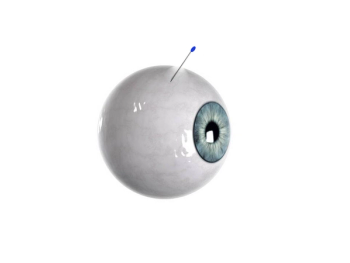
In a recent study, investigators found preclinical evidence that this innovative, biodegradable microneedle, dip-coated with a therapeutic drug for release upon insertion into the eyeball, can also be equipped with a special hydrogel that simultaneously seals off the insertion hole.
A team led by researchers from the University of Geneva has identified a molecular mechanism that causes degeneration of the eye’s photoreceptors, which can lead to blindness.

A team of investigators at Flinders University in Australia have found that a specific cell within the retina appears to be particularly good at housing Ebola and other viruses.

As novel therapies in the pipeline are aiming to decrease the rate of GA expansion—the endpoint Dr Karl Csaky and Dr Fredrick Ferris III identified in 2007—Dr Csaky reinforces the importance of preserving the central retinal tissue.

Via four cases, Dr Harry Flynn describes a variety of endophthalmitis management options for retinal surgeons.

EyePoint Pharmaceuticals hopes to usher in a new paradigm of retinal eye disease treatments with their candidate EYP-190.

Minute movements are related to patching treatment outcomes in patients.
Dr Yasha S. Modi discusses his best tips and tricks for finding and diagnosing infectious uveitis.
Jeff Cleland, PhD, CEO of Ashvattha, discusses safety data for an at-home subcutaneous anti-VEGF injection option in development for the treatment of wet AMD and DMO.

Increasing understanding of the genetics behind Usher syndrome suggests that treatment may become possible in the very near future.
The OpRegen trial is a cell therapy trial, looking to explore potential safety and efficacy for patients with advanced dry age-related macular degeneration (AMD).

Retina specialists and their patients have learned how AI and telemedicine can be effective in monitoring disease progression and alerting clinicians to early signs of adverse changes.

The study assesses retinal blood biomarkers using a new prototype OCT, aiming to measure retinal biomarkers such as blood flow volume, average velocity and vessel diameter with a new prototype.
The study found that if certain forms of nystagmus that are seen in patients, then there is a higher chance of poor binocular visual function, as well as higher interocular suppression.
Dr Carlos Quezada Ruiz, senior medical director at Genentech, discusses “Predicting optimal treatment regimen for patients with neovascular age-related macular degeneration using machine learning.”

According to Novartis, the approval is based on year 1 data from the Phase III KESTREL and KITE clinical trials investigating brolucizumab-dbll 6 mg vs aflibercept 2 mg in diabetic macular oedema patients.

Prof. Anat Loewenstein discusses data regarding the efficacy of faricimab at targeting both the VEGF and Ang2 pathways in patients with neovascular AMD and diabetic macular oedema.
The Phase 3 integrated PEACHTREE and AZALEA study data revealed strong safety and efficacy for triamcinolone acetonide via suprachoirodal injection.

Promising gene therapies in development are pinpointing steps in the pathogenic cascades involved in ocular diseases, such as VEGF for wet AMD and CFI for dry AMD.

An ischaemia modulator has demonstrated it is safe and well tolerated in a Phase 1/2a trial in diabetic macular ischaemia patients.

Dr Jennifer I. Lim reviews the 2-year results of the YOSEMITE and RHINE trials, outlining the efficacy, durability, and safety of faricimab in diabetic macular oedema.
Advertisement
Advertisement