




Retina
Latest News
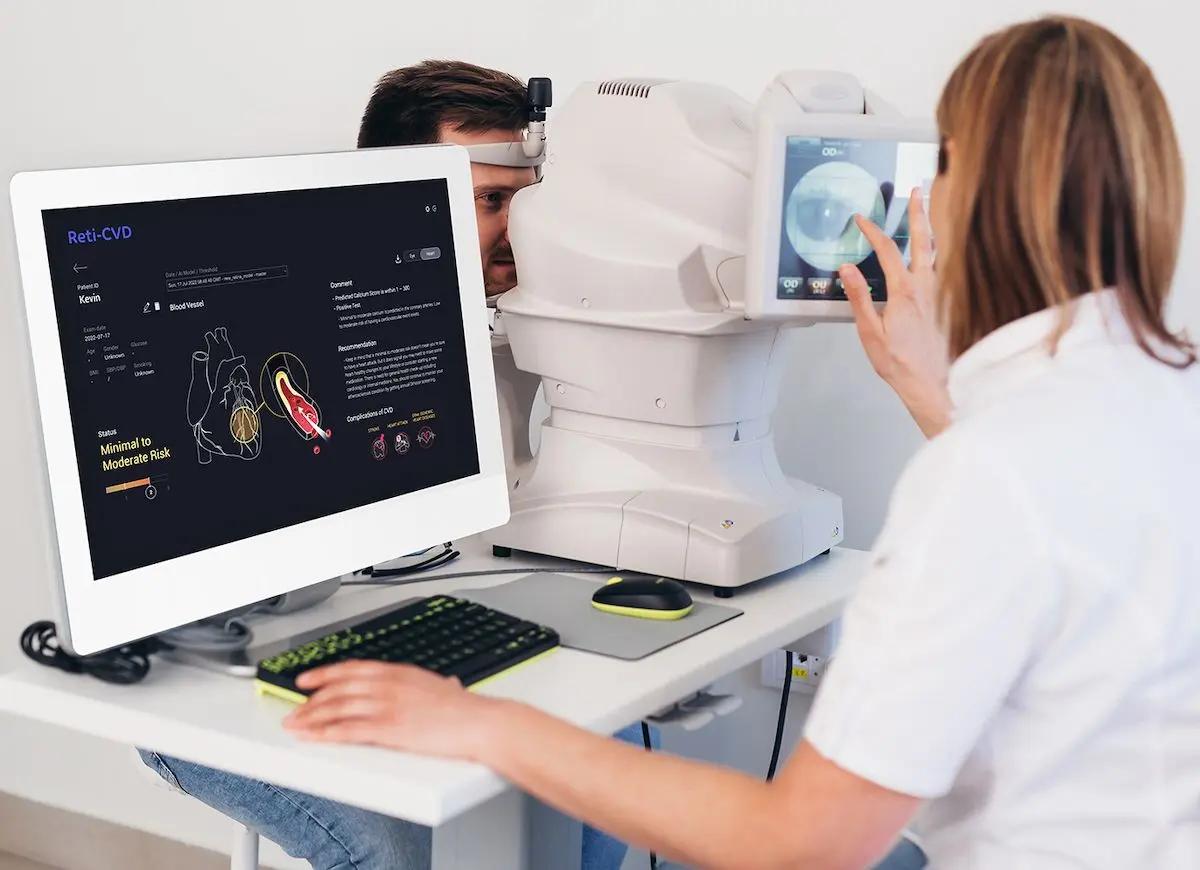
Heart Eye announces AI-driven retinal imaging system to detect biomarkers of cardiovascular health risks
By Hattie Hayes
Advertisement
Video Series



CME Content







Advertisement

Advancements in drug durability and patient care are closing treatment gaps.
At the Envision Summit 2025 in San Juan, Puerto Rico, Nita Valikodath, MD, MS, gave insight into a challenging case of a 14-year-old boy who had trauma-related retinal detachment in his right eye, where a further macula-on retinal detachment with retinal dialysis was found in the left.

Researchers used data from the UK Biobank to investigate the associations between a healthy lifestyle score and retinal neurovascular health.
Martin Friedlander, MD, PhD, discusses phase 3 macular telangiectasia findings, highlighting the potential for a decade-long alternative to intravitreal injections.

Nathan Congdon, MD, highlights a recent study showing how virtual mentor-mentee relationships through Orbis' free telemedicine and e-learning platform can significantly enhance care.

Results were published from the phase 3 QUASAR trial and the extension study of the phase 3 PULSAR trial.
Andrew Iwach, MD, co-founder of the Glaucoma 360 meeting shares that value this meeting has for residents and fellows as they embark on their careers and the future additions to the meeting that will include retina discussions.

From cytokine pathways to genomics, Shree Kurup, MD, highlights new approaches for managing diabetic retinopathy and combating systemic inflammation.
This prospective case-control study included 85 patients with lung involvement related to the COVID-19 virus and a group of 50 healthy controls

Researchers reported identifying changes in 4 areas of the brain

Results from the study assisted Notal Vision in receiving De Novo authorization from the US FDA for the SCANLY Home OCT in 2024.

Previous research has shown that voretigene neparvovec administered subretinally early in childhood for RPE65-mediated inherited retinal dystrophy achieved encouraging efficacious results.

Laru-zova is a gene therapy currently being investigated for the treatment of patients with X-linked retinitis pigmentosa.
The device recently received 510(k) clearance from the US Food and Drug Administration.

Investigators examined the connection between amblyopia, components of the metabolic syndrome and individual cardiometabolic diseases.

The Sentinel Camera aims to address critical gaps in retinal disease screening by offering a portable device that captures high-quality images that require no dilation of the eye.

The program will deliver a range of high-quality access and affordability services for retina specialists.

The companies will work together by using the codon-optimized BBS1 AAV9 vector to minimize the vision loss caused by the genetic defects in the BBS1 gene.

The AI-READI project aims to establish fair, equitable, and ethical access to big data, enhancing artificial intelligence’s ability to diagnose systemic diseases and drive progress in ophthalmology research.

The company states LYNX is the world’s first and only pattern scanning laser indirect ophthalmoscope and is battery-powered to provide surgeons with an untethered laser solution.

The investigators found that the premature births to be associated with vascular changes on ocular coherence tomography-angiography.

The NeurEYE research team will use millions of eye scans from Scottish optometrists to create the data set.

The treatment showed stability or improvement in the Diabetic Retinopathy Severity Scale (DRSS) and generally the drug was well tolerated.

The NPI-001 (N-acetylcysteine amide) tablets are a proprietary investigational therapy for the treatment of patients with retinitis pigmentosa.
Changes can result in bacterial contamination, loss of drug activity, and inflammation
Advertisement
Advertisement