














Ed Hu, MD, PhD, shares highlights from his paper analyzing three years' worth of his own postop data on comparative lens rotations in toric IOL platforms.

Ed Hu, MD, PhD, shares highlights from his paper analyzing three years' worth of his own postop data on comparative lens rotations in toric IOL platforms.

Trifocal IOLs can, if implanted with caution, be suitable for patients with keratoconus.
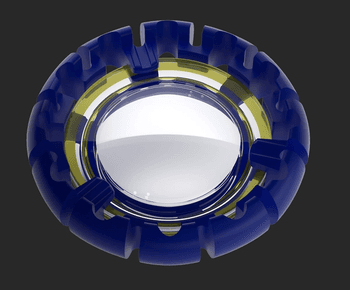
Eric Donnenfeld, MD, presents results of the year-long Grail Study demonstrating the safety and performance of the Juvene IOL from LensGen Inc.
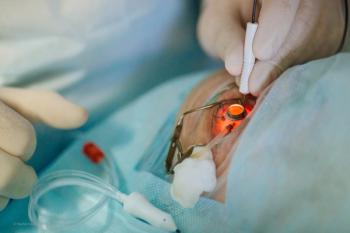
Physician offers practical advice for the use of systems.
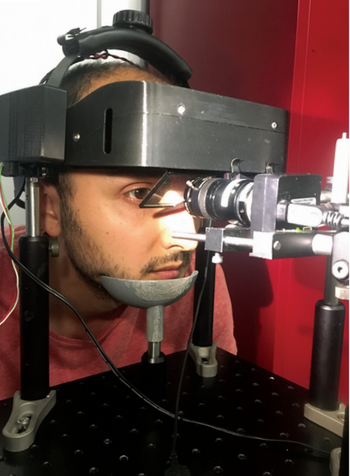
Holographic technology offers after-surgery glimpse for surgeons, patients.

Investigators find little difference between the options.
In recognition of Cataract Awareness Month.

In recognition of Cataract Awareness Month, Fasika Woreta, MD, MPH, discusses IOL options for cataract patients.
Lens option can correct for surgically induced astigmatism or an inaccurate position.
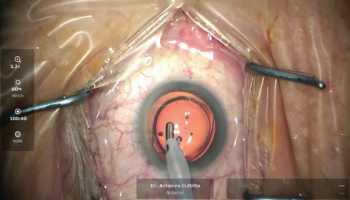
Bi-sign design compensates for aberrations resulting from misalignment.
According to the company, more than 400 eyes of patients from 12 European countries have been fitted with the TECNIS Eyhance Toric II IOL, with surgeons surveyed noting that their patients are pleased with the results.
Intermediate/near vision improvements are achieved without compromising distance vision.

Uwe Oberheide, MD, discusses the key findings of his virtual ARVO 2021 presentation on modeling of IOLs for patients with AMD by ray-tracing.
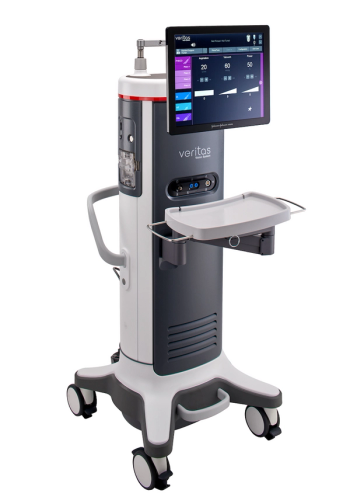
Johnson & Johnson Vision announced today that the FDA has granted 510(k) clearance and CE mark for its VERTIAST Vision System, a next-generation phacoemulsification innovation.
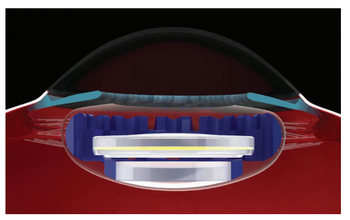
Lens offers full range of vision from distance through near vision.
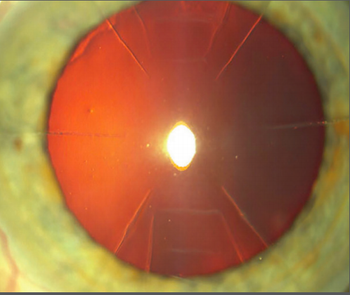
New option may prove to be a solution for cataract cases with unusual corneas.
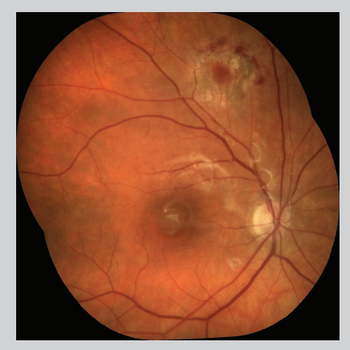
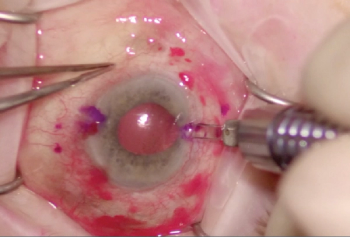
Practice and preparation are key for mastering the procedure.
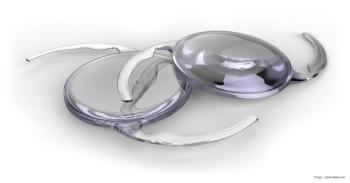
One surgeon shares the early results of his experience using the new TECNIS Eyhance and TECNIS Eyhance Toric II IOLs in performing the first post-FDA-approved cases in the U.S.
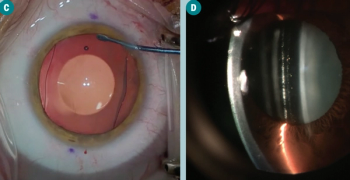
Phakic option provides hope to patients who are not candidates for laser vision correction.

Daniel H. Chang, MD, shares data on a recent study involving a new violet light-filtering chromophore in a preclinical computer simulation testing and randomized clinical study.
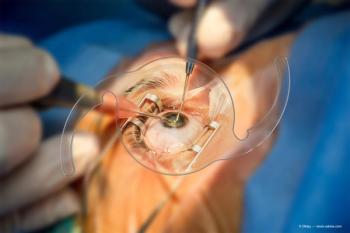
Phakic lenses are proving to be excellent additions to refractive practices.
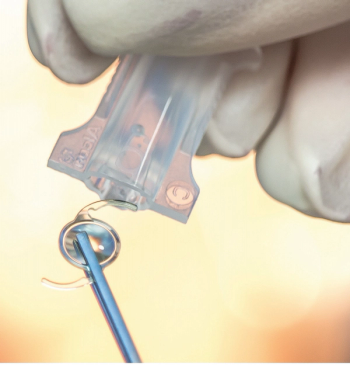
Procedure increases lens stability and improves visual acuity in patients.

Robert Ang, MD, discusses highlights of his AAO 2020 presentation on a study analyzing the vIsual outcomes of a small-aperture IOL implantation in patients with a history of post-laser refractive surgery.
